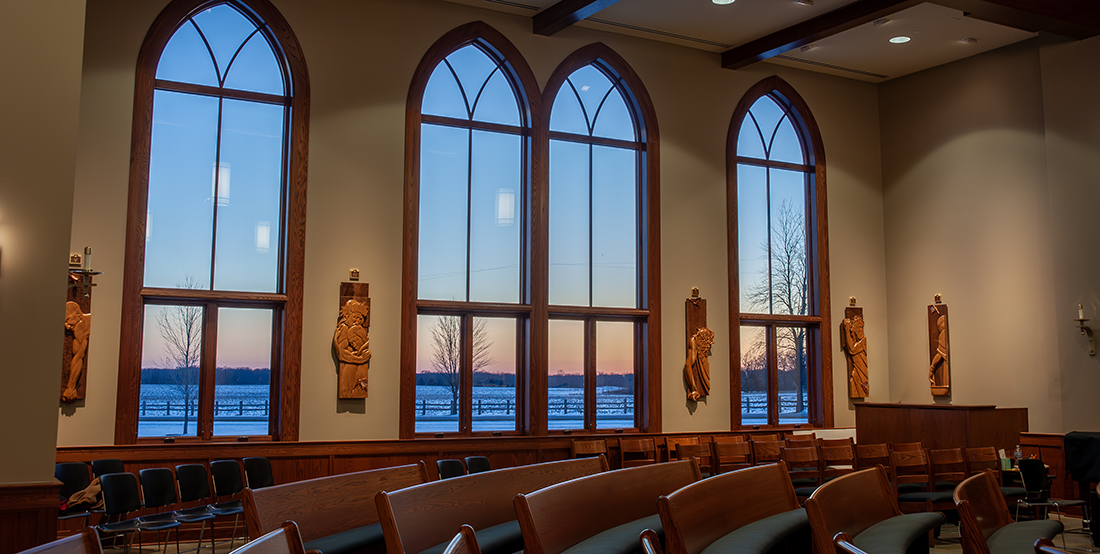
Station I: Jesus is condemned to death
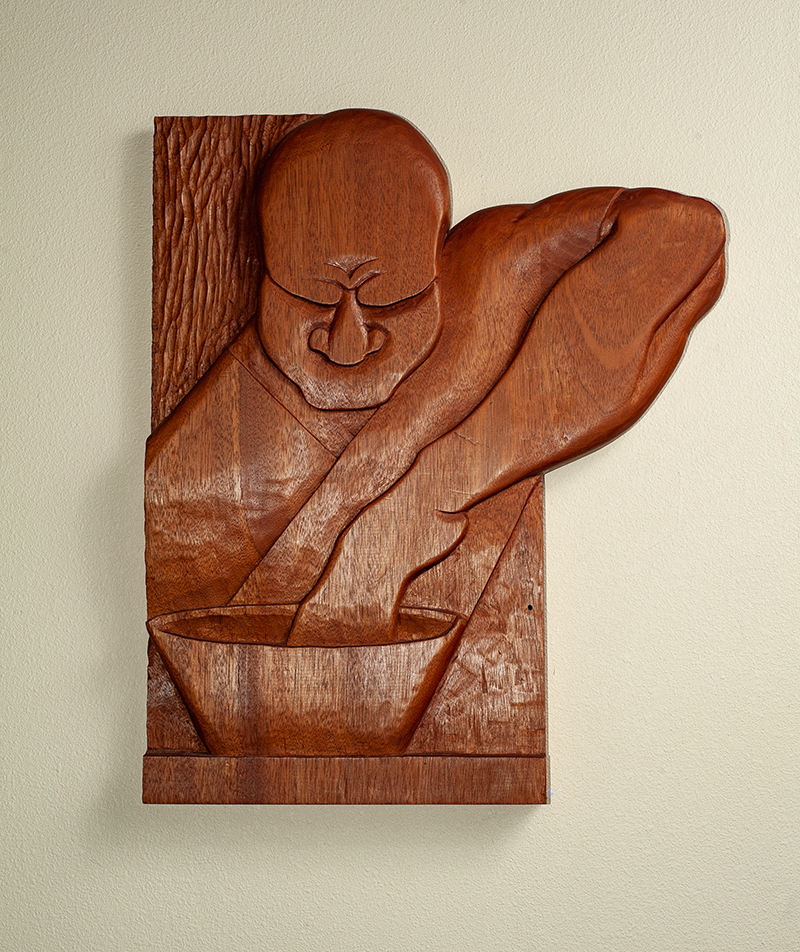
St. Augustine's is an African-American community established in 1929. These stations wrere my first and were commissioned as part of the parish's 60th anniversary. The community had survived loosing their original church and efforts to close the parish in the 1970's.
Pilate washes his hands after having condemned Jesus to death, knowing that He was innocent of all charges. Pilate in many ways reflects those, both in authority and in society, who recognize injustice, yet wash their hands seeking to avoid responsibility.
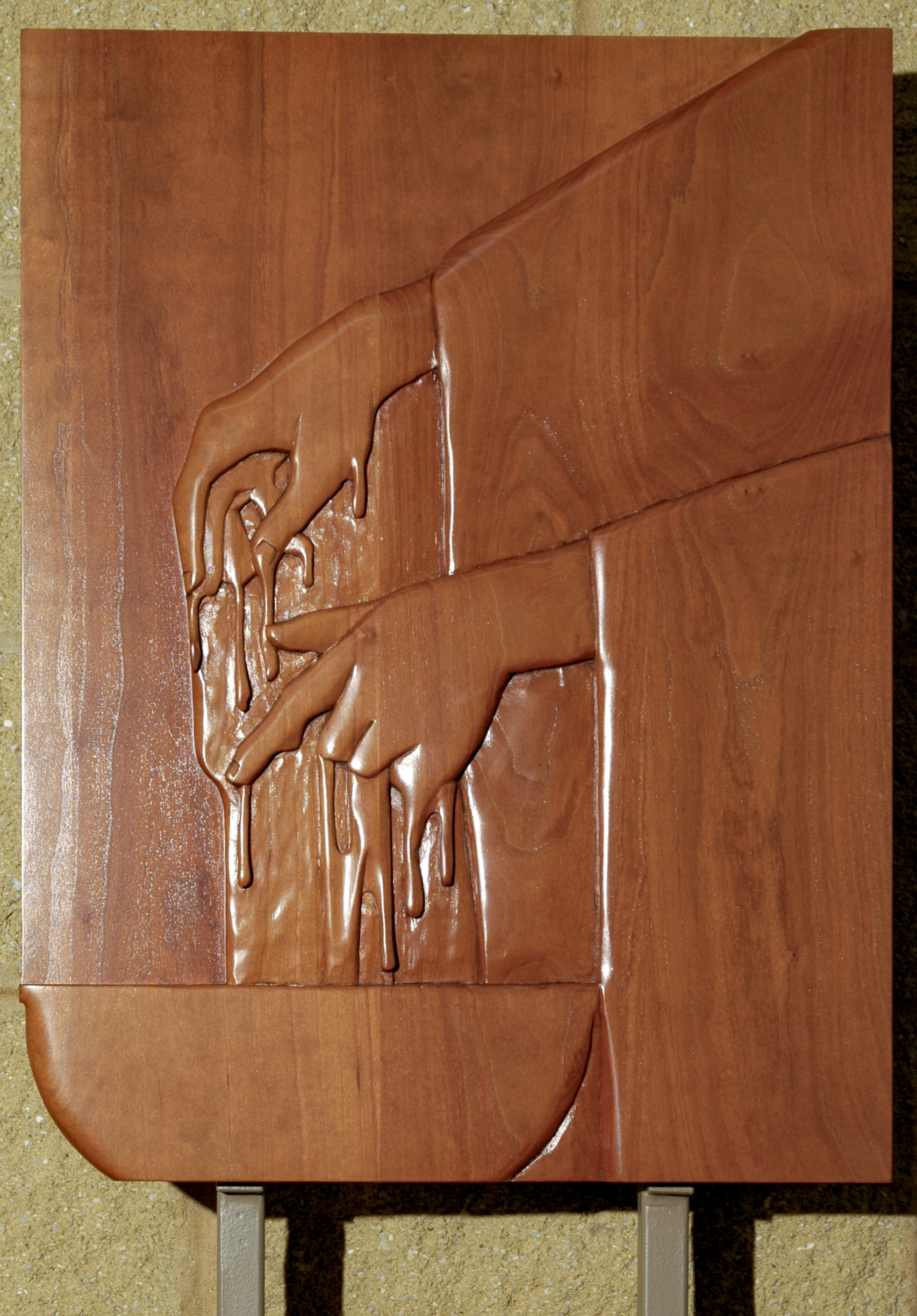
Pilate's capitulates to the pressure of the crowd clamoring for an unjust sentence, prefering instead the violence of Barabbas over the Peace of Christ.
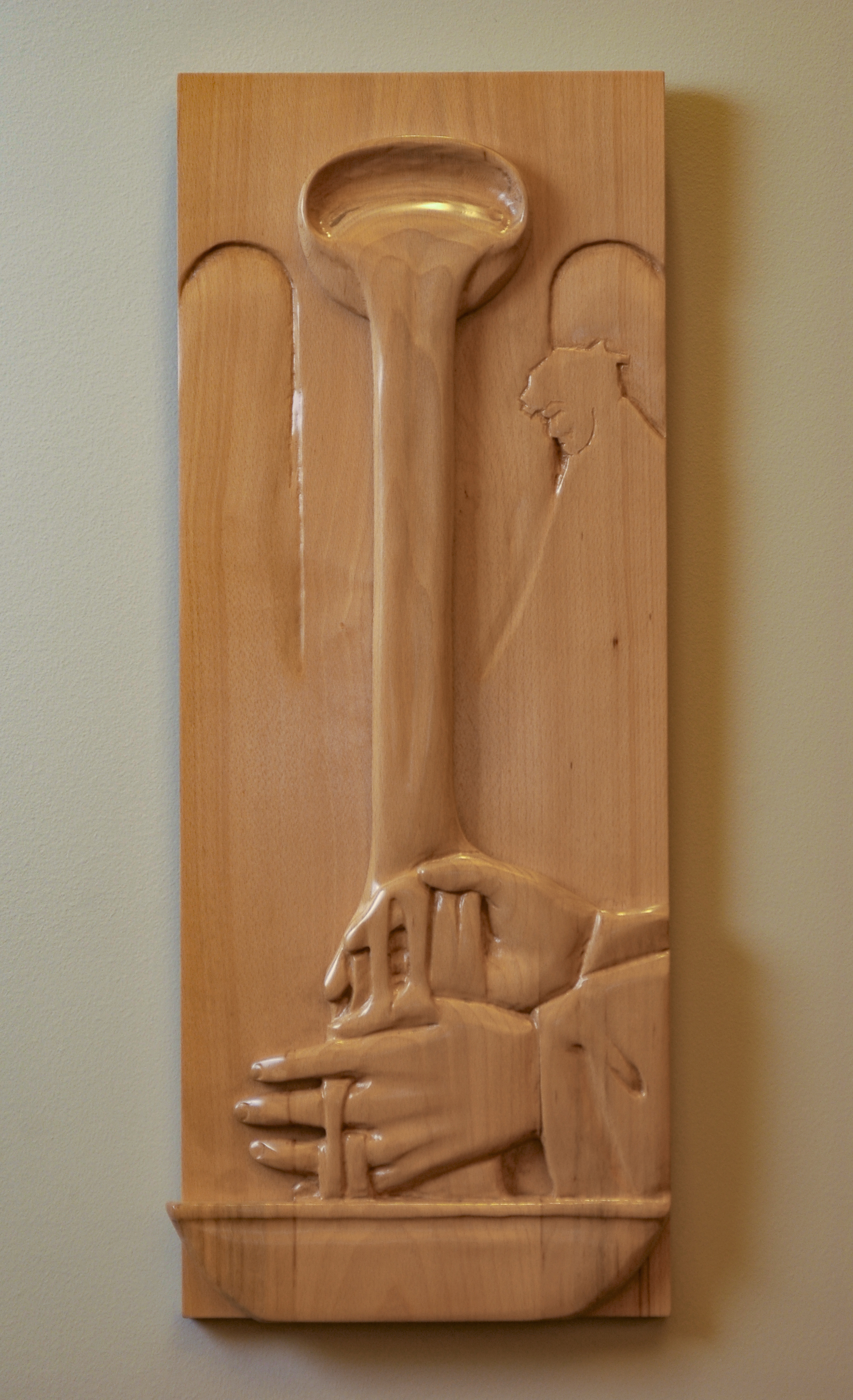
Pilate's act of washing his hands becomes a type of anti-baptism, ironically becoming immoratlized as an act of cowardice and injustice rather than purification.
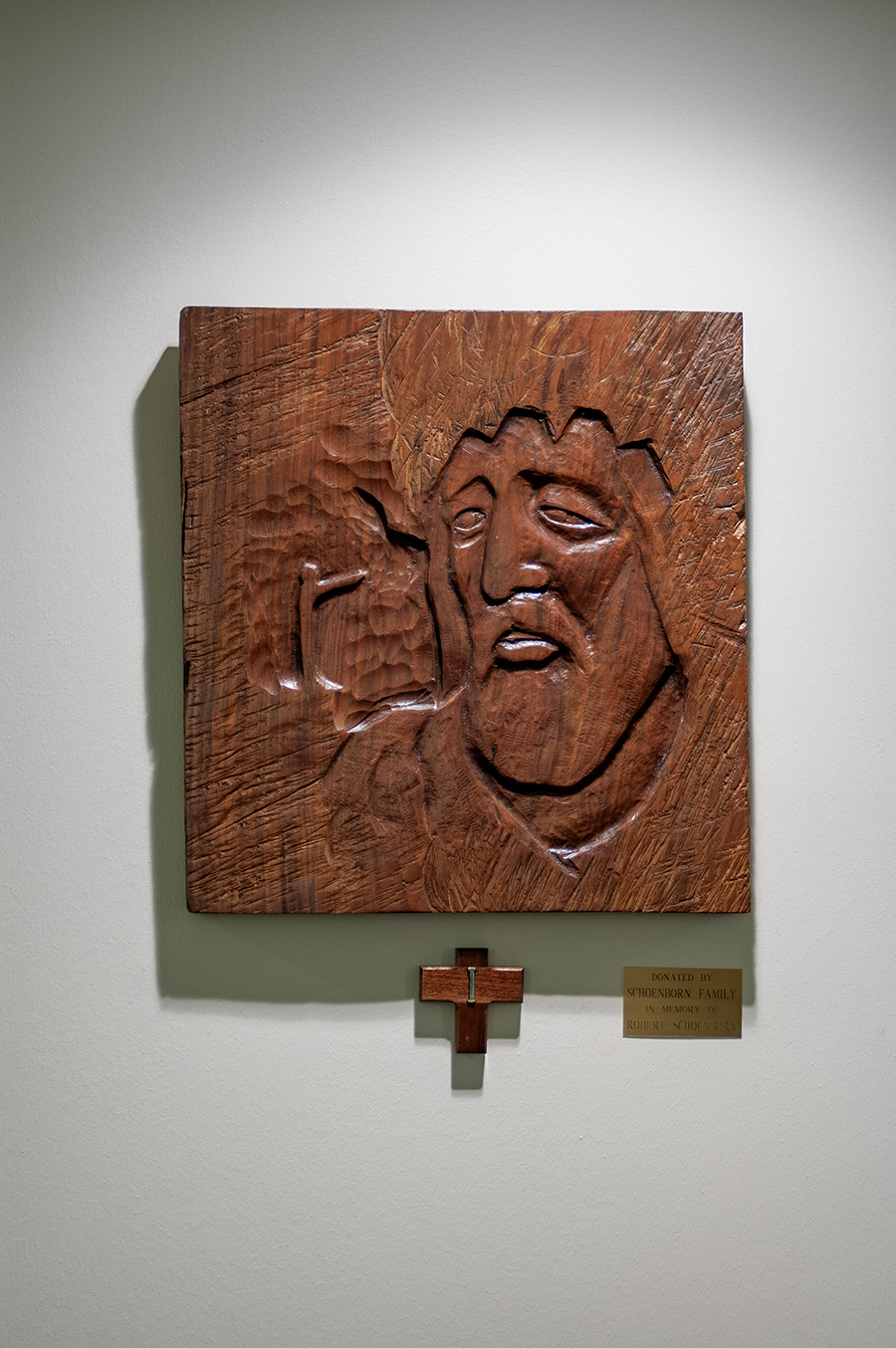
The hospital chapel was a place of spiritual refuge for a broad spectrum of people of varying religious persuasions. The design of this series focused on the fact of Christ to appeal to non-Catholics. In the background, sillouettes represent the traditional Catholic devotion.
In spite of His rejection by the governing authorities and His own People, Christ remains in silent committment to the Divine Will. With evening, weeping enters in, but with dawn comes rejoicing.
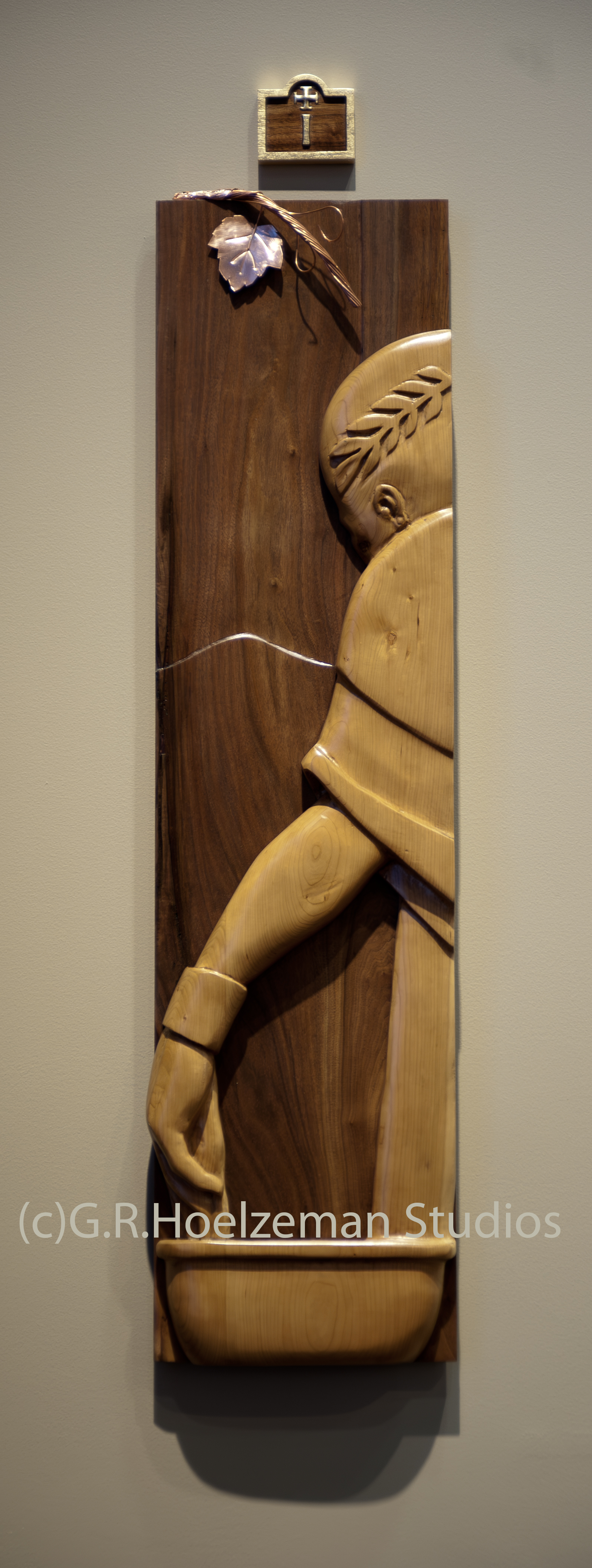
Pilate turns his back as the Via Dolorosa begins the painful procession to Calvary. A grape vine begins to grow, linking the Way of Sorrow with the Eucharist, and recalling a parallel with the grain of wheat which must die in order to bear fruit.