Station II: Jesus Accepts the Cross
The crossbeam is yoke-like, recalling the oppression of slavery and segregation endured by the African-American community. It also inspired, in part, by a similar cross seen by the Artist in the Friedenskapelle in Germany's Black Forest. The Friedenskapelle was a joint project of German and Russian survivors of the Battle of Stalingrad (of which the Artist's cousin was part). The burden of sin which oppresses humanity manifests itself most destructively in war, injustice, oppression, and every sort of inhumanity toward others.
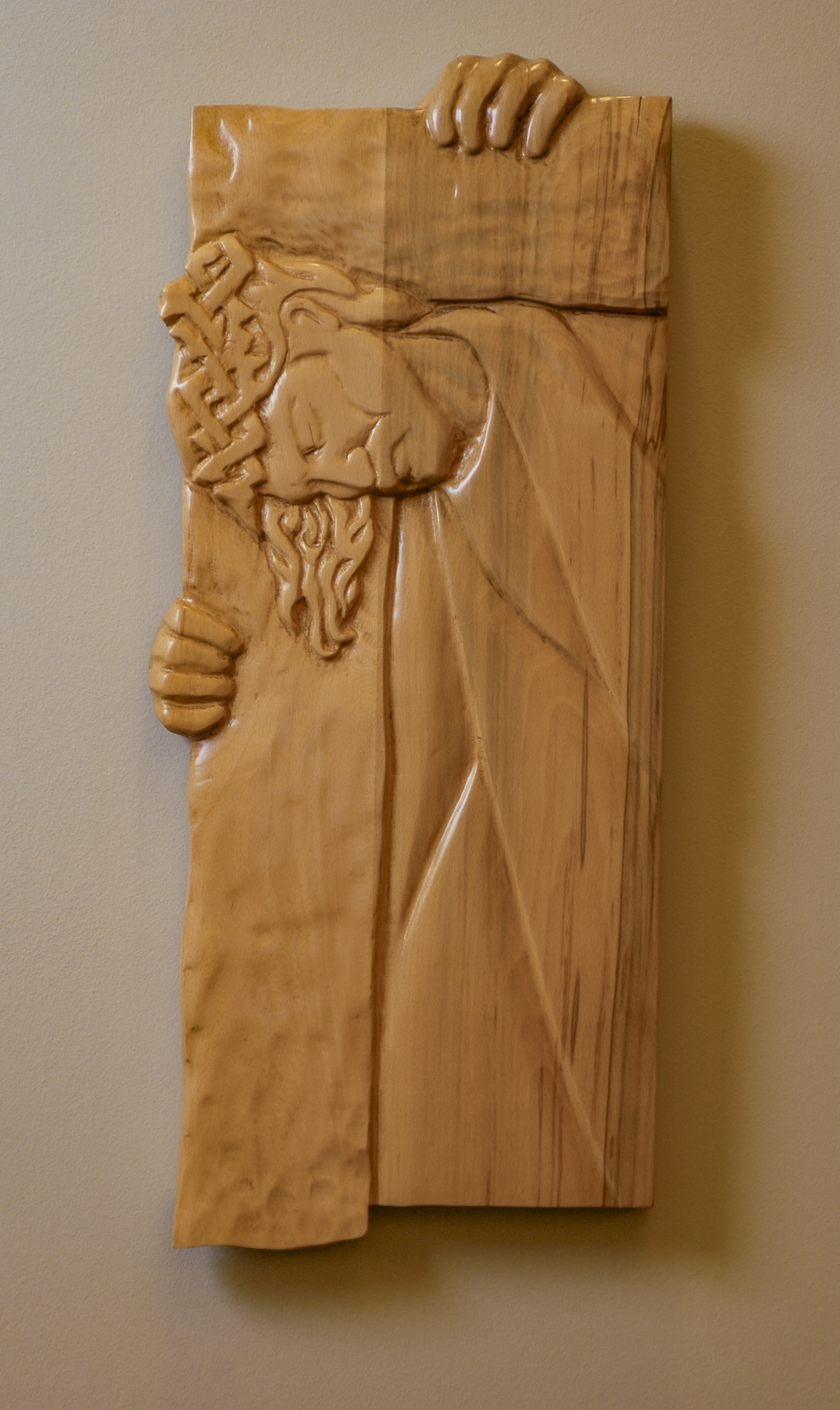
The crushing weight of the Cross and the sinfulness which it symbolizes weights down humanity, both individually and collectively. In contrast to Pilate who seeks to abdicate responsibility, Christ accepts a responsibility otherwise not His own.
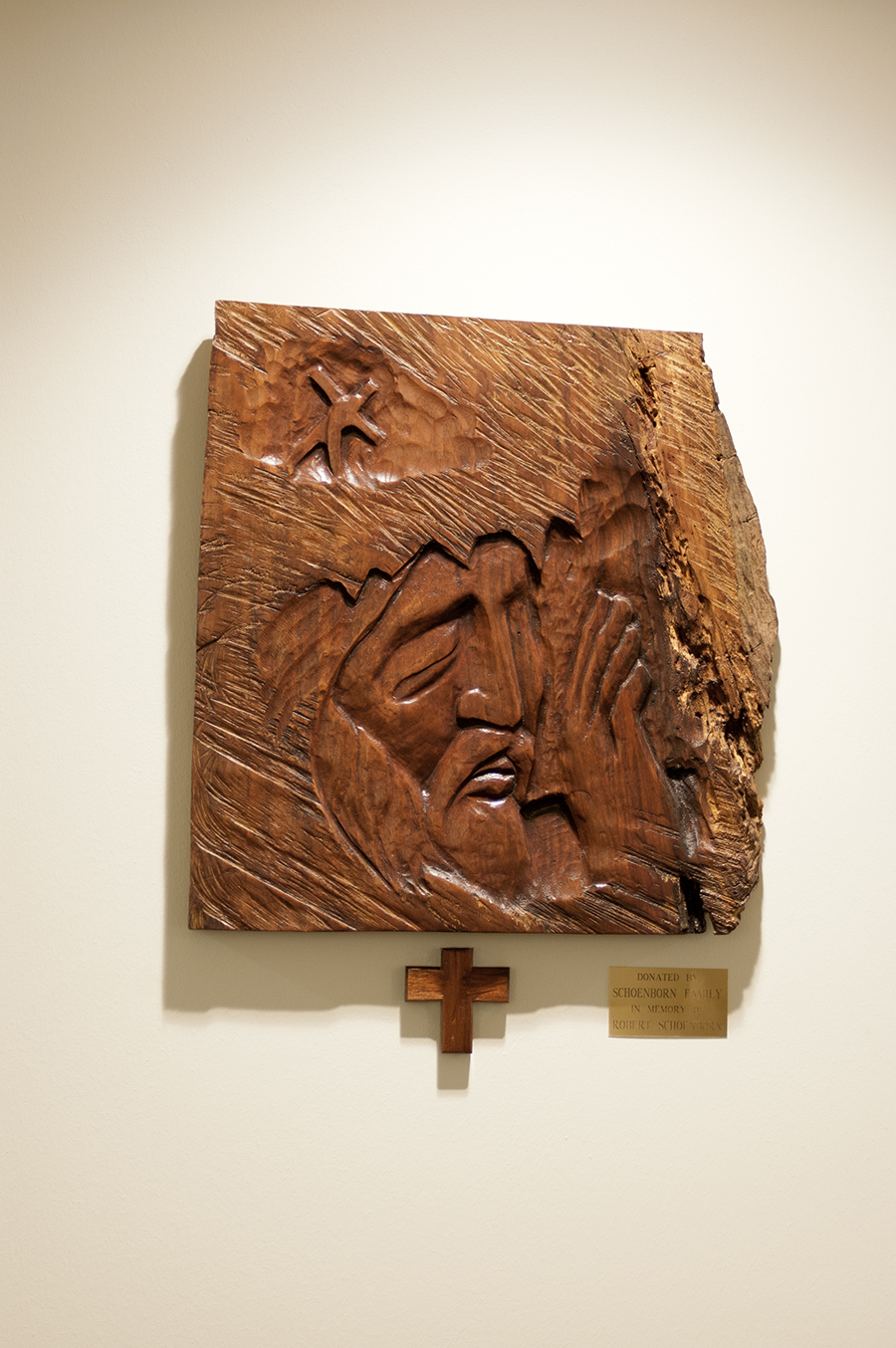
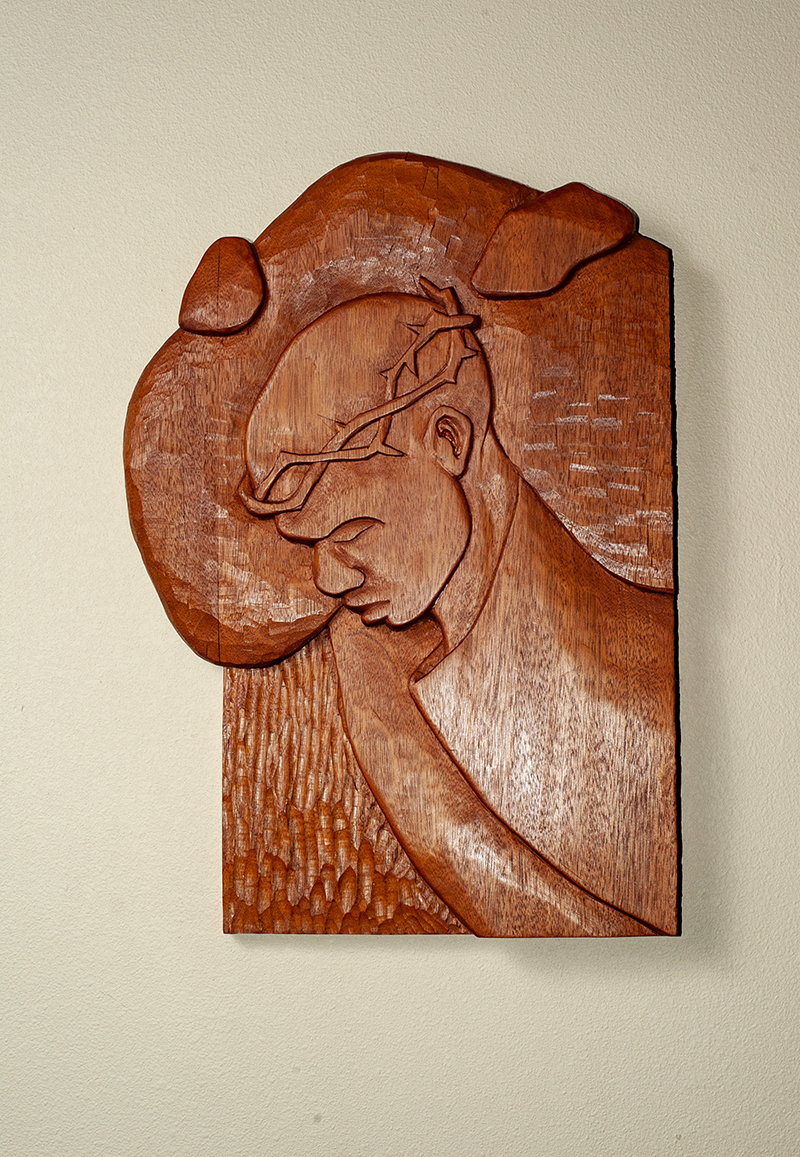
The rough cut walnut reminds us of the harsh brokenness of the world, our own psychological confusion and disorientation, and the tragic trauma which is healed by the Passion of Christ.
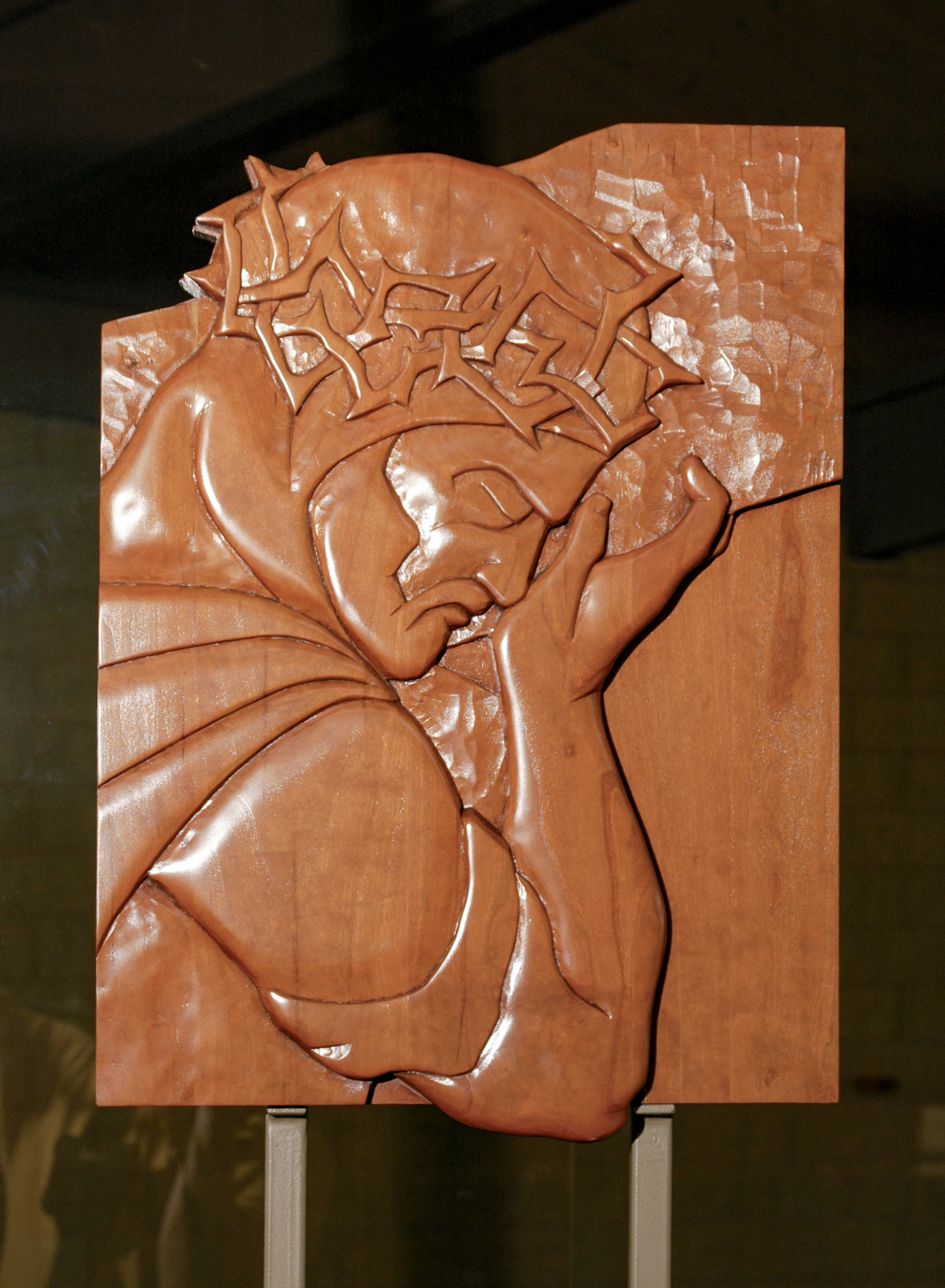
Resignation to real or imagined Fate is nothing other than hopeless despair. Christ does not resign himself to his 'fate' but accepts the Will of the Father recognizing the greater good of His redemptive Passion.
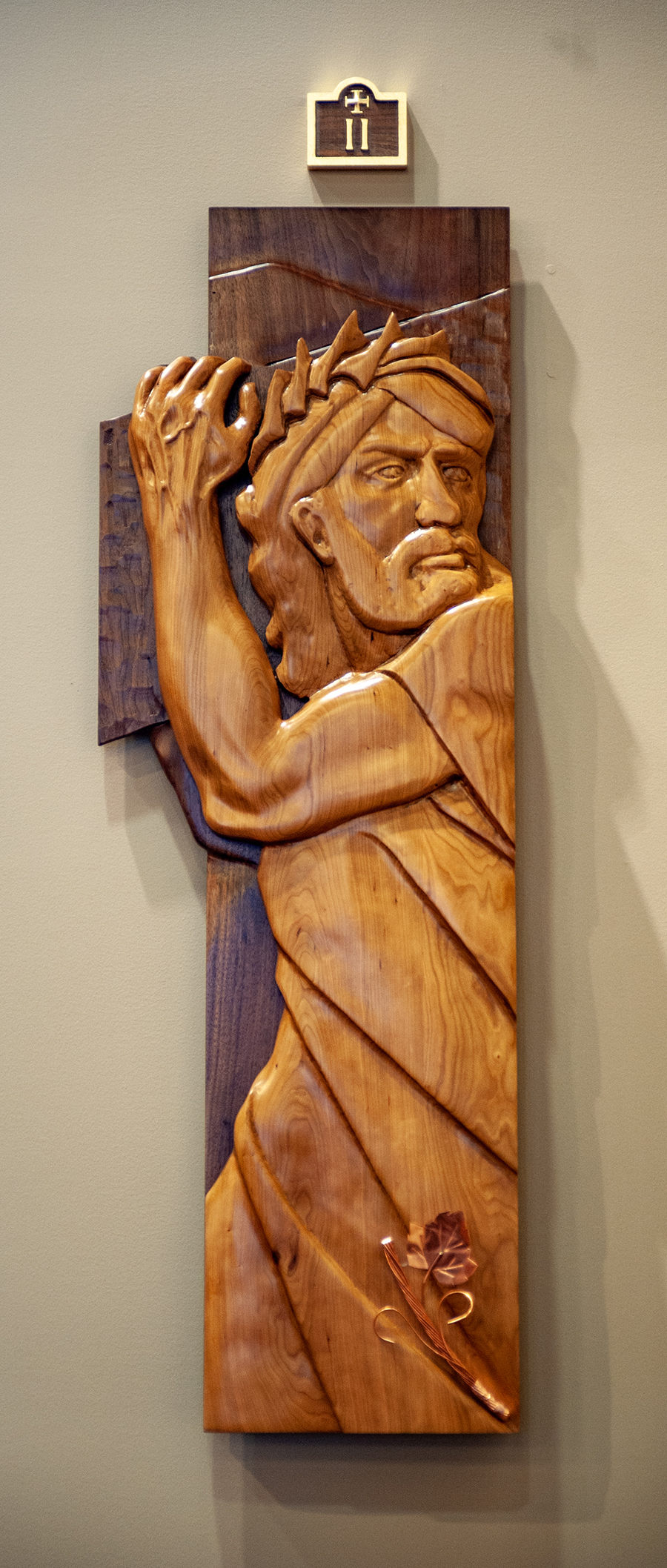
Christ is not passive, but is the master of events looking toward a Divine end. Strength is not found in displays of power and might, but in humility, compassion, and love. "Vain hope for salvation is the horse - despite its power, it cannot save."