The Sacred Journey (Der Weg)
Schwarz’s next model, the Sacred Journey (Heilige Fahrt), represents the dominant (and often misunderstood) architecture of Western Christianity. For Schwarz, this historically familiar plan is the completion of the preparation for departure (Aufbruch) begun in the previous models. Those gathered understand that they are on their way (Weg) and, crucially, that they have been sent out (ausgesendet) on the journey to their true home. Foundational to this journey is the understanding that the people have been sent forth by the Lord himself, and are now on their way to the Father. Thus, the journey is from God to God,(1) thus reflecting the Thomistic principal that divine grace motivates and sustains the spiritual life.(2) Schwarz cautions that this ‘way’ is not so direct (unmittlebar) as one might think.(3) Rather it is most clear only in hindsight. During the journey is the hard work of becoming one, seeing each other as neighbor and the people becoming community.
But Schwarz also notes that there are spiritual dangers in this model, dangers that become significant when considering the posture and attitude of the gathered assembly.
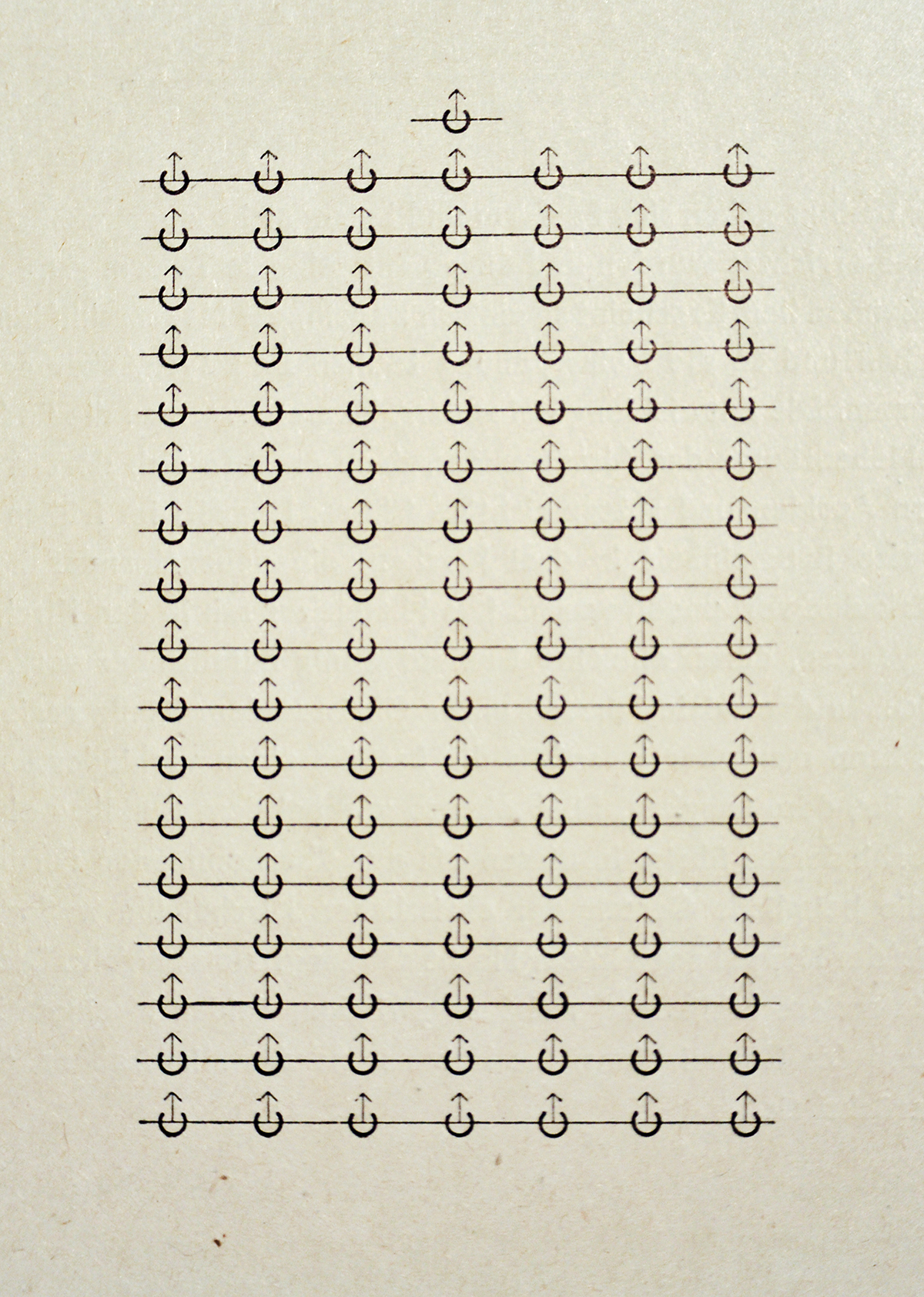
First among these is the chain. (4) The chain has no center, nor can it organically grow. Its abstract nature is such that new elements can only be ‘welded’ onto its ends. Each link of the chain has no awareness of a link before or behind, or of the whole. Its only ‘link’ is with that next to it, and even then, the individual link does not look left or right, but only forward. Even when woven into a net with successive chains, the individual “experiences nothing” (5) While the net continues to expand by accretion, this expansion changes nothing in the individual link. There is, in effect, no spiritual movement to a higher plane. The chain and net are purely abstract; “it lacks the powers of organic growth… it needs people only as the material for such uniformity.” Only when the Cross is added to the form is there opportunity for advancement, and even here, that opportunity is limited. (6)
.jpg)
This is not all. Schwarz notes the posture of the priest. Facing the direction of travel in union with the chain/net, the priest is also on the journey. But that journey is futile. (7) and it is futile precisely because the journey is eternal. The journey is toward the eternal light, to God, yet that light remains ever over the horizon. God remains elusive and forever out of reach. As long and hard as the people strive toward it, it cannot be achieved. It is only by God coming to meet humanity at the altar that there is hope of the journey’s end and fulfillment. The altar is “that sacred spot where God enters the world…” (8) The priest may face an altar in union with the people, but as such he is merely the human agent of humanity – a leader of people. When the altar moves between the people and the priest, the priest becomes an agent of God, the altar moves back toward the center as in the original intimacy, and the teleological end of the journey ceases to be remote, but now within reach. And it is within reach because it is God who reaches out to the people.
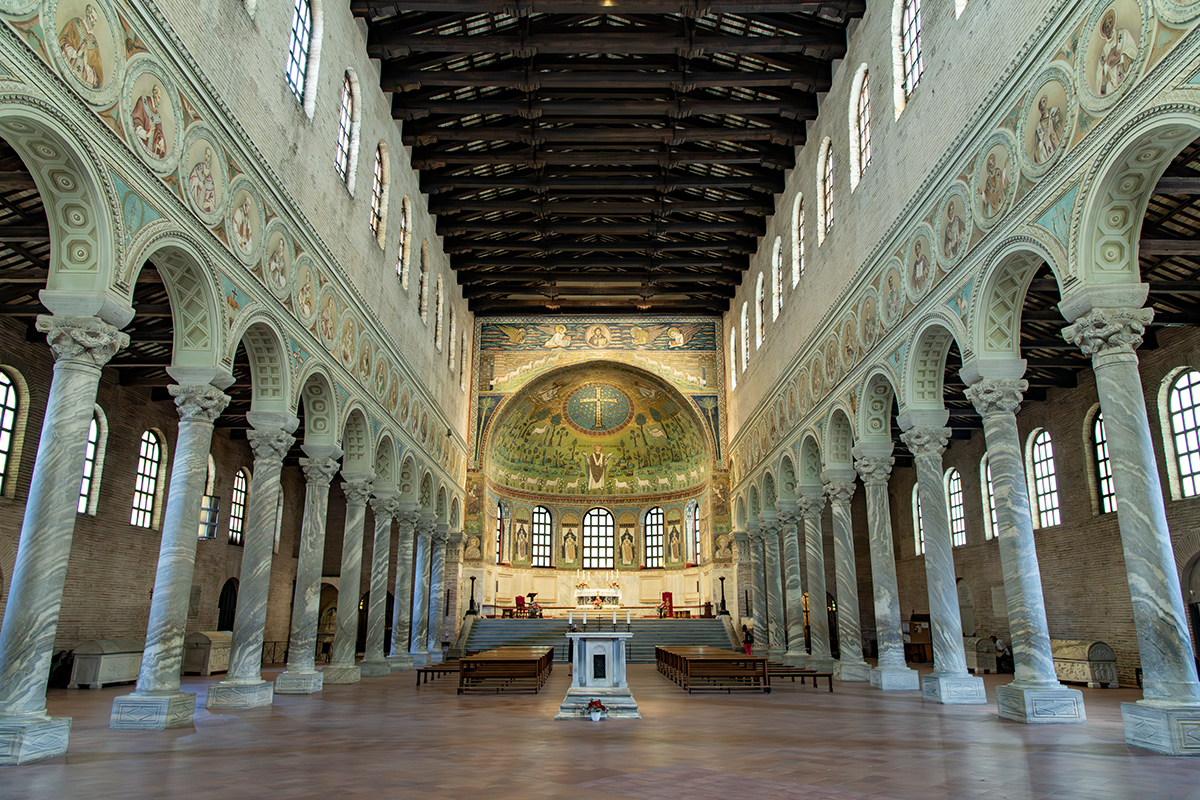
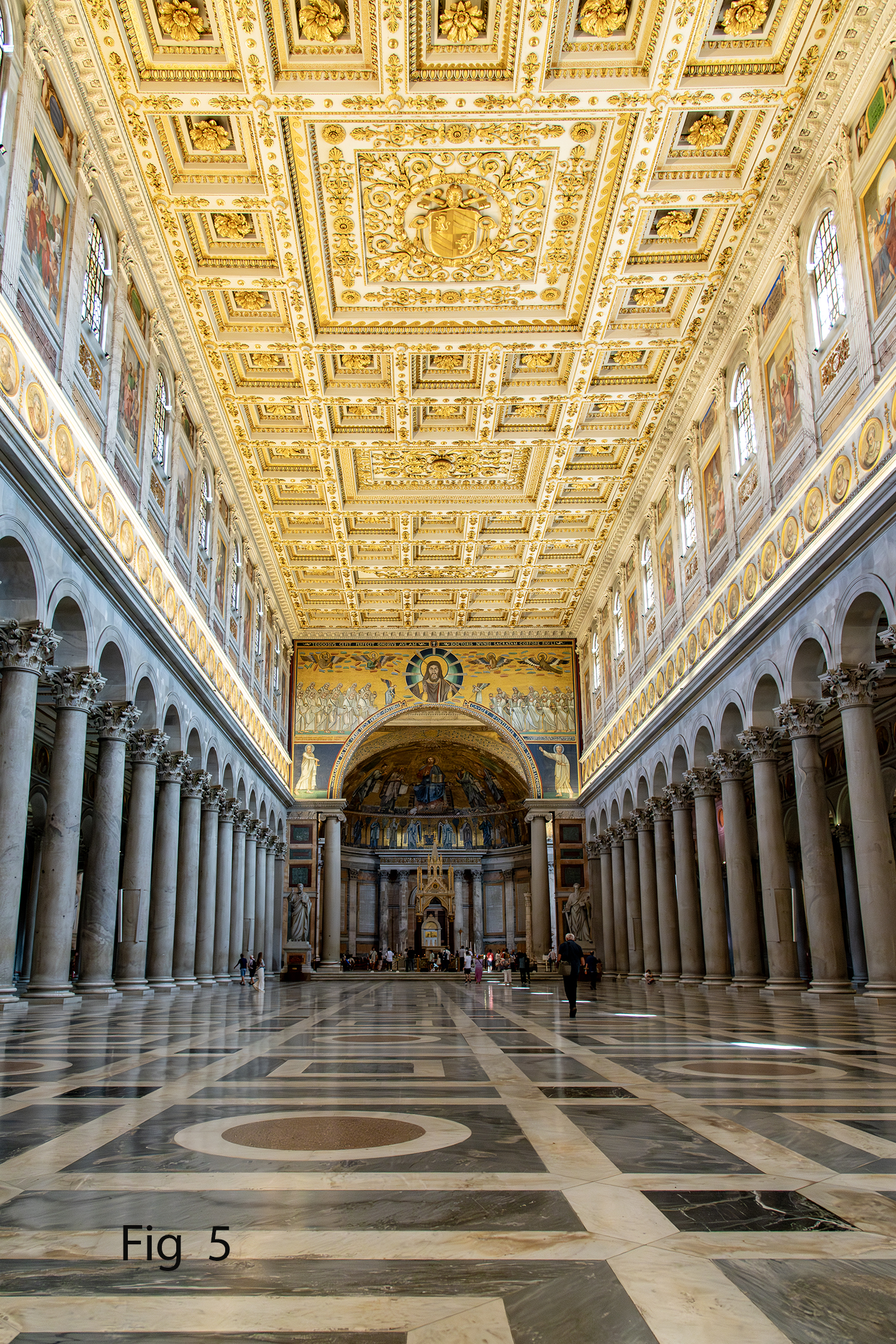
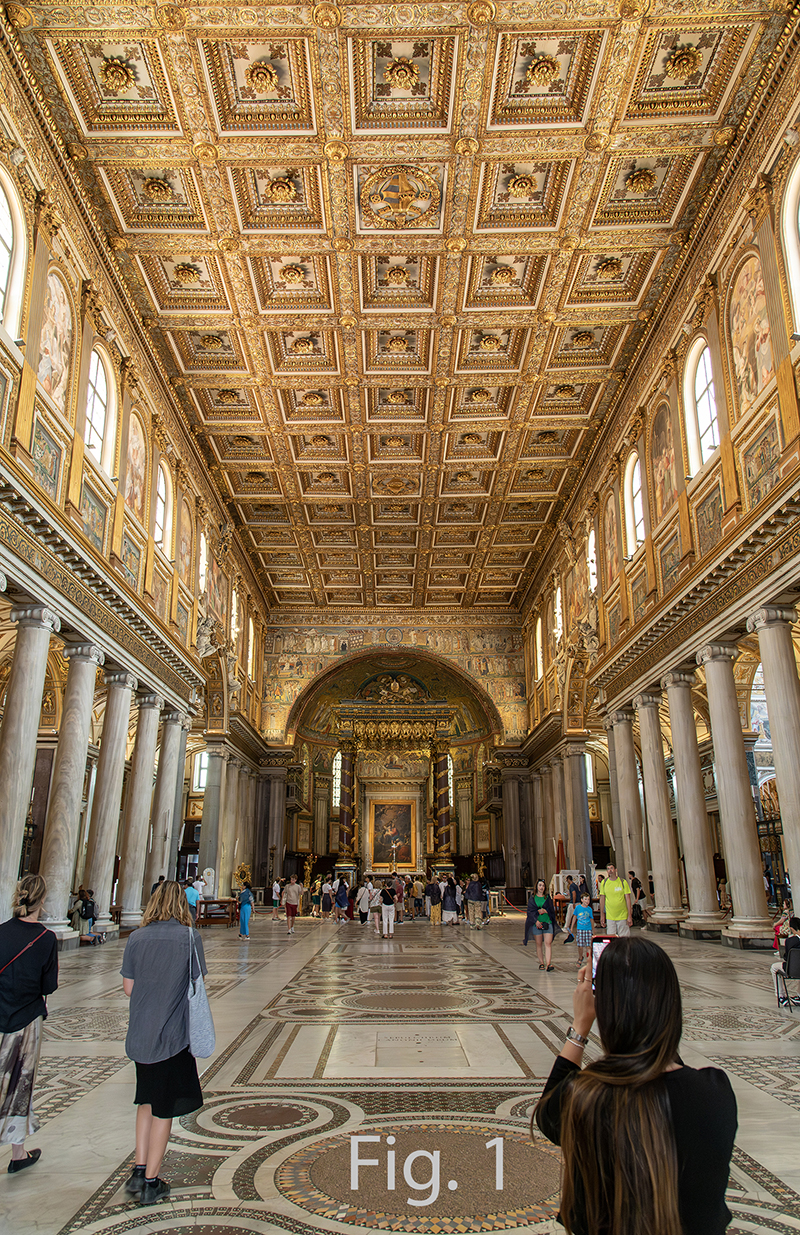
This classic model is well known in the longitudinal basilica and hall churches of history. During the Middle Ages this plan with various adaptations became an analogy for Christ crucified (his head the apse, transepts his arms and nave his body). A less static vision is seen in the photo of St. Paul Outside the Walls in Rome. Here, one enters the courts of Christ the true King who oversees his people in justice. The congregation must pass through a metaphorical triumphal arch, reflecting the victory over death won by the incarnation. It is no accident that the rondel of Christ the Pantocrator hovers over this arch, thus making all who pass through his victory a part of his body.
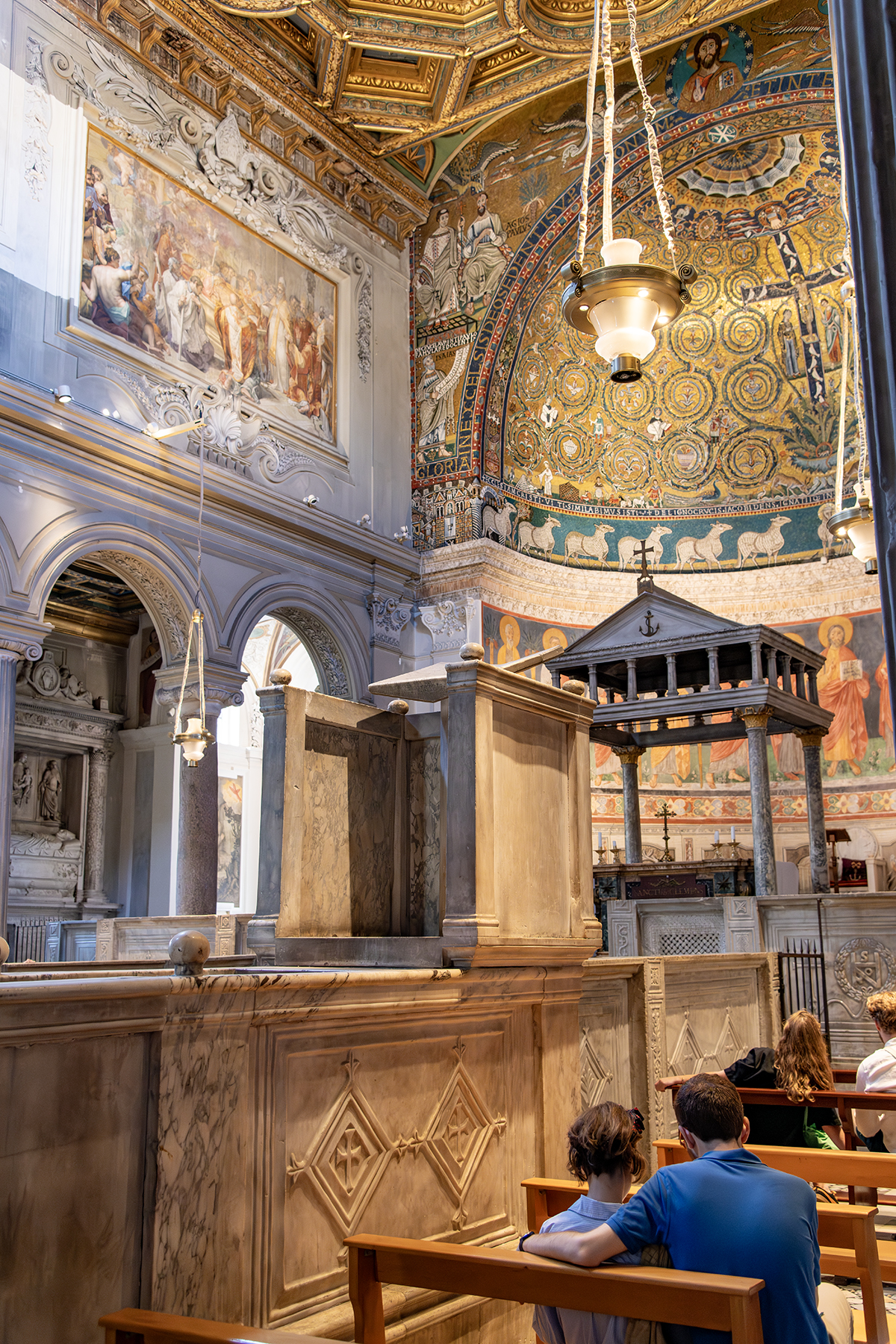
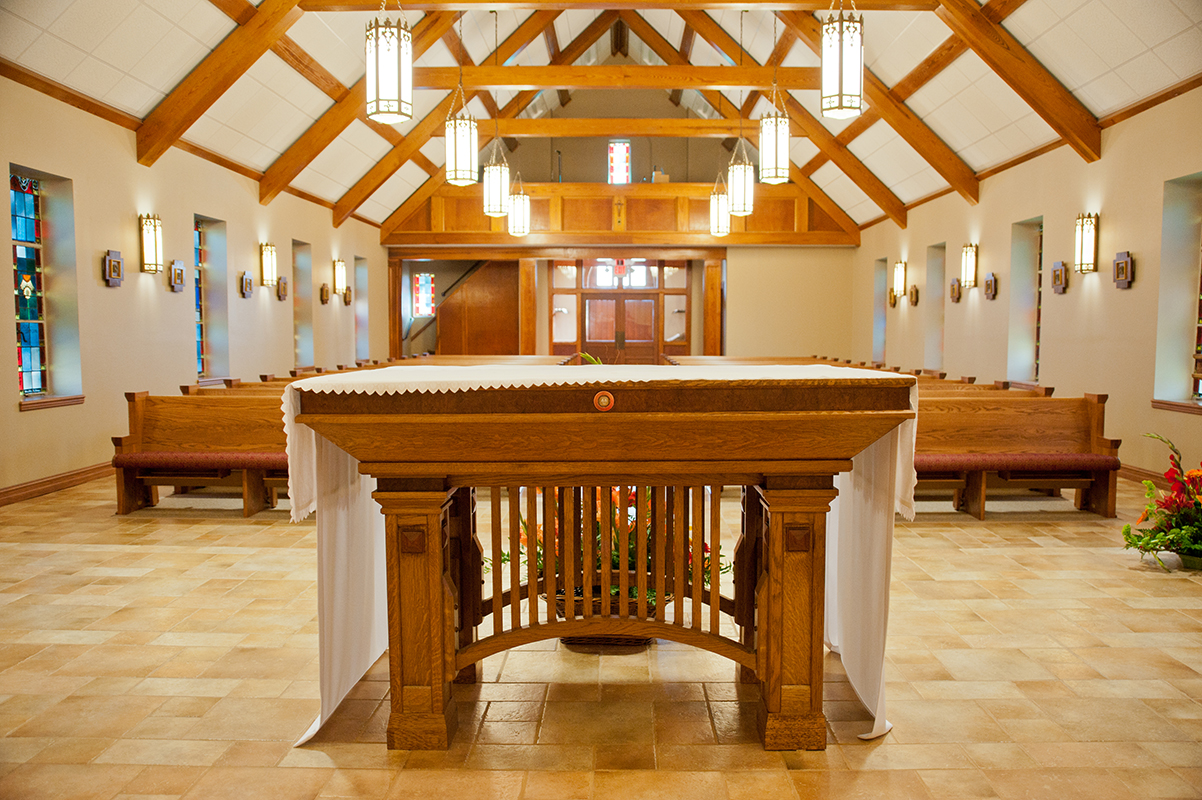
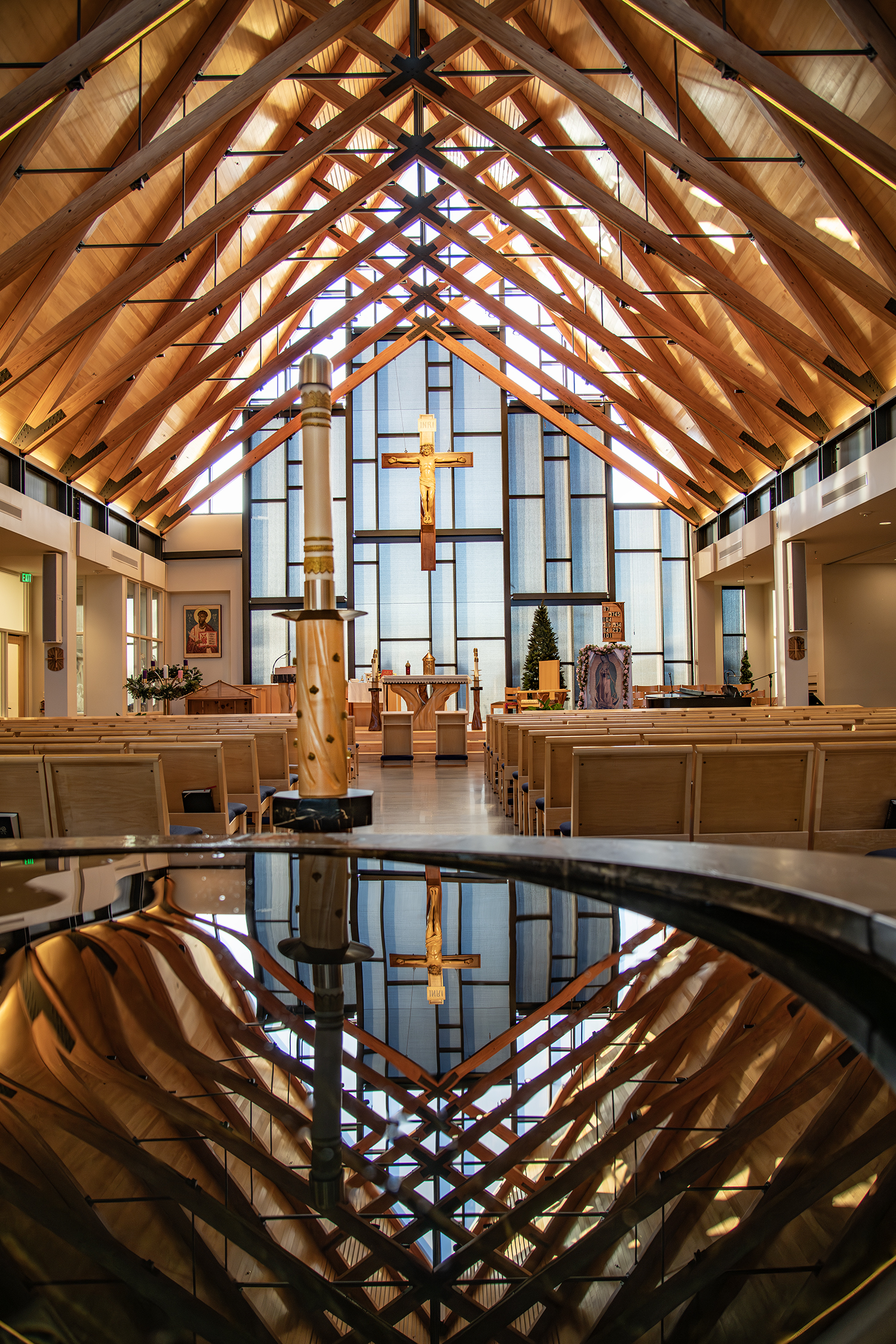
It is also important to recall that until after the Reformation, pews were not part of the longitudinal basilica design. The congregation were an organic body gathered near the chancel or before the choir. (9) Because of this, there was never the experience of regimentation which exists in modern longitudinal hall churches. One can still see this most ancient configuration in many European churches. Unfortunately, even older churches in North America suffer from the congestion and regimentation created by pews. This presents challenges of liturgical theology and practice in addition to contemporary custom and expectation. An effective Liturgical consultant and designer can find ways to reduce the unfortunate aspects of pews at the same time respecting contemporary inclinations.
.jpg)
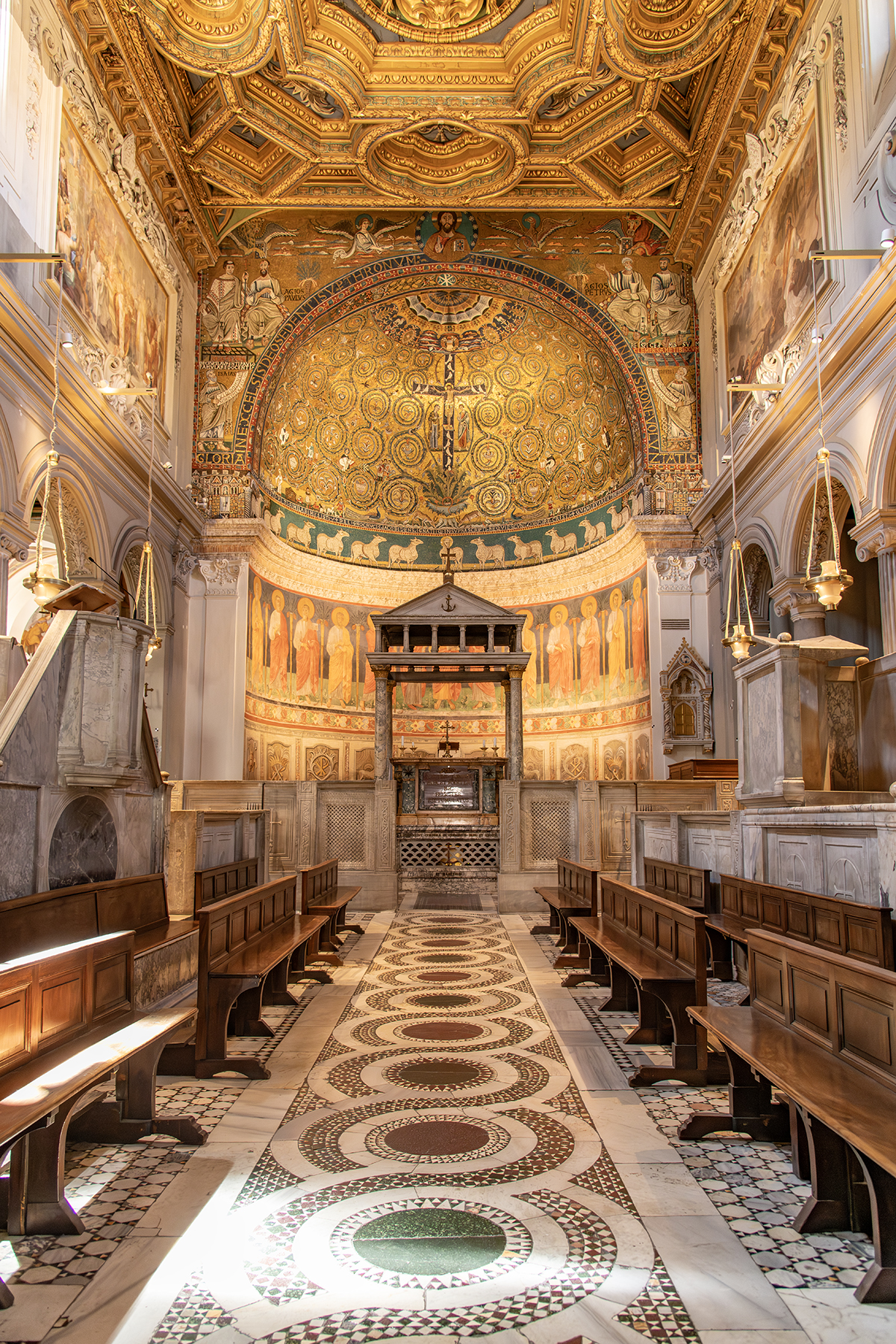
While the longitudinal hall church has many elements of liturgical value, it is not the final word in designing the church, nor in the meaning of the Liturgy. Schwarz’s next model brings us close to the liturgical telos. We will explore that plan in our next installment.
(1) Irgendwoher kommt und irgendwohin geht, einen Ursprung un ein Ziel hat, un auch, dass dieser Weg von Gott zu Gott fuehrt und darum ein heiliger Weg ist. Schwarz, pg. 78-9
(2) Aquinas, Thomas, Summa Theologiae
(3) Schwarz, pg 79
(4)Schwarz, Rudolf, “The Church Incarnate: The Sacred Function of Christian Architecture”, translation by Cynthia Harris, Henry Regnery Company, Chicago, 1958, pg. 120. This source will hereafter be identified as Schwarz/Harris.
(5)Schwarz/Harris, 121
(6)Schwarz/Harris, 122-3
(7)Schwarz/Harris, 132, etc. Schwarz’s commentary here is extensive and insightful, indeed it becomes mystical. Careful and reflective reading of the commentary will produce much fruitful insight.
(8)Schwarz/Harris, 132
(9)The Rood screen (Lettner in German) also served as the gathering place for the congregation, when they weren’t engaged in devotional activities until the consecration bell rang. This is a subject for another day.