A notable aspect of the Open Ring (previously discussed) is the theology of openness to the Divine. The Ring of God’s People is opened to a portal which looks to, and welcomes, a new and brilliant presence. Schwarz envisions that the priest can either face the open passage, thus becoming the agent of the People looking toward the portal to the Divine, or he could face the congregation. In this latter position, the priest becomes a ‘type’ of the messenger – a herald of the One who comes to dwell in the midst of His People.
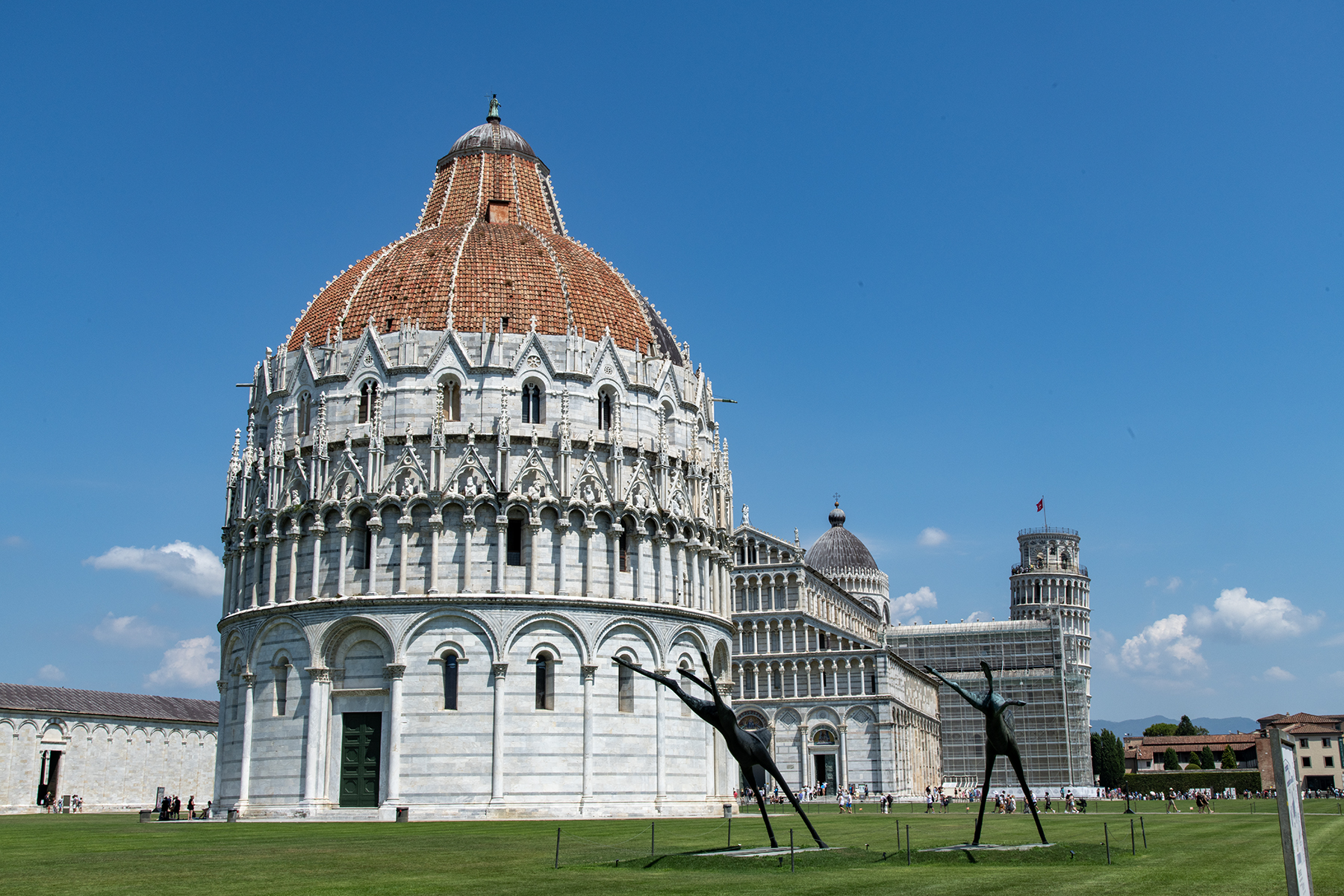
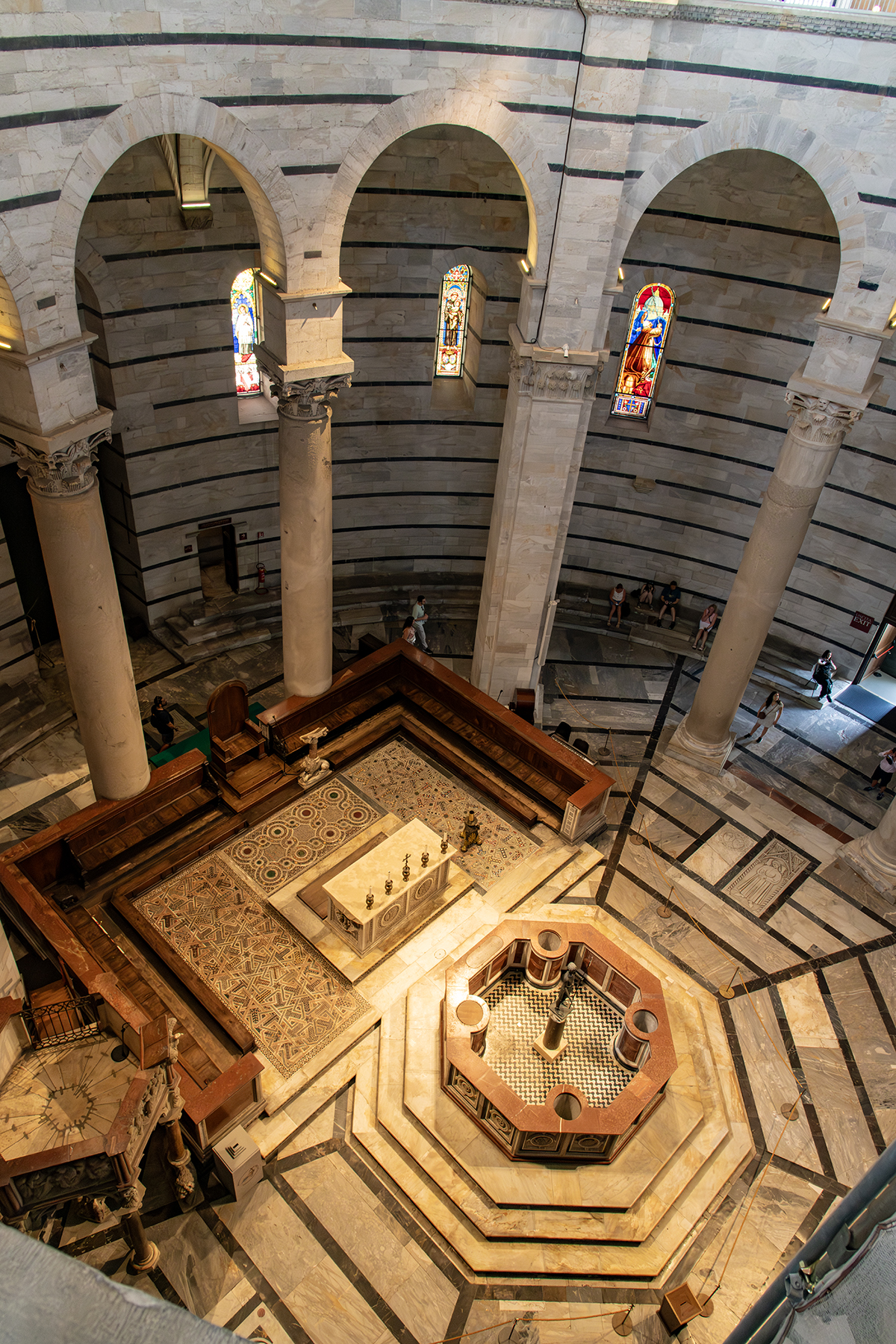
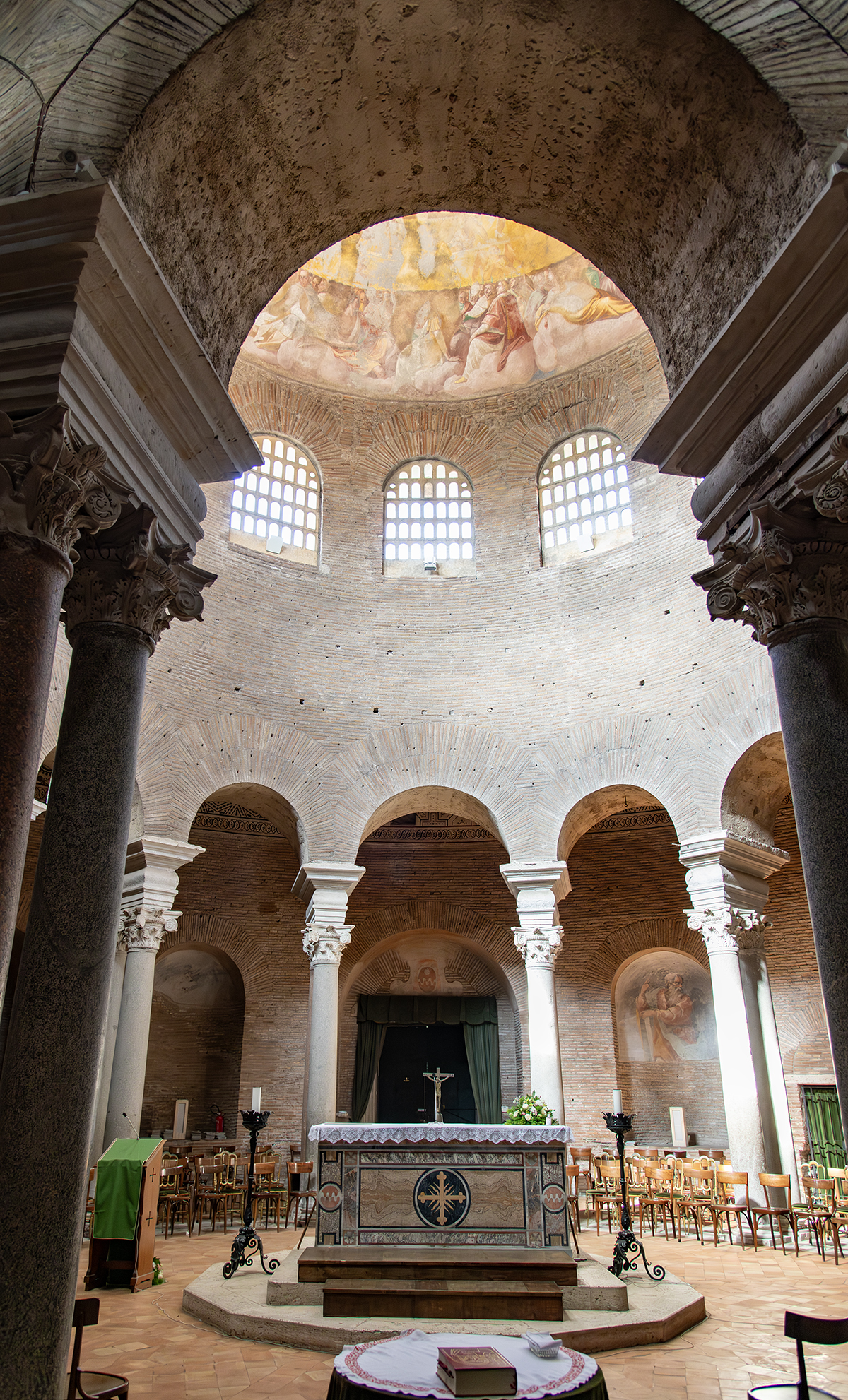
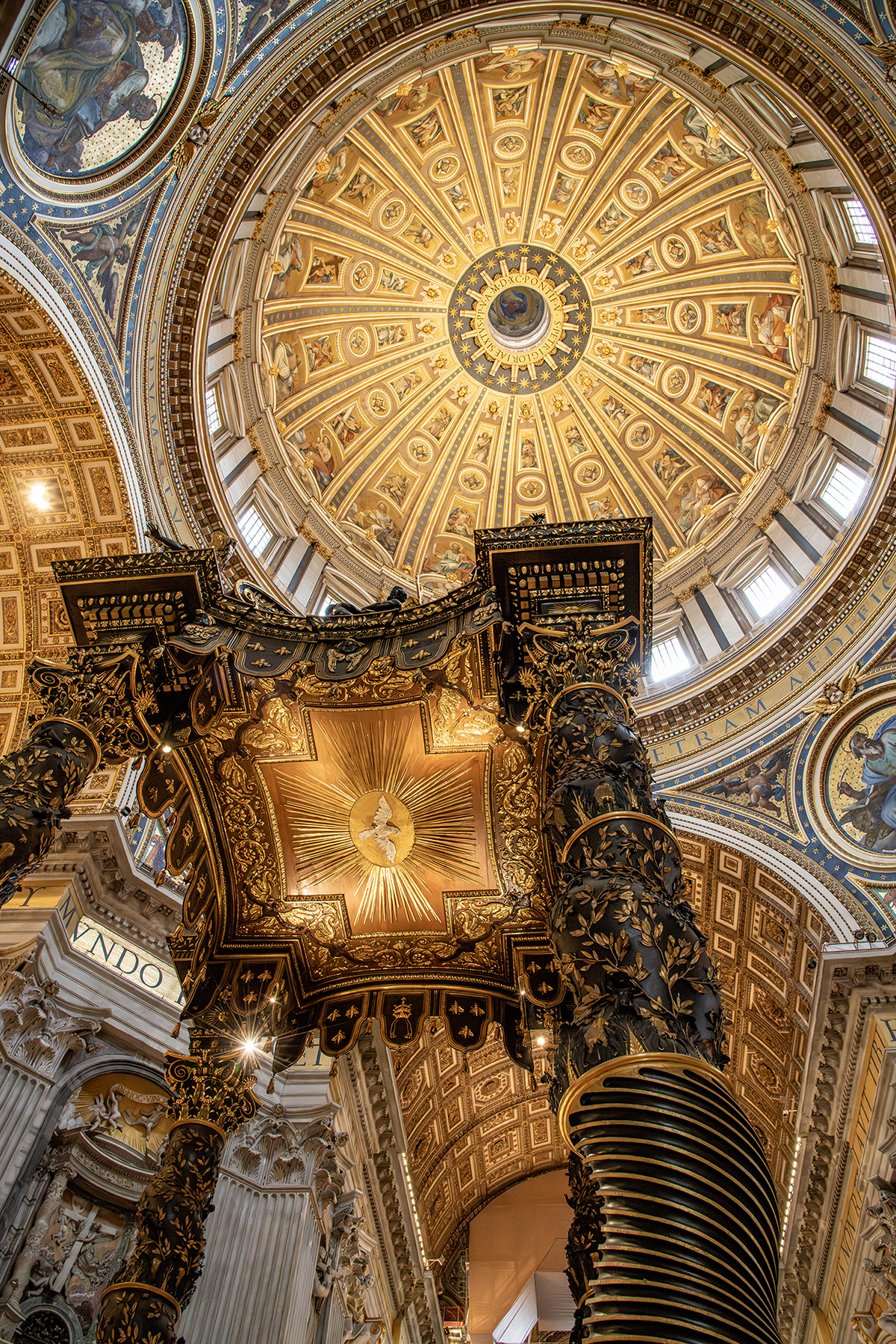
Schwarz describes his third model as a blending of the first (Holy Ring) and second (Open Ring). This is the Chalice of Light. Now, the world itself lies open to the light of Christ, which floods the space. From here the prayers of the intimate Ring (first model) “rise like incense” to the Father, whose divine light shines upon the People (second model). Schwarz sees here a link to ancient baptisteries (fig 1, 1b), with their domed ceilings and ocular light, itself a metaphor for the enlightenment received in Baptism. (1) More specifically, he refers to churches such as Santa Constanza (fig 2) and those basilicas, such as St. Peter’s in the Vatican, which are dominated by a dome over the crossing (fig 3).
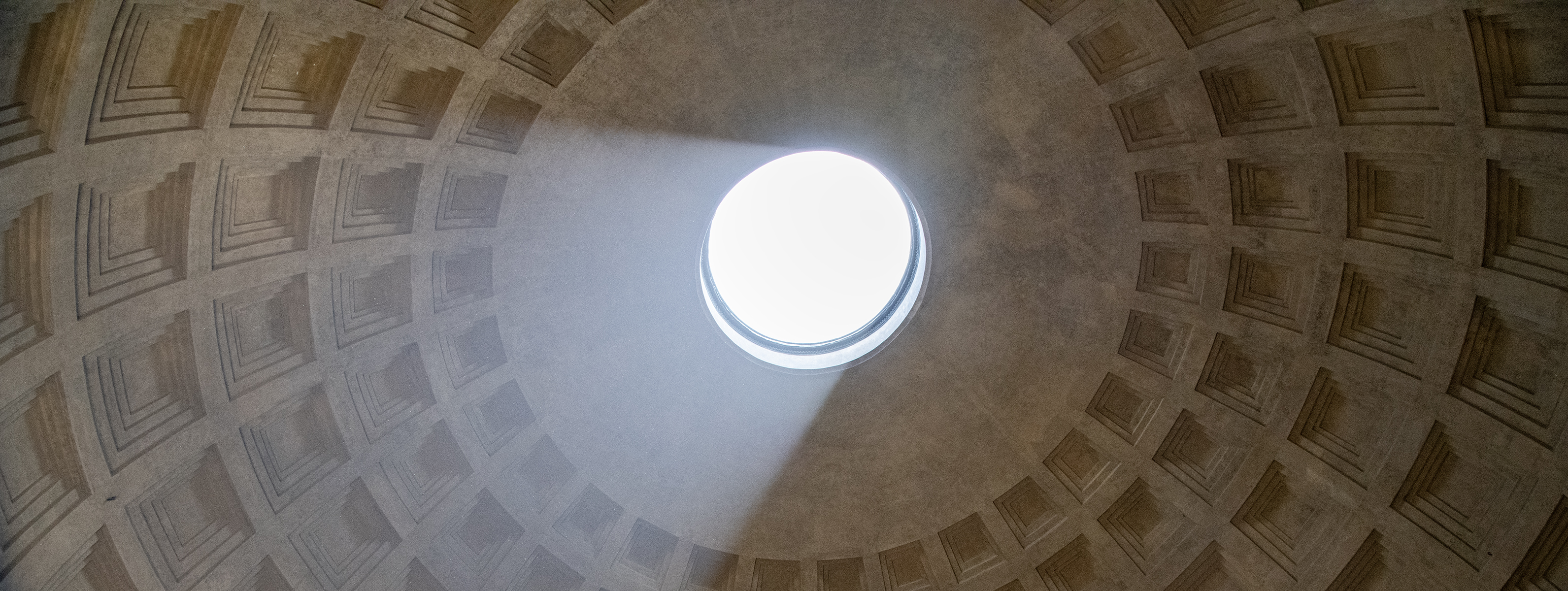
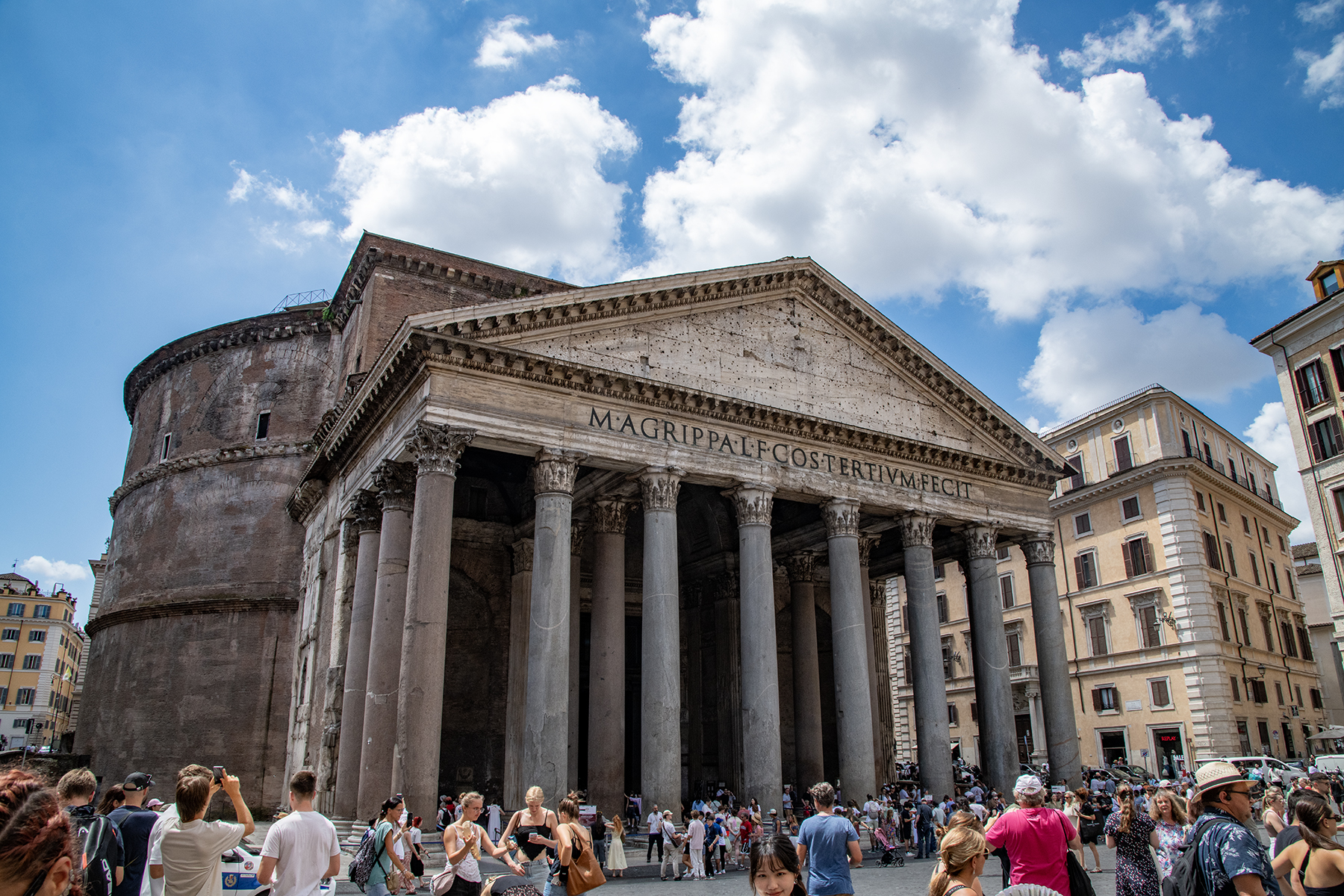
Of particular note is the Roman Pantheon (fig 4-6) which exemplifies this plan brilliantly. Although it was not converted to a church until the seventh century, and does not host a centrally located altar, the Pantheon’s massive oculus floods the space with light, illuminating during the day various altars honoring the saints. Hence, the symbolism of the Chalice of Light is reflected (no pun intended) through the Saints who have given their lives over to the Light of Christ.
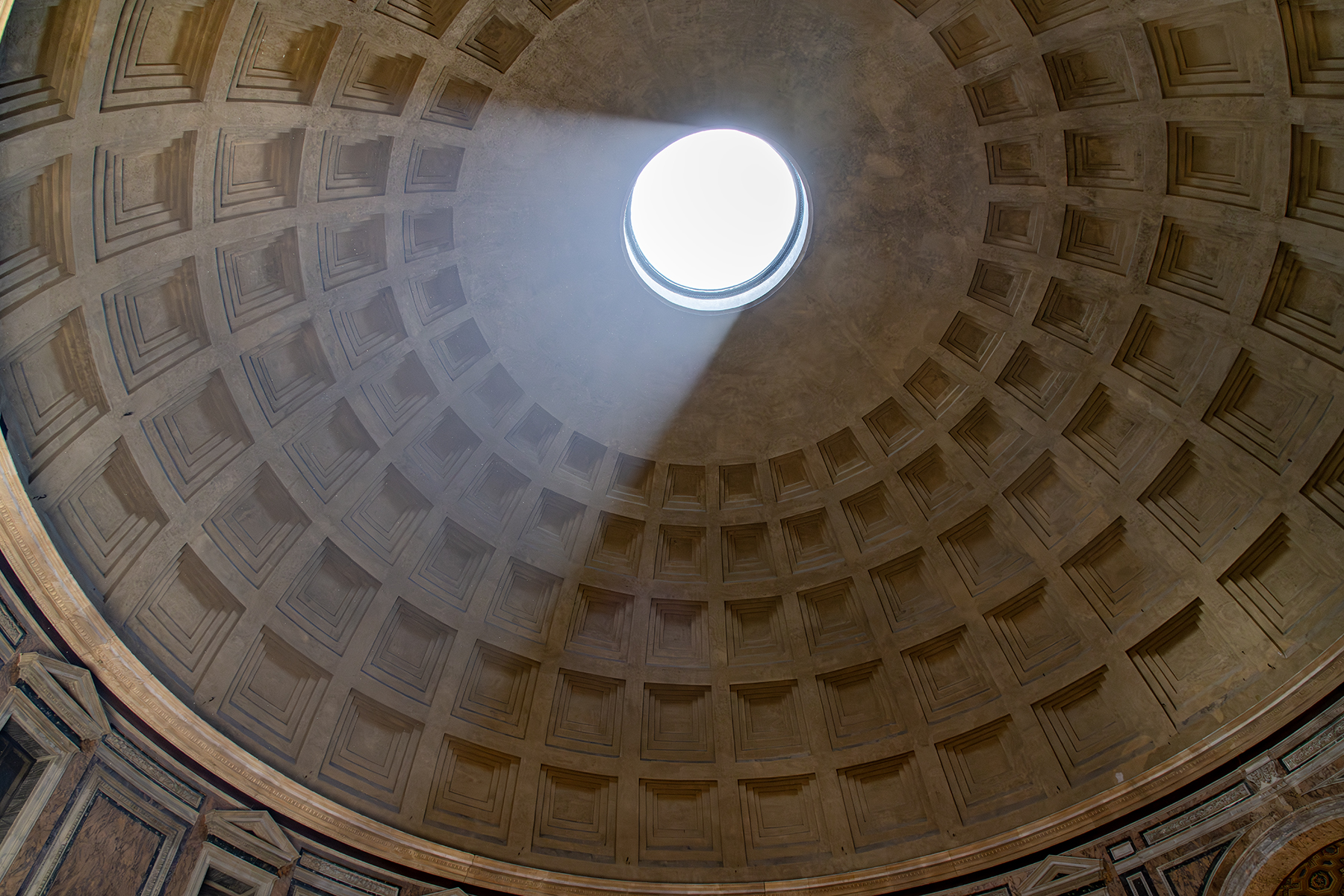
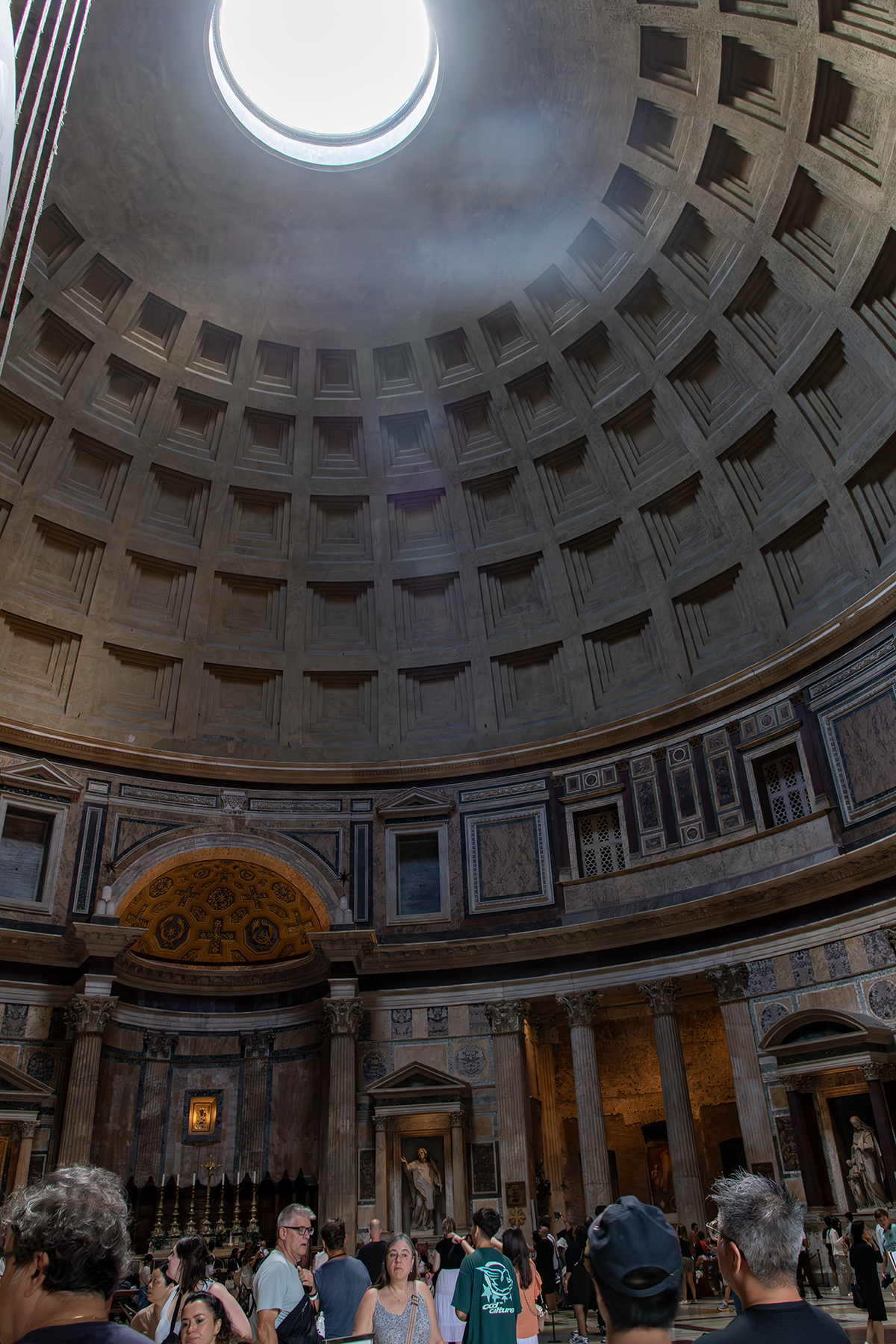
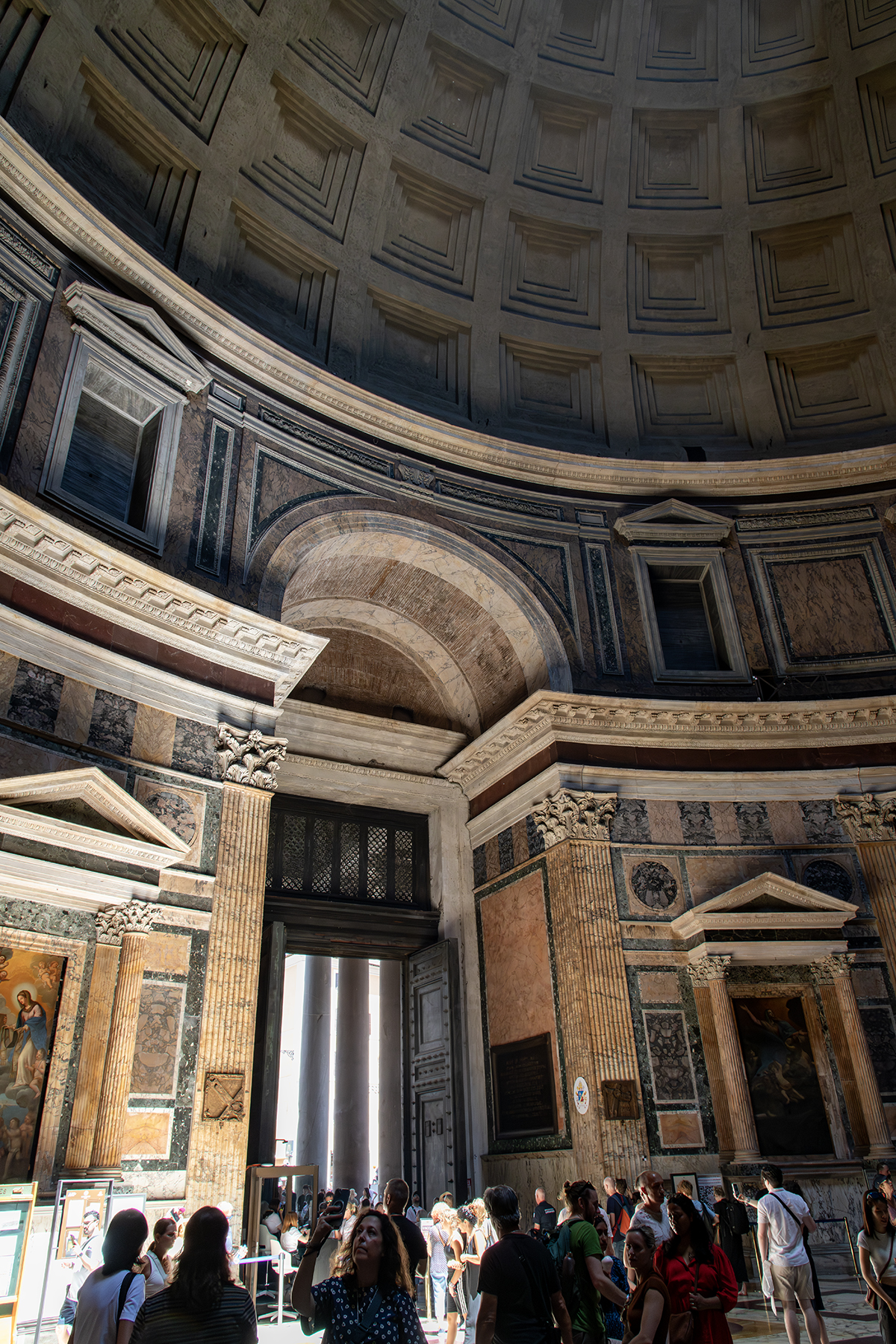
Such domed spaces feature prominently in the long architectural tradition of the Church, particularly in the East. In the Chalice of Light, Schwarz specifically sees the dome (and its related lantern or oculus) as an inverted cup which allows the divine light to flood the space. Hence, there is a sacramental theology of enlightenment which Schwarz directly connects with Baptism. Other aspects of liturgical celebration also reflect this concept of enlightenment, including the rites of the Easter Vigil. Additionally, the People, gathered in a ring around the altar (as in the first model) become also symbolic of all creation into which the Divine light and presence shines, immanently illuminating the world, light flowing out from the central altar through those gathered there in communion.
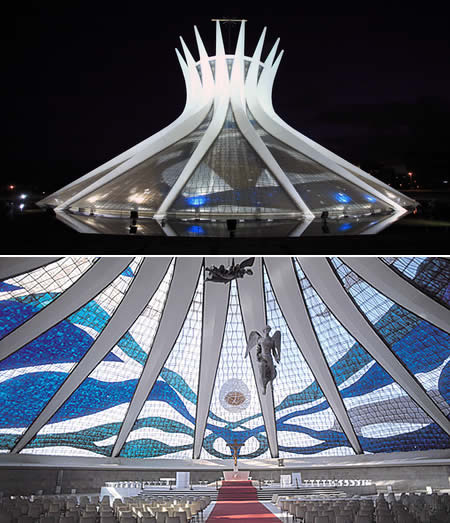
Among modern examples of the Chalice of Light, the circularly planned Cathedral of Brasilia is particularly noteworthy (fig 7-8). Designed by Brazilian architect Oscar Niemeyer and engineered by Brazilian structural engineer Joaquim Cardozo, was dedicated on May 31, 1970. This unique structure powerfully and dramatically allows light to flood the congregation (those illuminated by the light of Christ) at the same time its conical form and sweeping beams create a sense of divine/human interplay, further emphasized by the placement of the altar and suspended images of angels. Even in its architectural modernity, the Cathedral of Brasilia retains the ancient theology of illumination and imminent presence experienced in ancient spaces.
Schwarz’s next model, the Holy Journey (Heilige Fahrt), represents the dominant (and often misunderstood) architecture of Western Christianity. But that is a story for another day.
(1) Schwarz, Rudolf, Vom Bau der Kirche, Verlag Lambert Schneider, Heidelberg, 1947. Pg 65, and following. Schwarz’s commentary is extensive and insightful.