

Architect Ben Heimsath encouraged the building committee to consider a grand entryway which included a set of carved doors. The committee generated a series of biblical subjects which have traditionally been seen as a revelation of the Divine Trinity.
George R. Hoelzeman, OblSB, KHS, MTS applied his knowledge of theology, liturgy, and symbolism to create a systematic theme and meaning to the project.
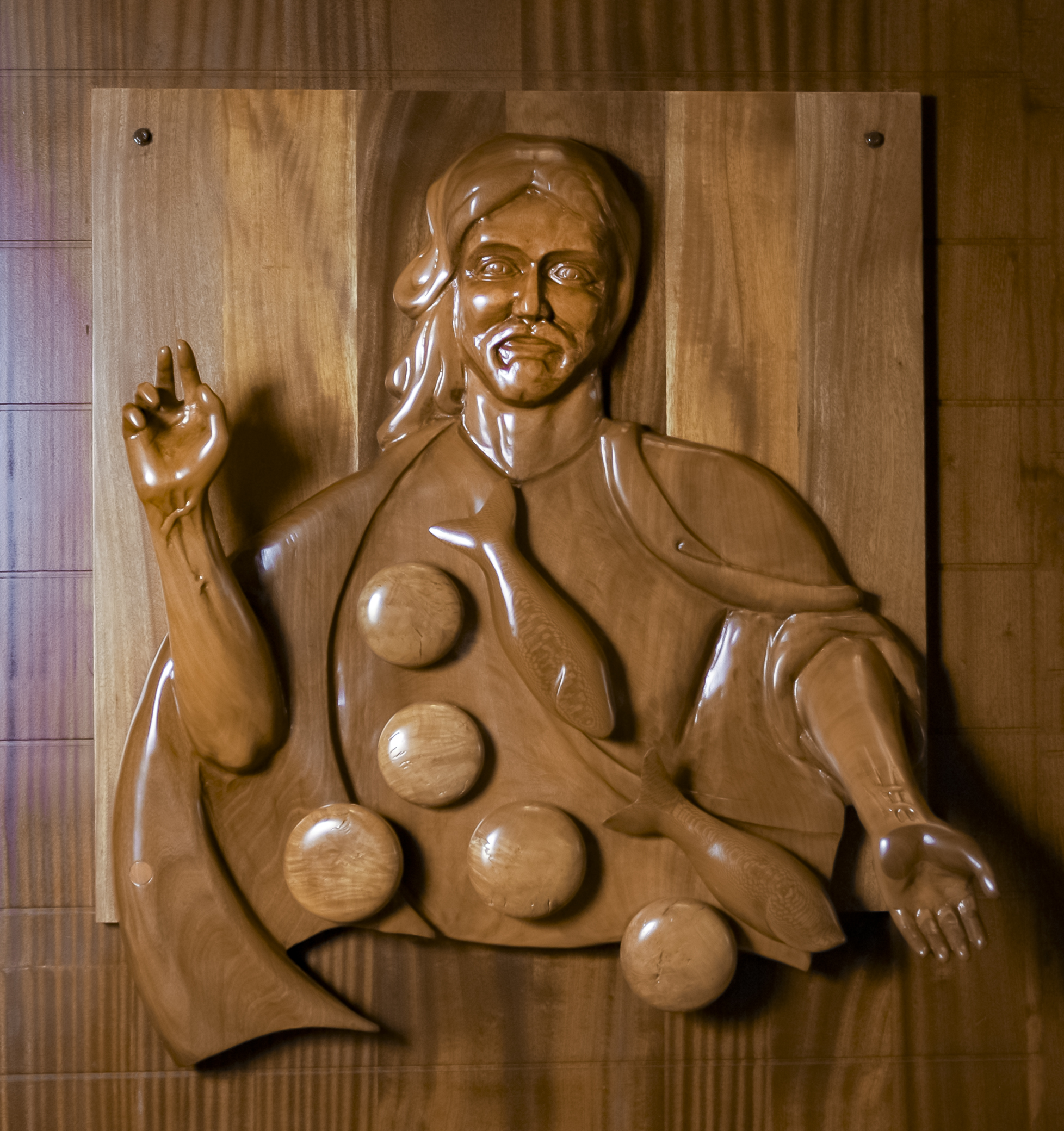
As one approaches the entry the doors recall biblical scenes of hospitality and welcome (Left) and the revelation of God throughout salvation history (Right). These panels are 'read' from bottom to top, reminding the one who encounters them that the Church is a welcoming community and that God is revealed within this place.
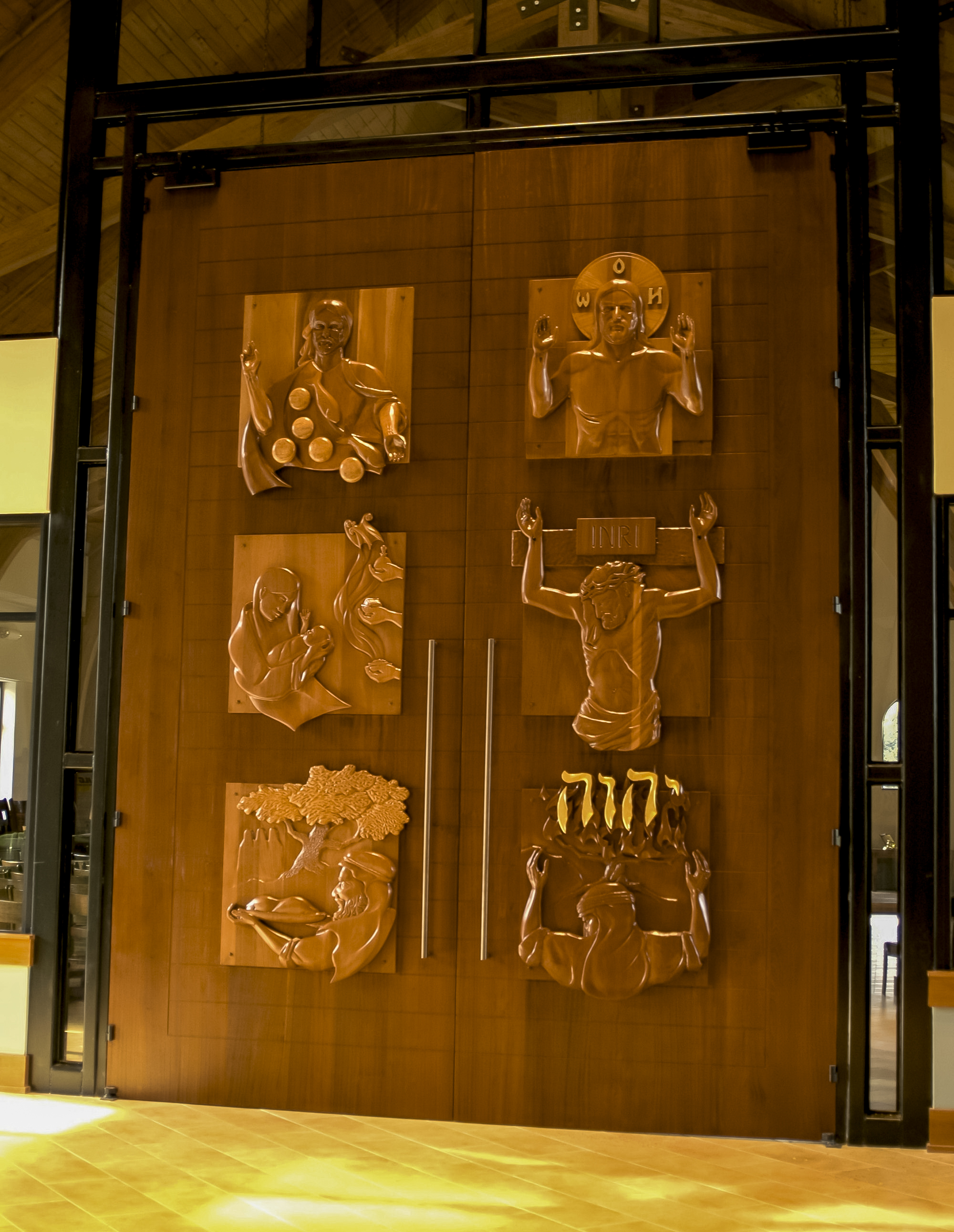
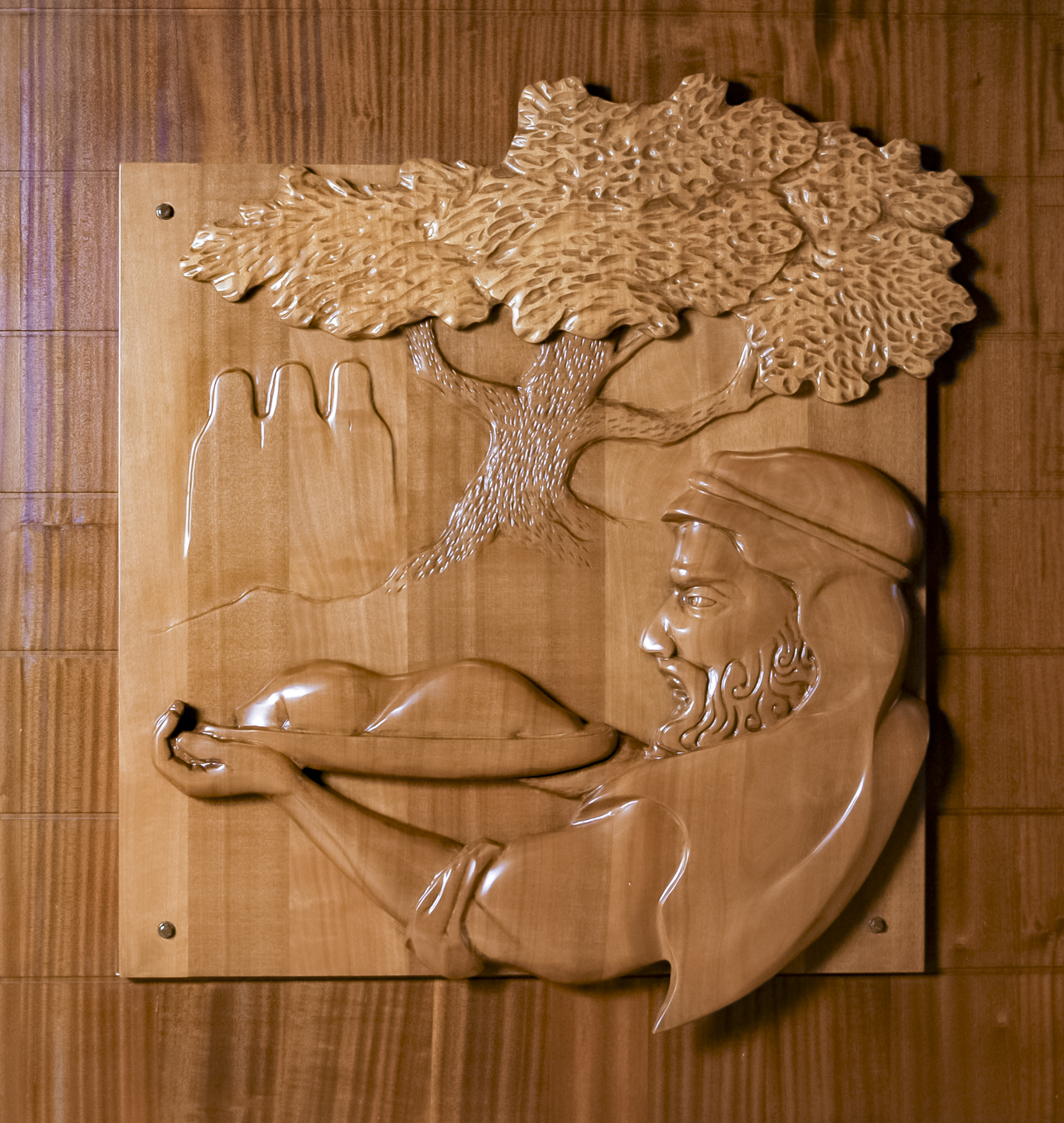
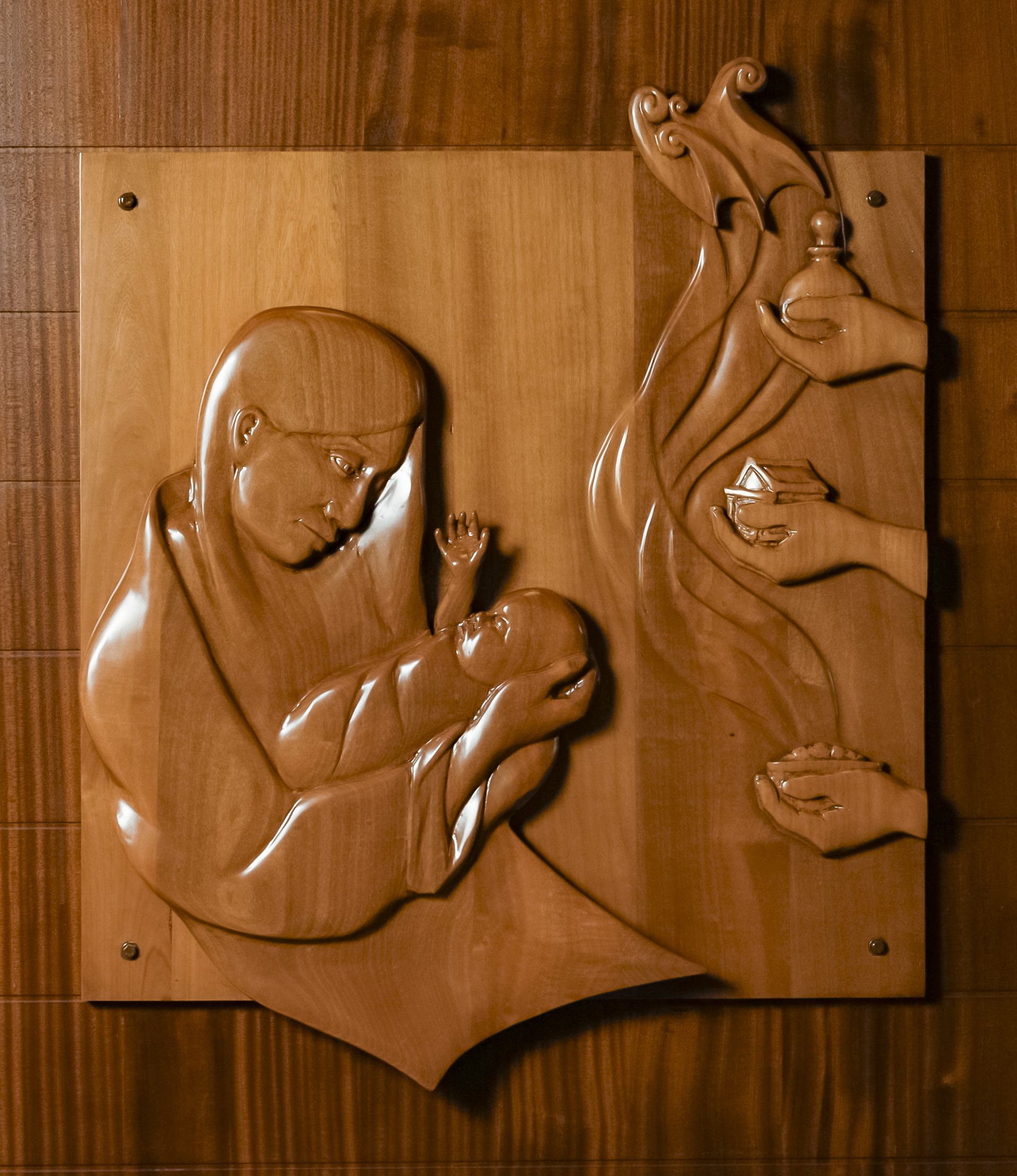
The panels form a sequence from bottom to top.
Abraham welcomes the three visitors under the oak of Mamre, the three Magi welcome the Christ at the Nativity, and Christ Himself feeds the multitude with the loaves and fishes.
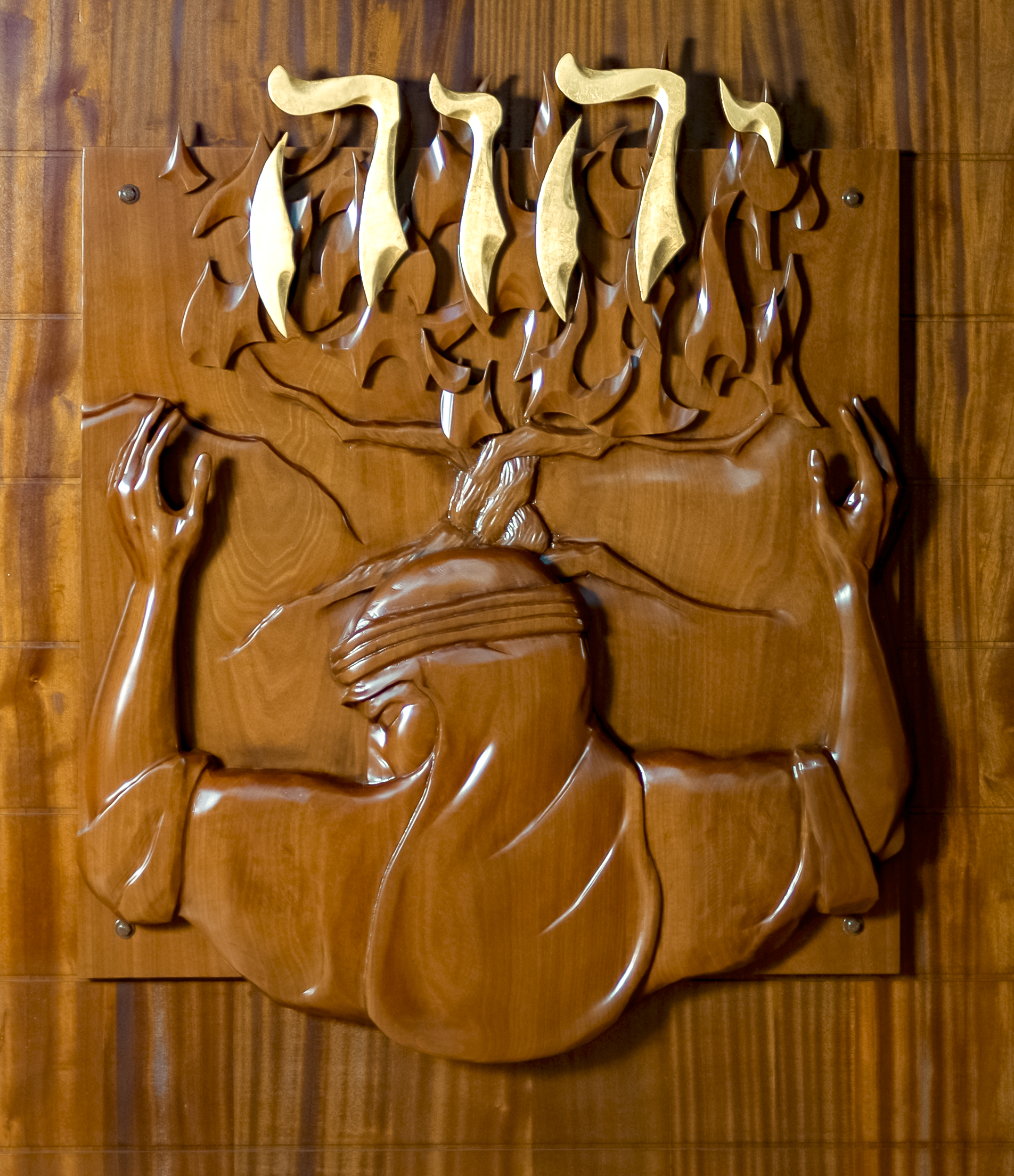
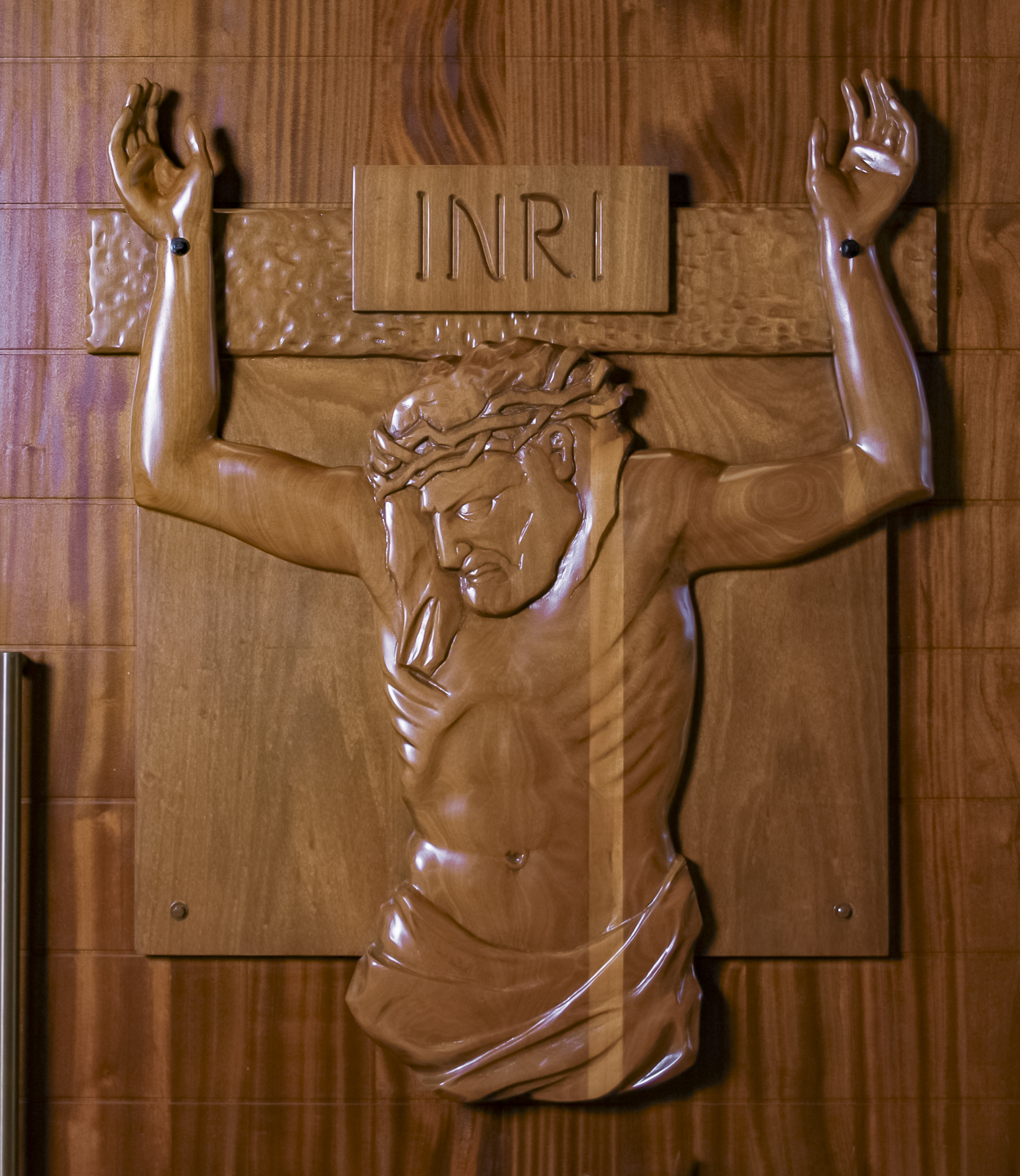
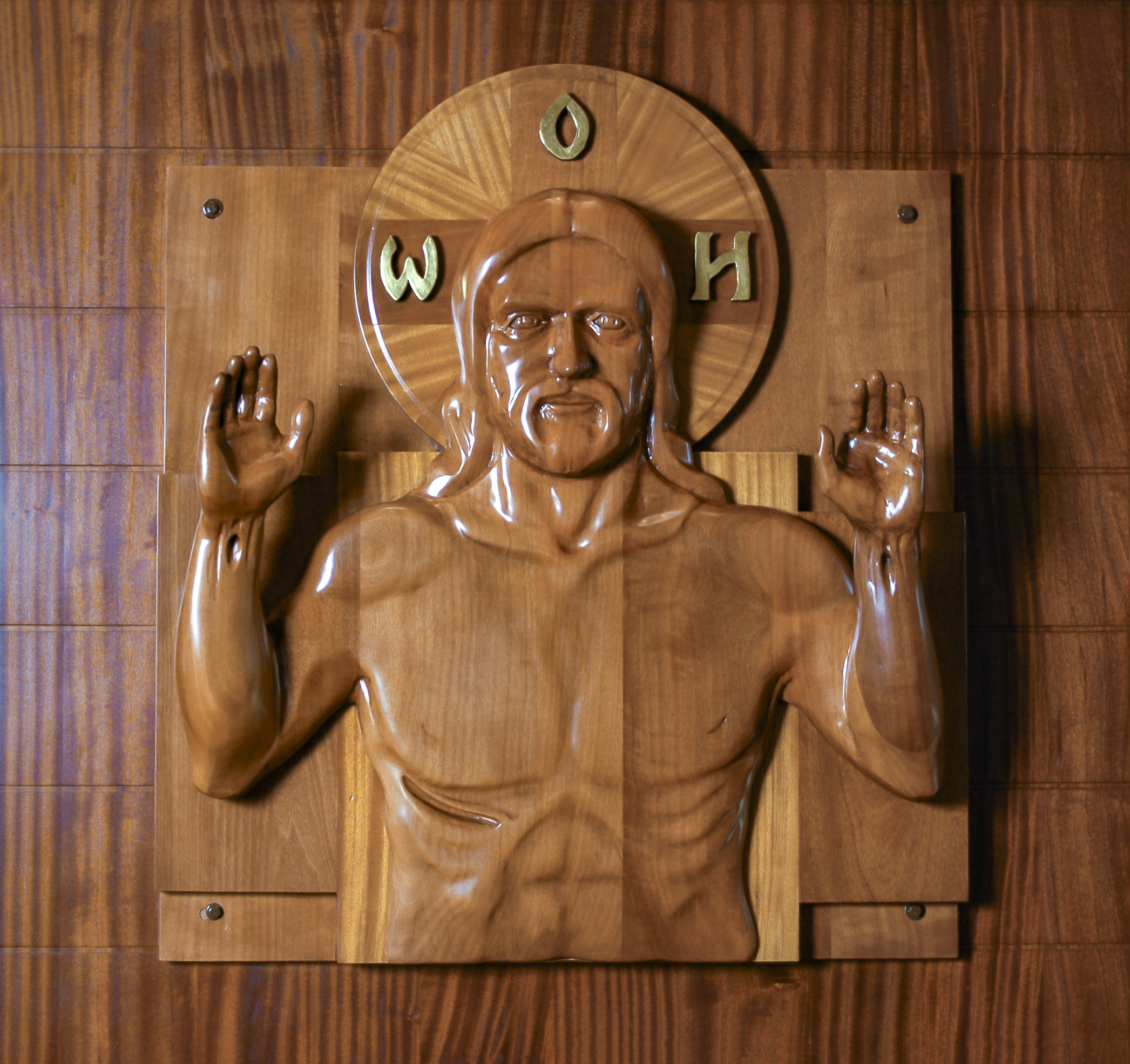
The successive revelation of God is encountered on the right door. Here the burning bush reveals the Divine Name to Moses and gives him the mission to free the Hebrews from slavery. Christ in turn sacrifices Himself on the tree of the Cross to free humanity from slavery to sin and death. Ultimately, at the parousia Christ the ruler of all welcomes the faithful into the realm of eternity "where every tear shall be wiped away."
Hebrew, Latin and Greek inscriptions announce the sucessive manifestations of God's saving work.
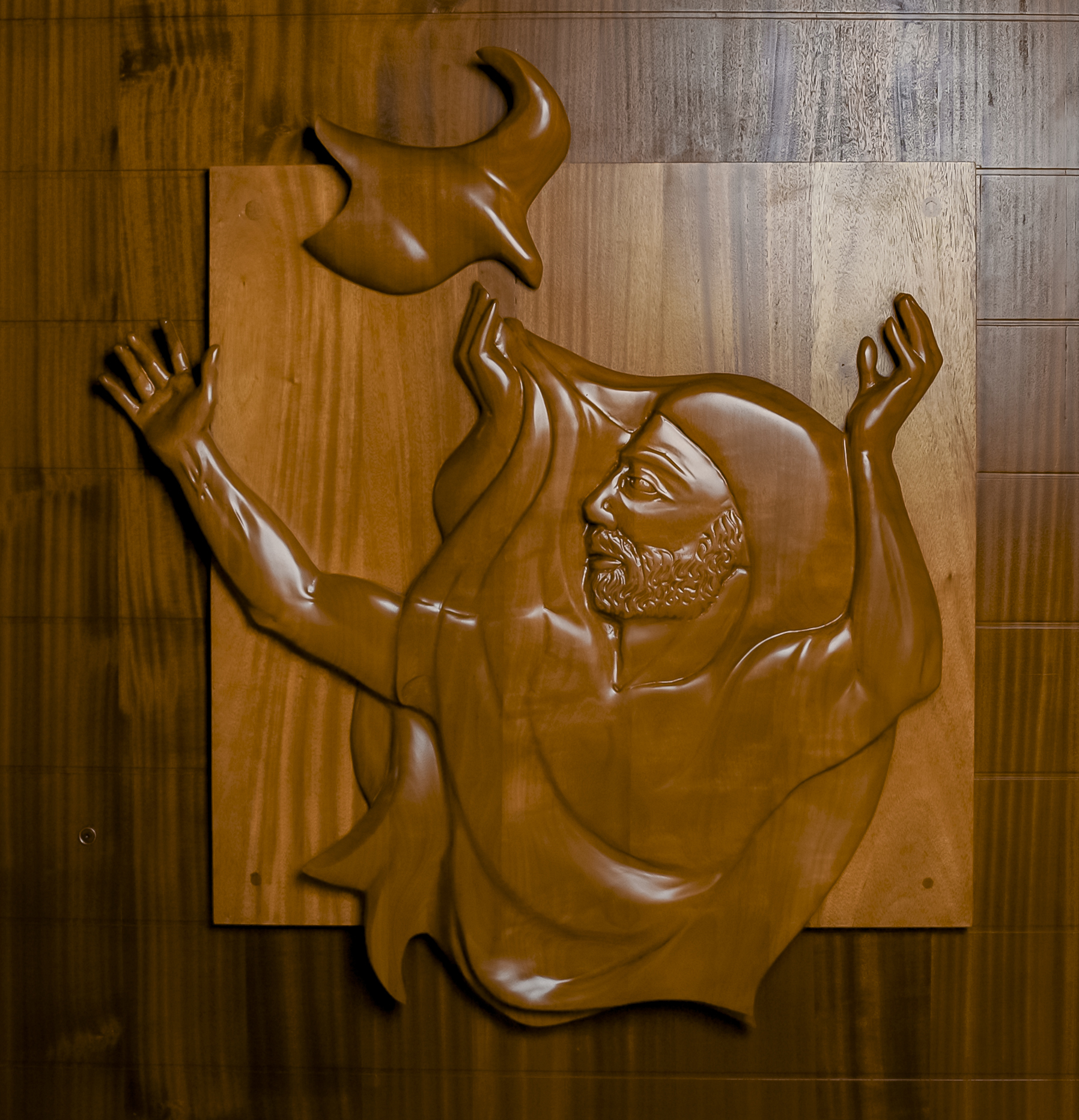
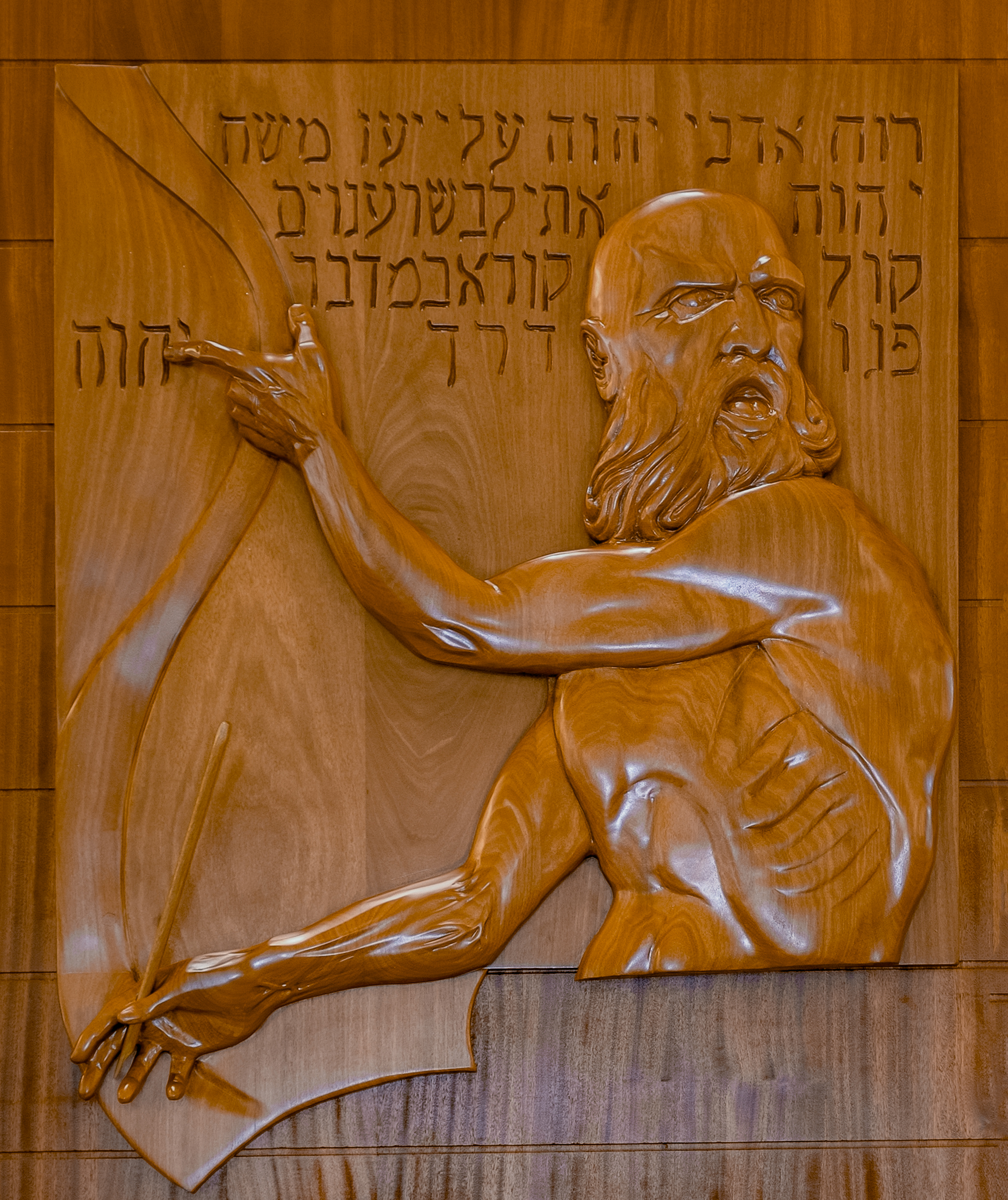
As the Congregation is sent forth they encounter a different set of symbolic panels. On the left the subject is Creation and the promise of the Redeemer. This is the only series which reads from top to bottom. On the right, the sacraments of initiation are presented as reminders that the People of God, renewed through Baptism, the Eucharist and the Holy Spirit are now collaborators in the work of restoring all things in Christ.
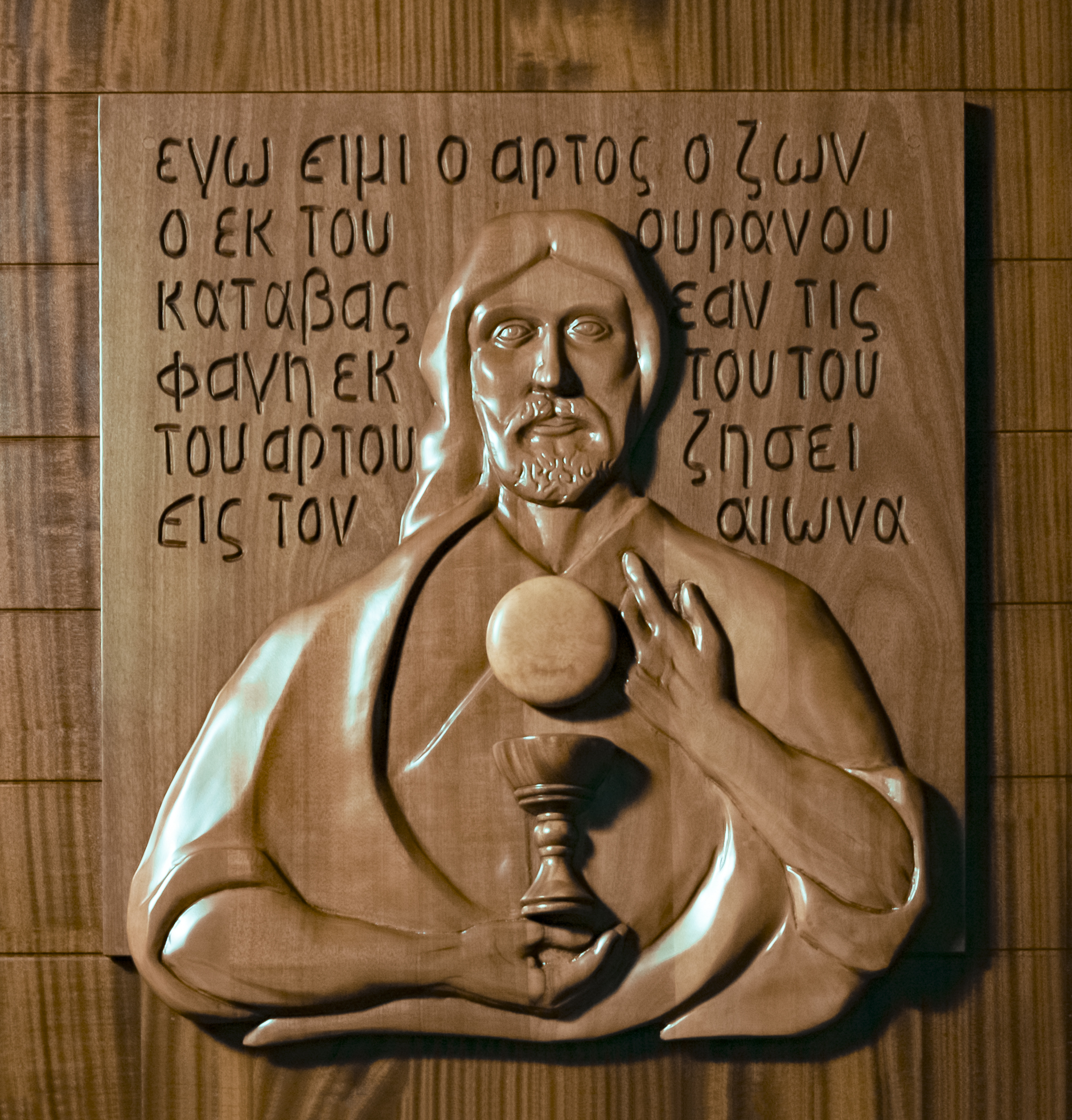
The Holy Spirit's action in Divine creation is repeated in the creation of the Church at Pentecost, while the Prophet announcing the redeemer in Hebrew is fulfilled in the Greek words from John 6 ("I am the Bread of Life). Just as the coming of the Messiah is announced by the angel at the Annunciation, so too does Jesus' public ministry begin at his baptism in the Jordan.
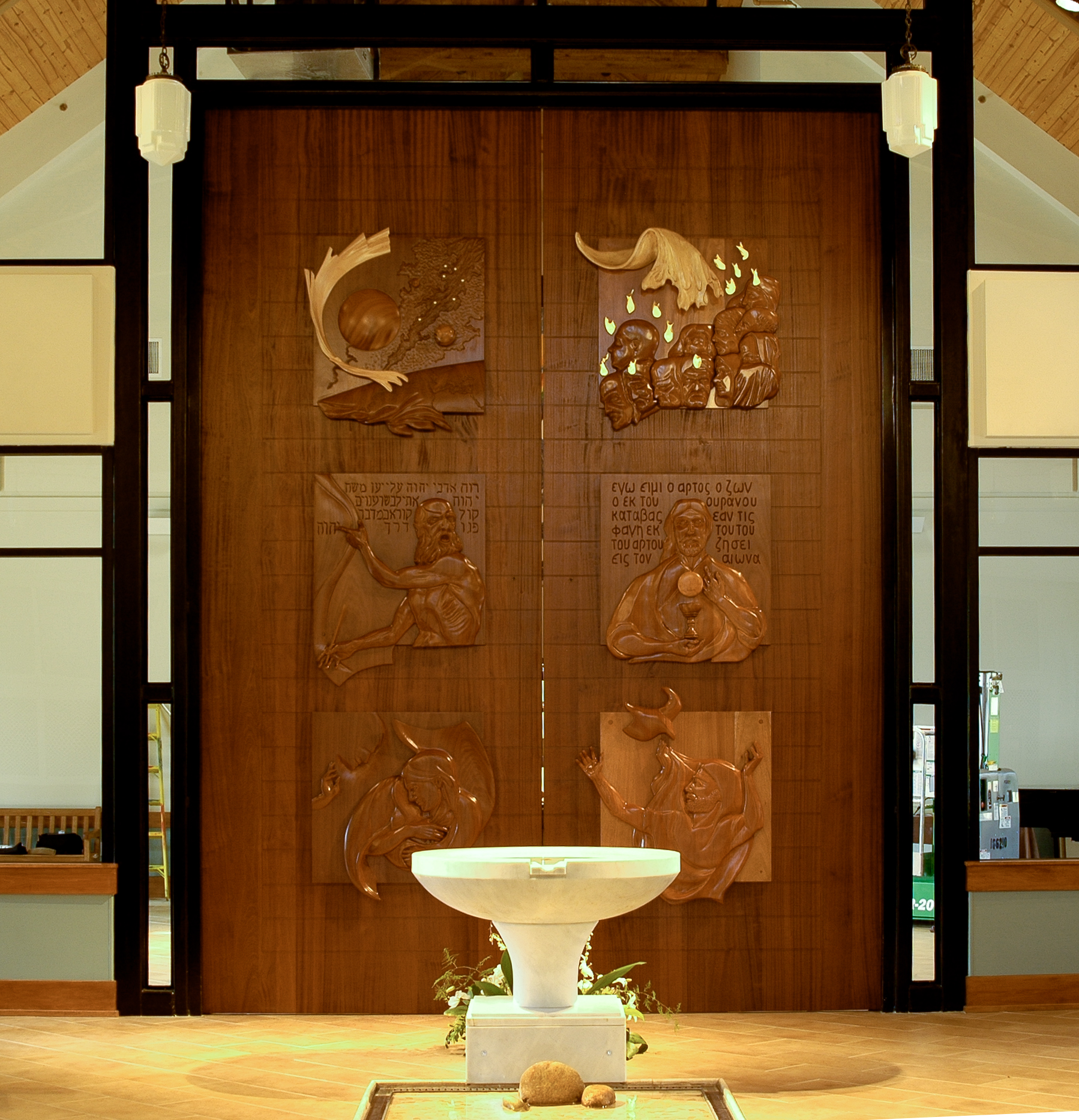
By the breath of God (Spirit) all creation comes into being. The stars of the Pleides and Orion, mentioned in the Book of Amos, brighten the galaxy and the planets. Earth and all life (the Earth is shaped like a whale) come into being and are good. The donor for this panels wanted it to be a memorial to her son who was an astrophysicist with NASA.
The Prophet proclaims the promised Messiah with an inscription from Isaiah "The Spirit of the Lord is upon me . . ." The Divine Name appears three times in the passage presented.
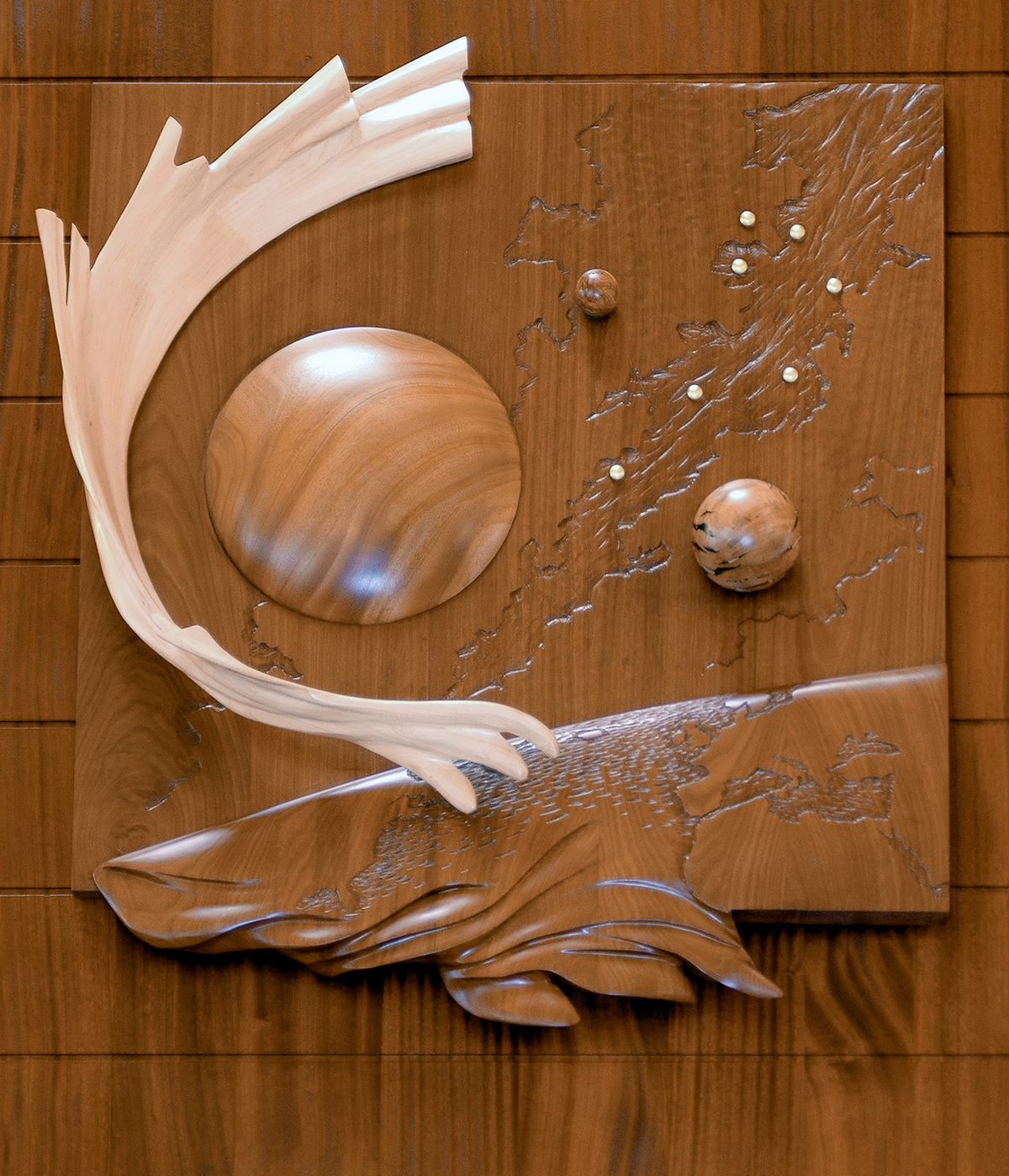
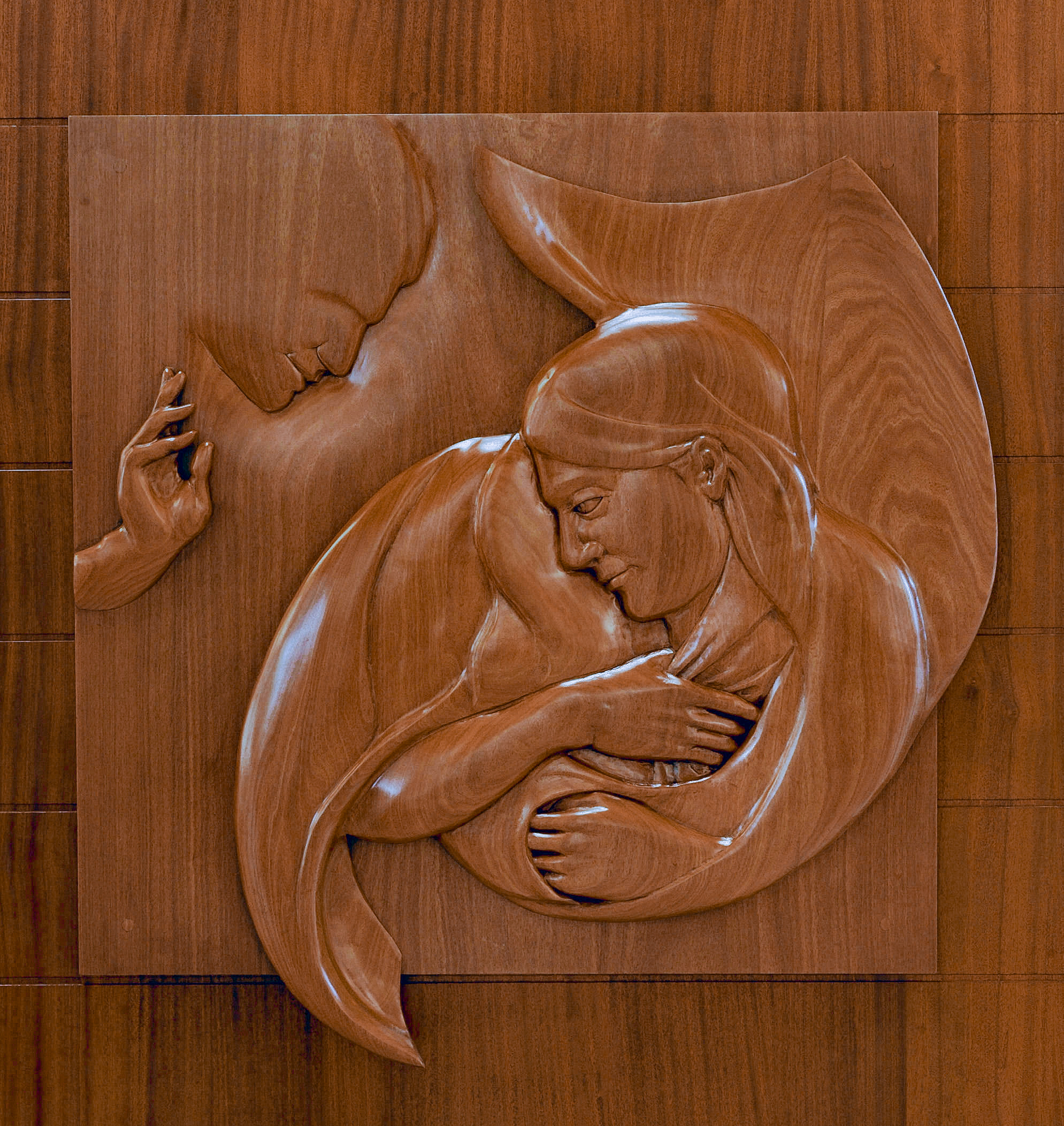
At the Annunciation the promised Messiah becomes incarnate.
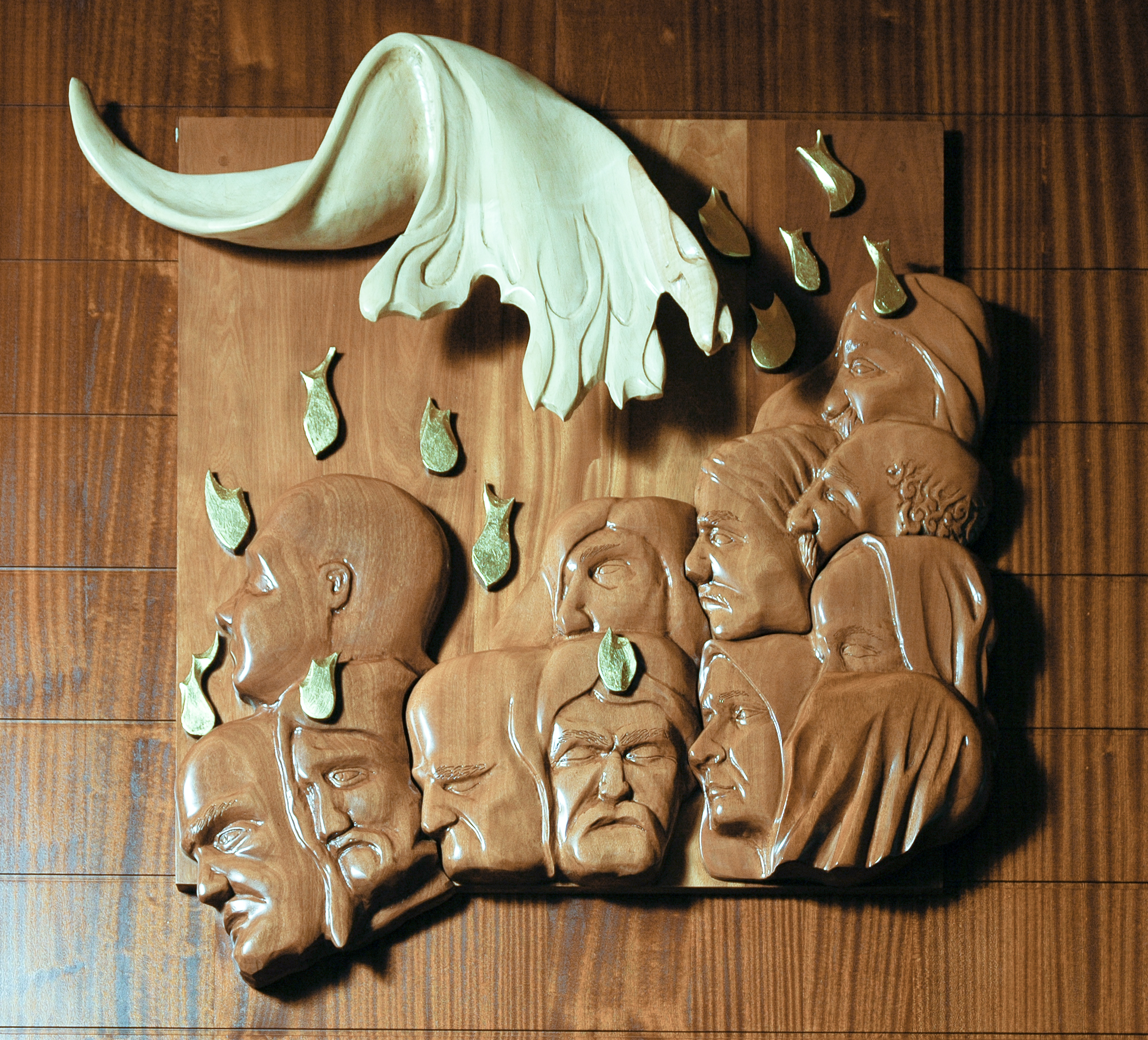
To the right the Sacraments of Initiation remind the congregation of their baptismal dignity, their new Life in Christ, and their mission to renew the face of the earth. We return here to reading the panels from bottom to top.
The Baptism of Christ is intentionally visually close to the font. Above it Christ at the Last Supper reveals Himself as the Bread of Life, of which He spoke in John 6:52, which scripture is inscribed in Greek. Ultimately, all things are renewed in Christ through the Spirit of Pentecost