

Consultant Fr. Philip Horrigan of the Archdiocese of Chicago guided the new construction process for St. Katherine Drexel. George R. Hoelzeman was one of several liturgical artists who were selected to create works for the space.
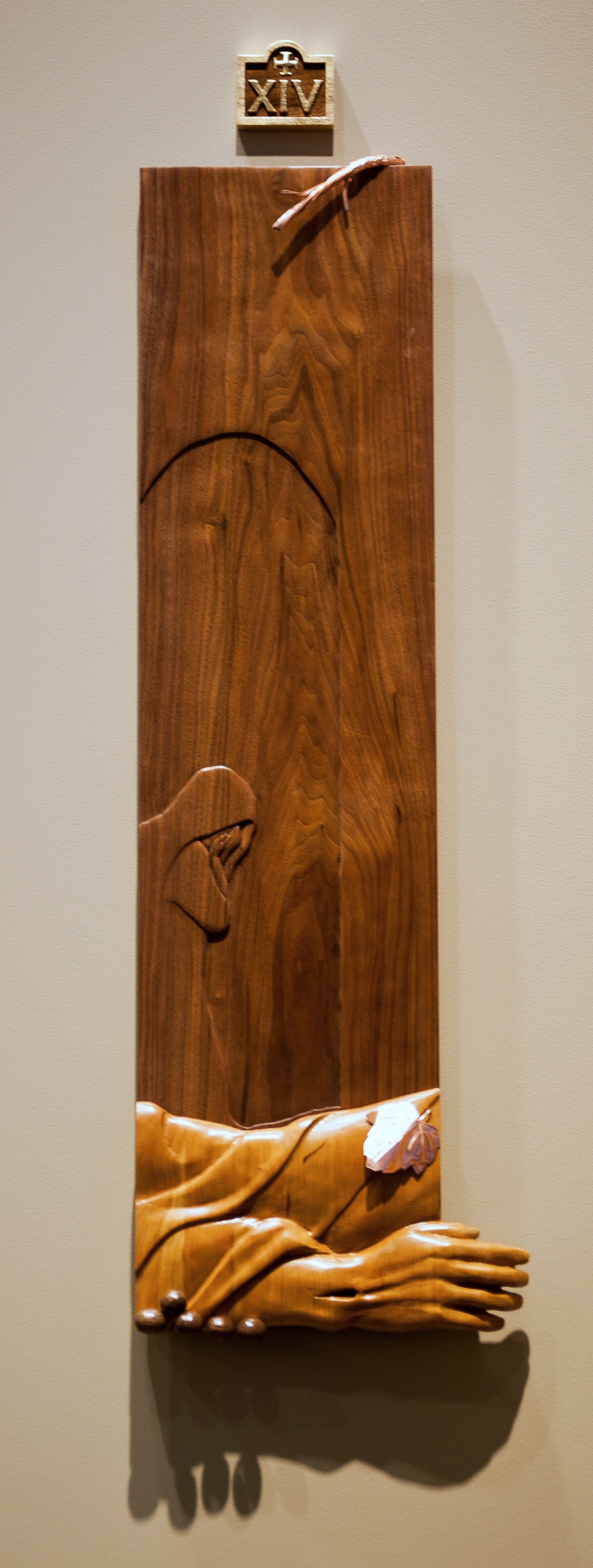
The goal was to create a set of Stations that were both traditional in theme and contemporary in expression without becoming excessively abstract.
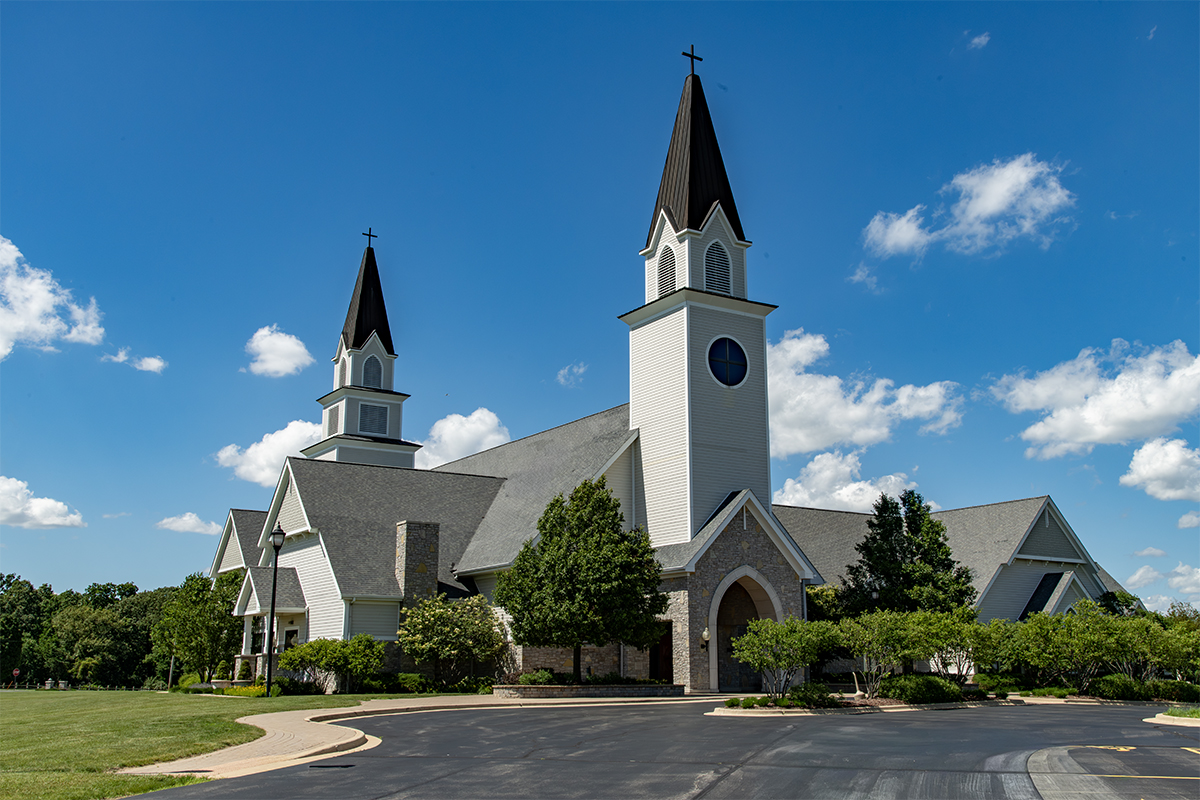
The church itself is a post-modern neo-gothic structure in a rural setting. The open nave was filled with natural light from tall gothic style windows. Because the Stations were to be installed between these windows and several relatively narrow walls, they were designed to emphasise the vertical aspects of the architecture.
The images focus on elements of significance rather than presenting a narrative of the entire scene, This invites the one following the Way to slow down and spend time contemplating the image and reflecting on its meaning.
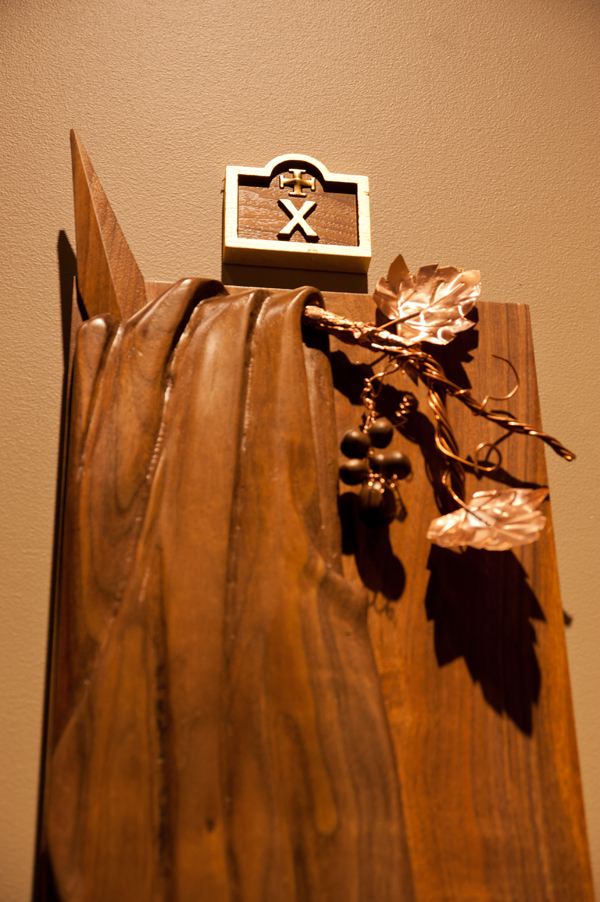
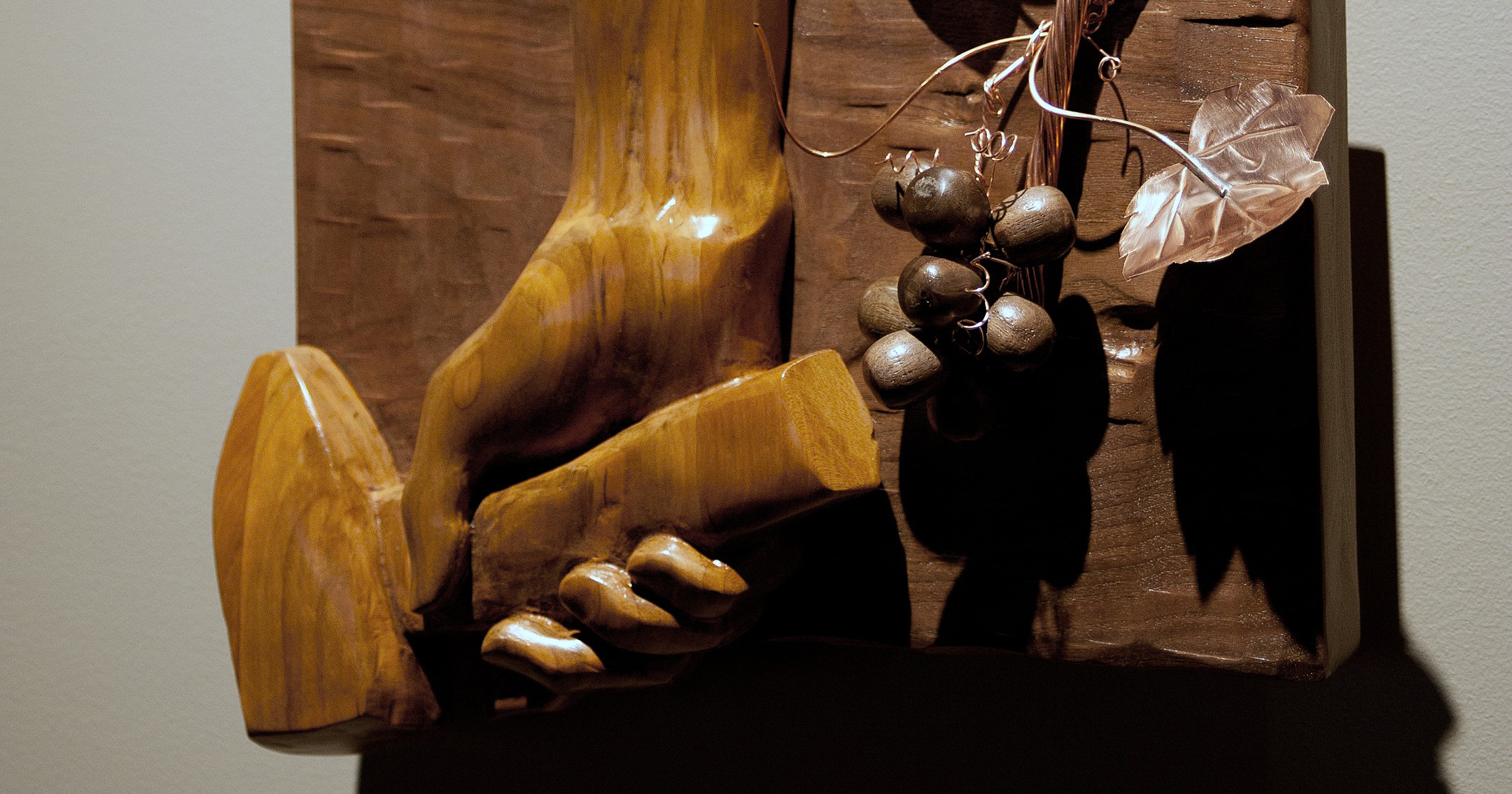
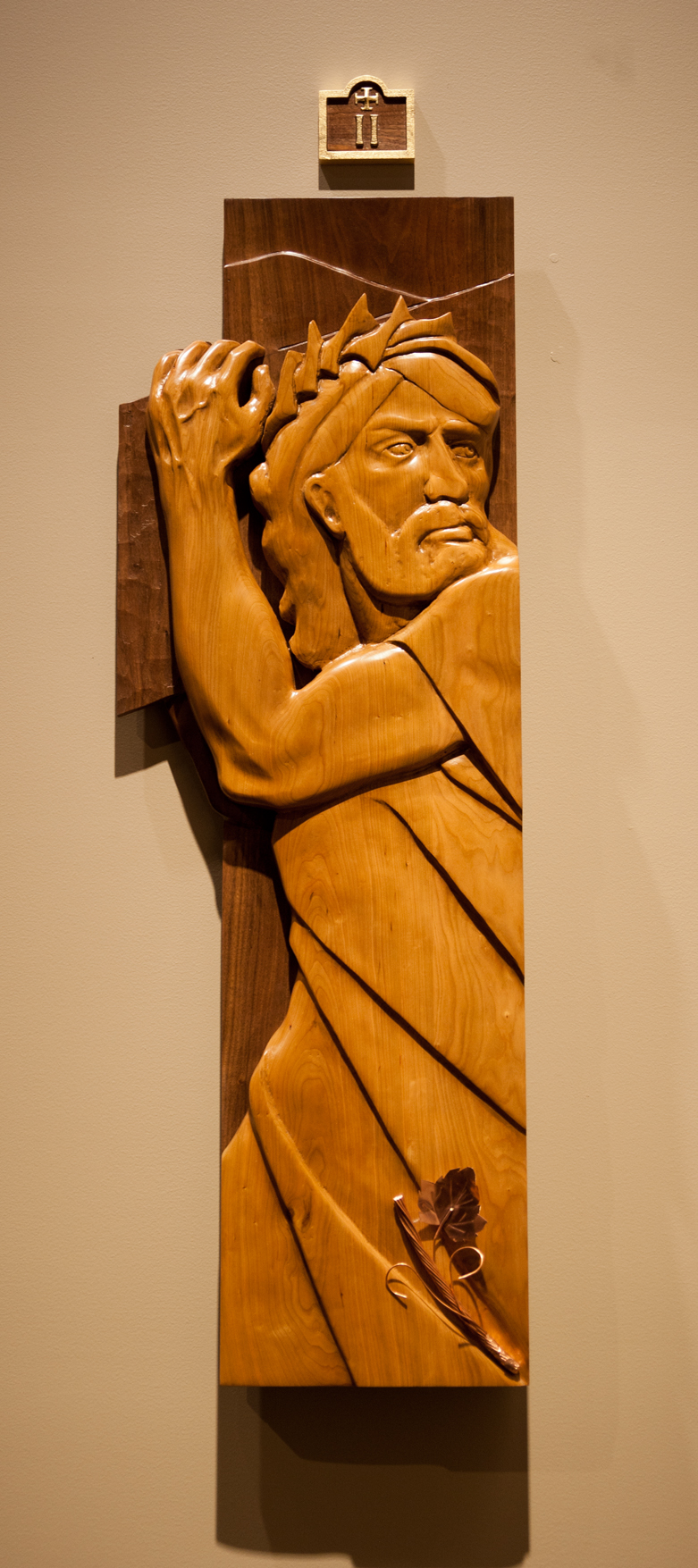
An additional element is the copper vine which grows and produces fruit as the Way progresses. At the death of Christ, the vine drops its fruit and leaves. As Jesus is laid in the tomb, the vine is pruned and prepared to rise and once again bear fruit.
The symbolism of the Vine, grapes and seed falling to the ground in order to spring back to life is a rich symbol in the Gospels and in Christian iconographical history.
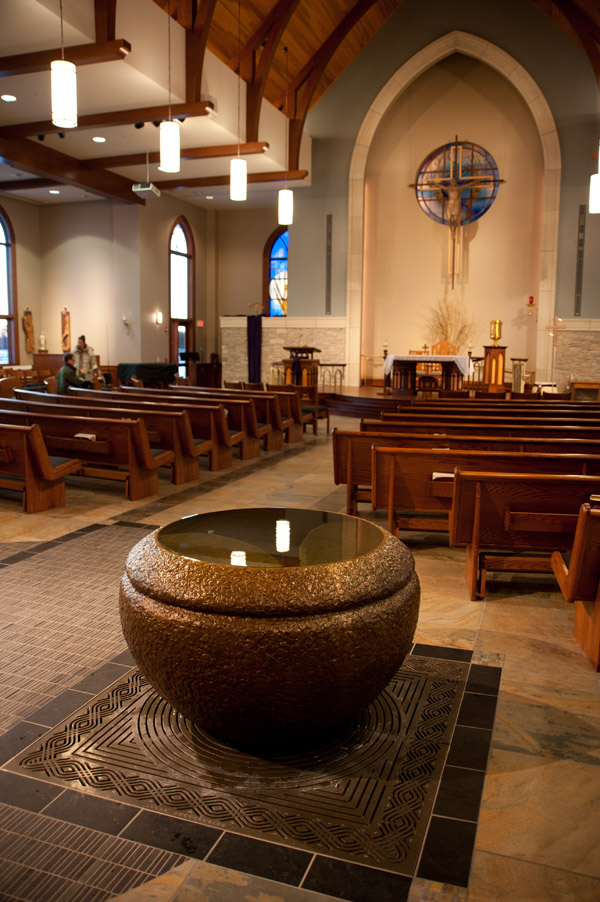
St. Katherine Drexel is set in the beautiful Illinois countryside of Sugar Grove. The architecture is a post-modern, neo-gothic design. The congregation gathers in a semi-circle around the sanctuary. A robust baptistry welcomes all who enter.
The fourteen Stations of the Cross by George R. Hoelzeman are arranged between windows and on walls surrounding the nave.
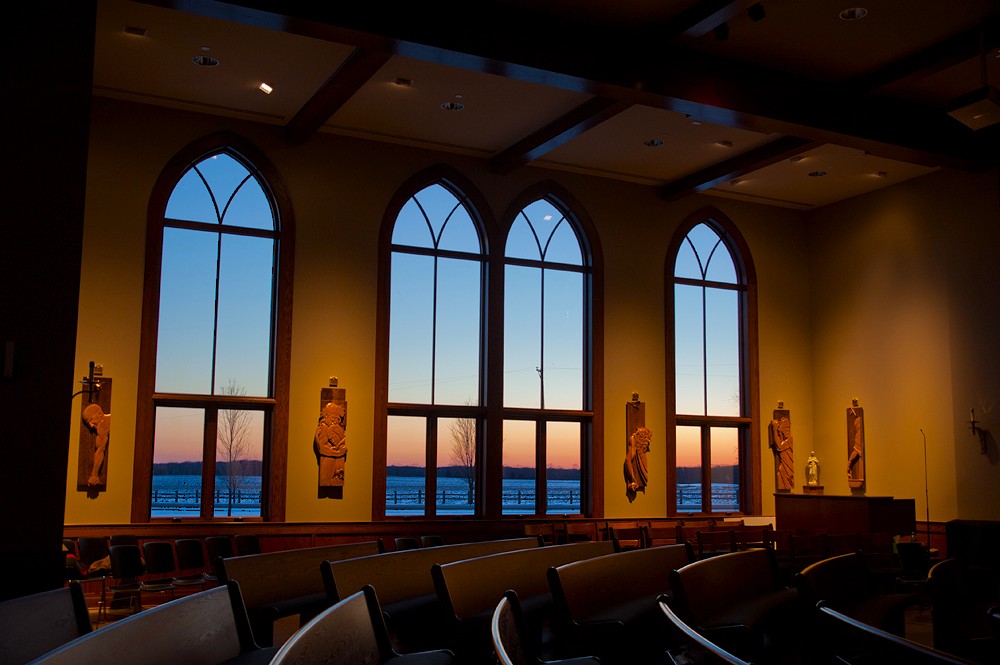
Six of the fourteen Stations of the Cross are shown.
II - Jesus takes up the Cross. Christ is depicted as strong and resolute, aware of His redemptive sacrifice and accepting the Father's Will.
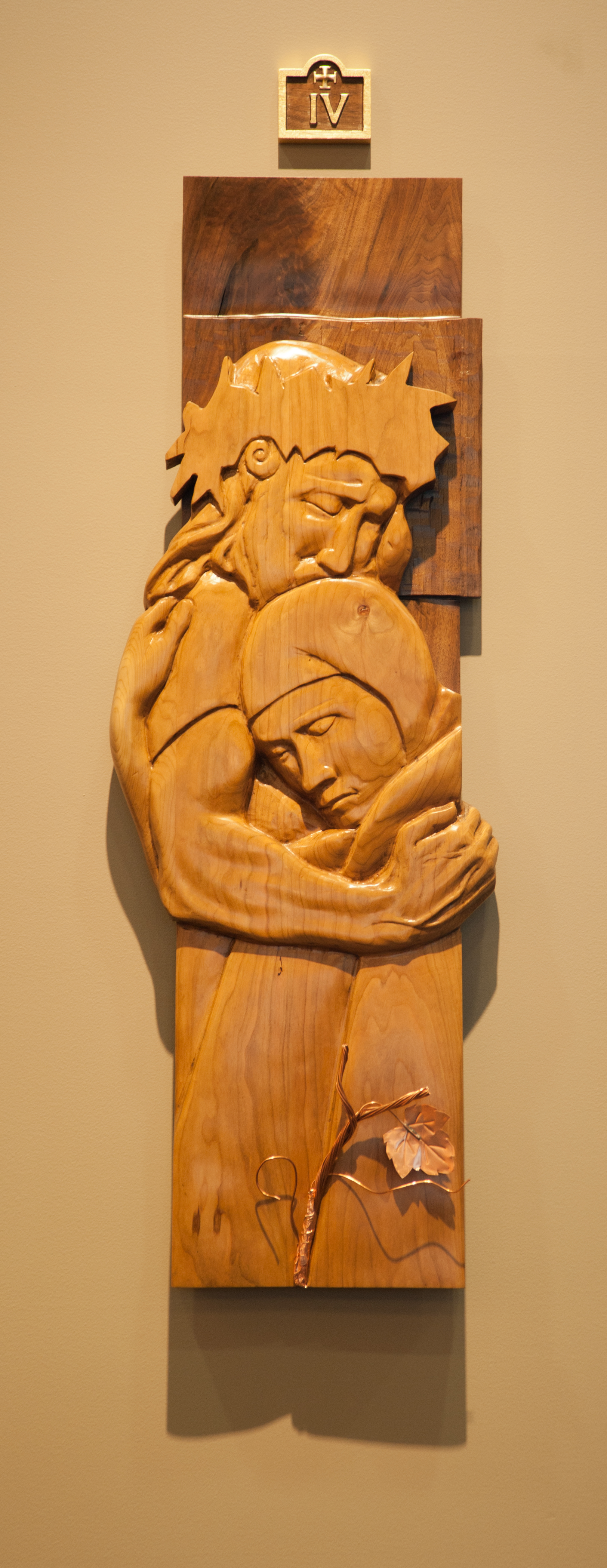
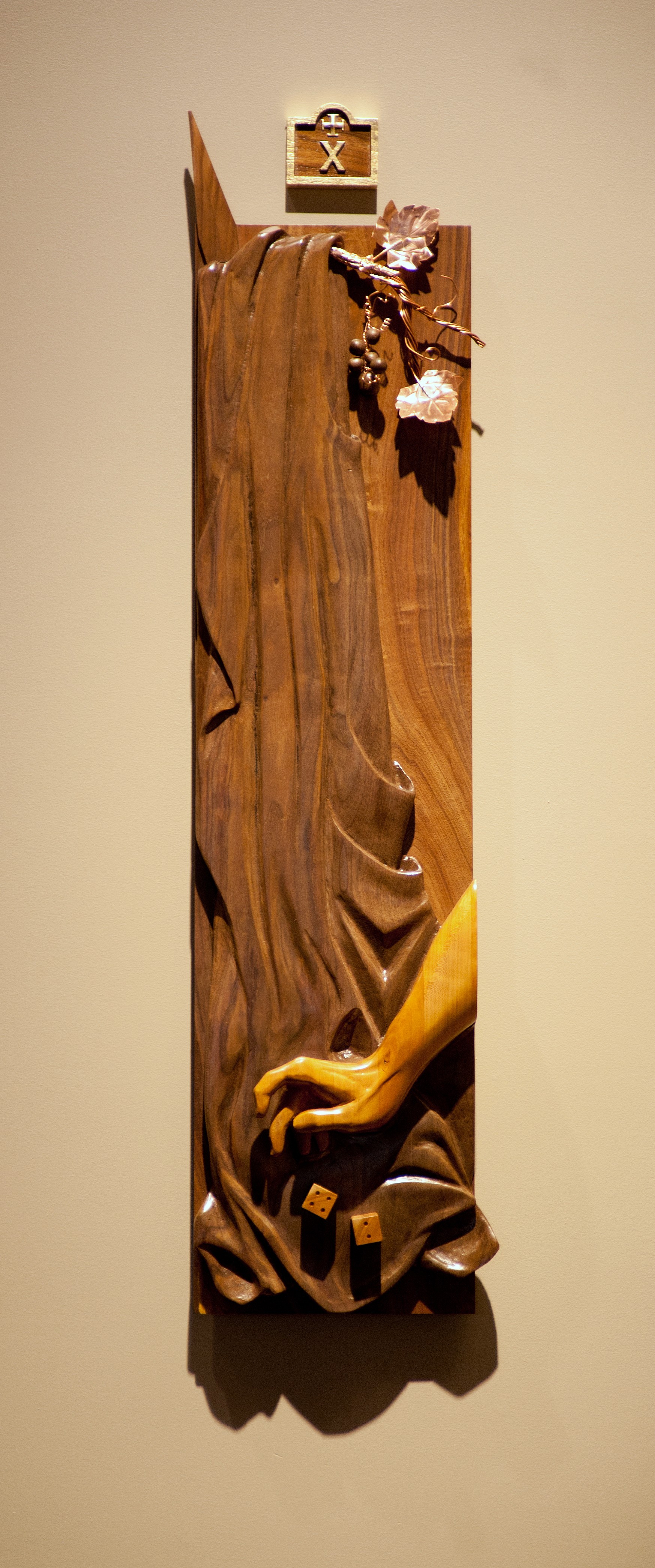
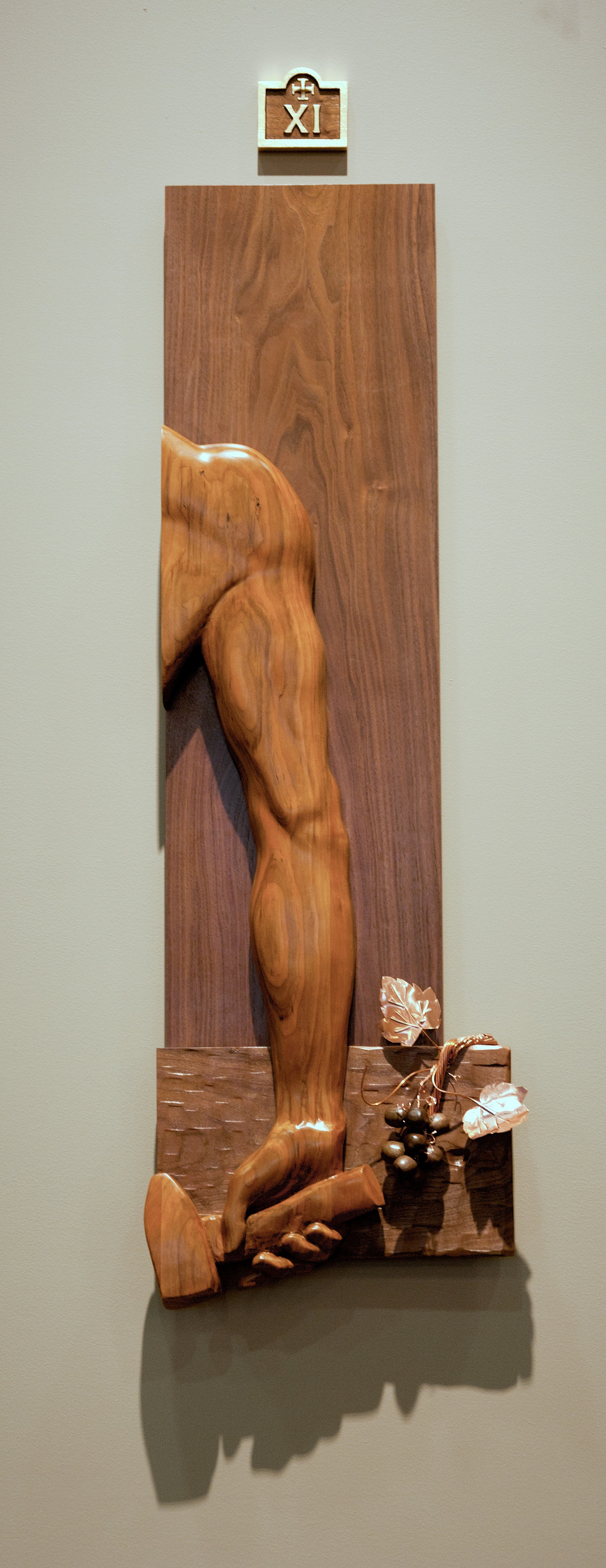
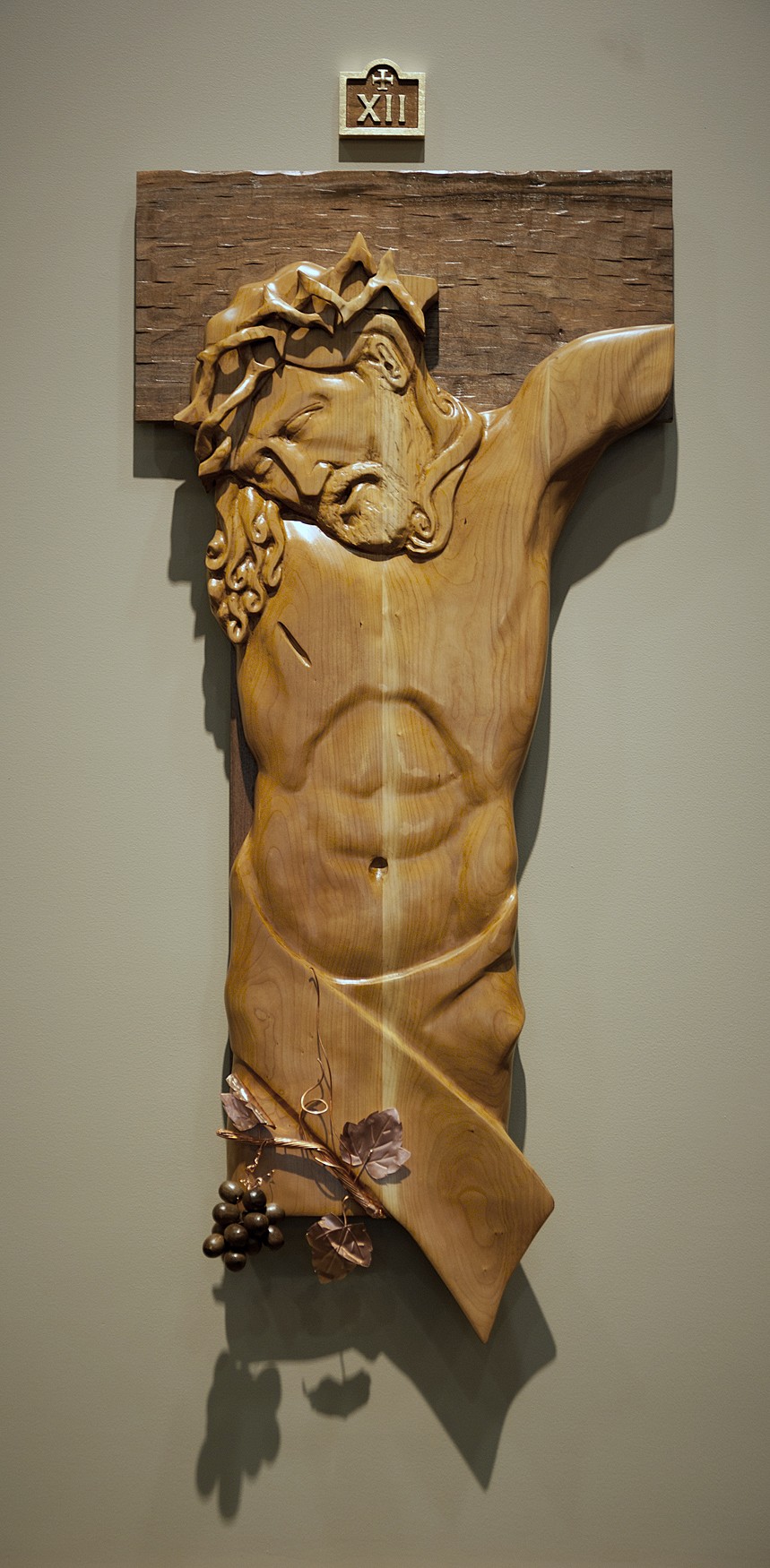
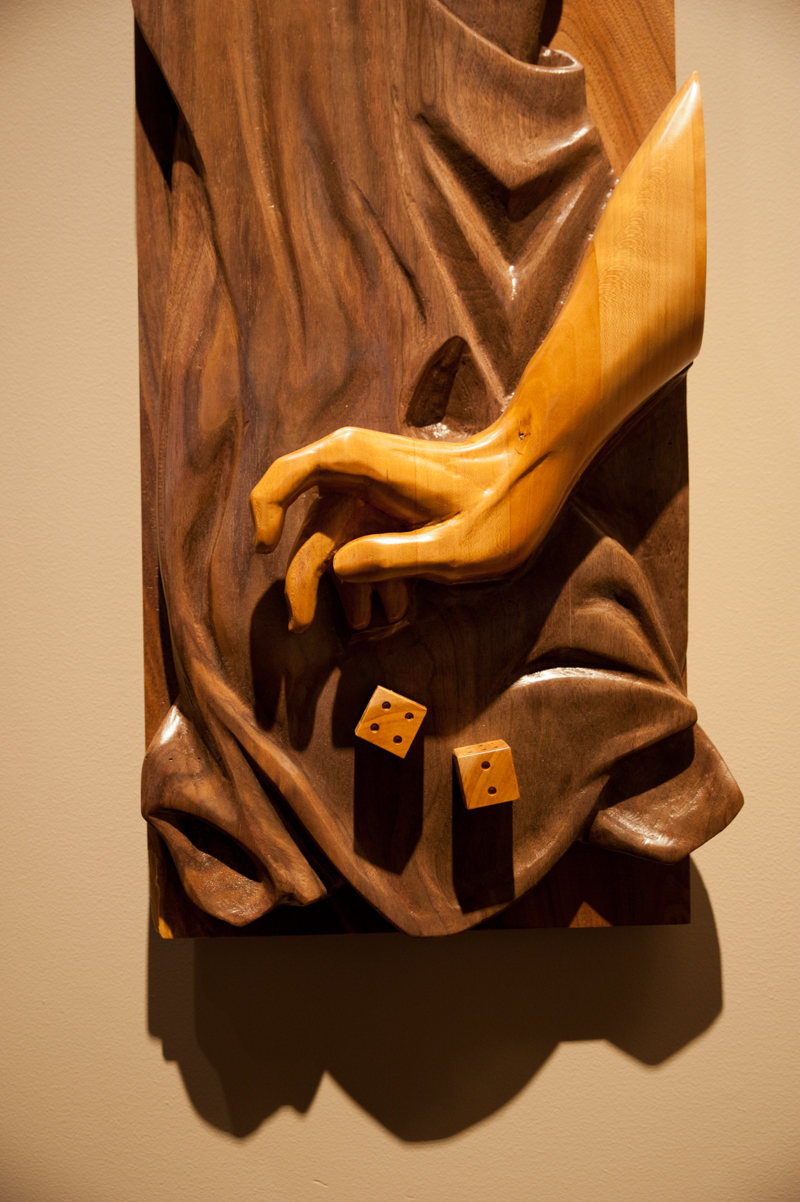
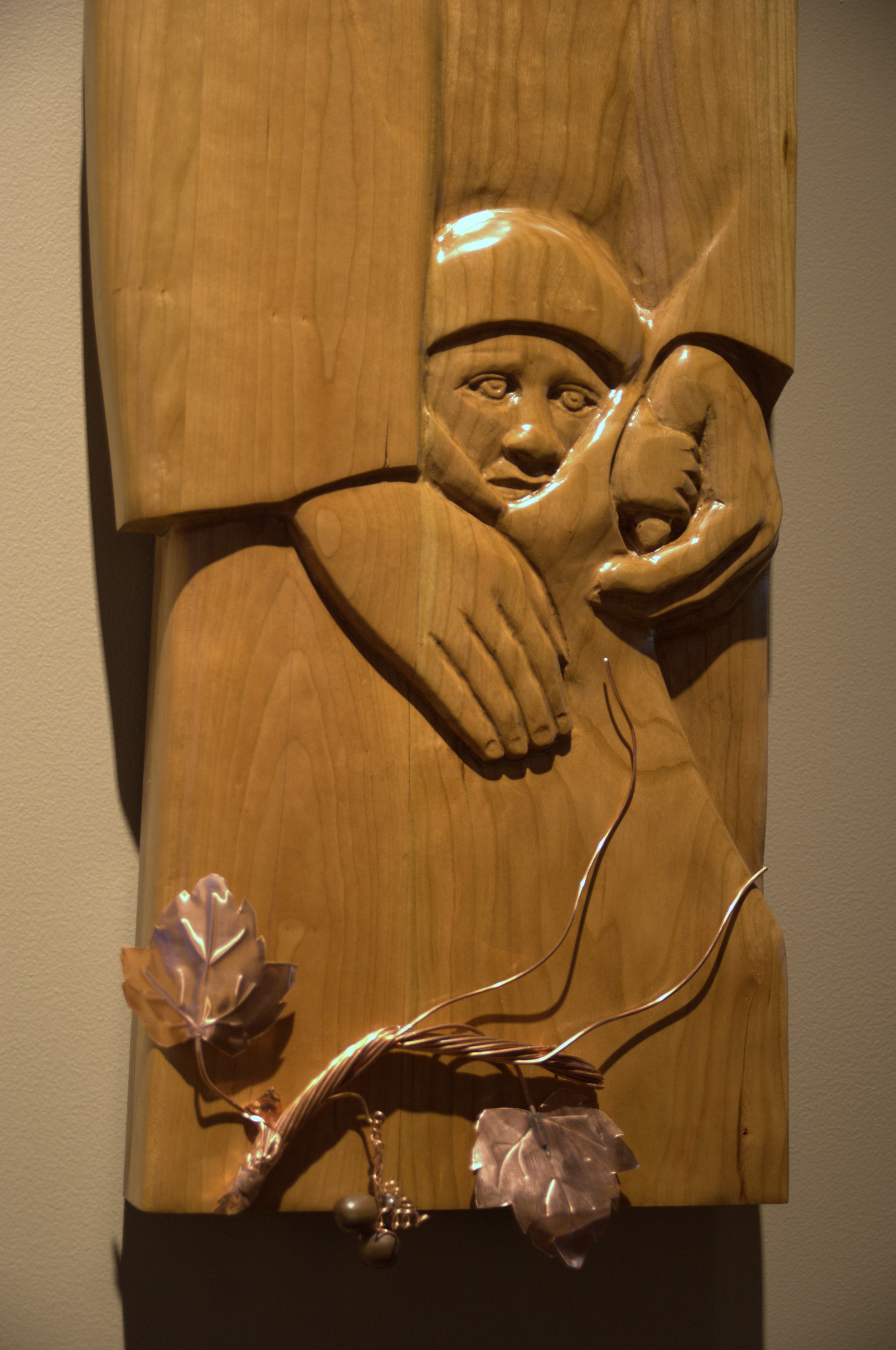
Detail elements of Stations X, XI, VII