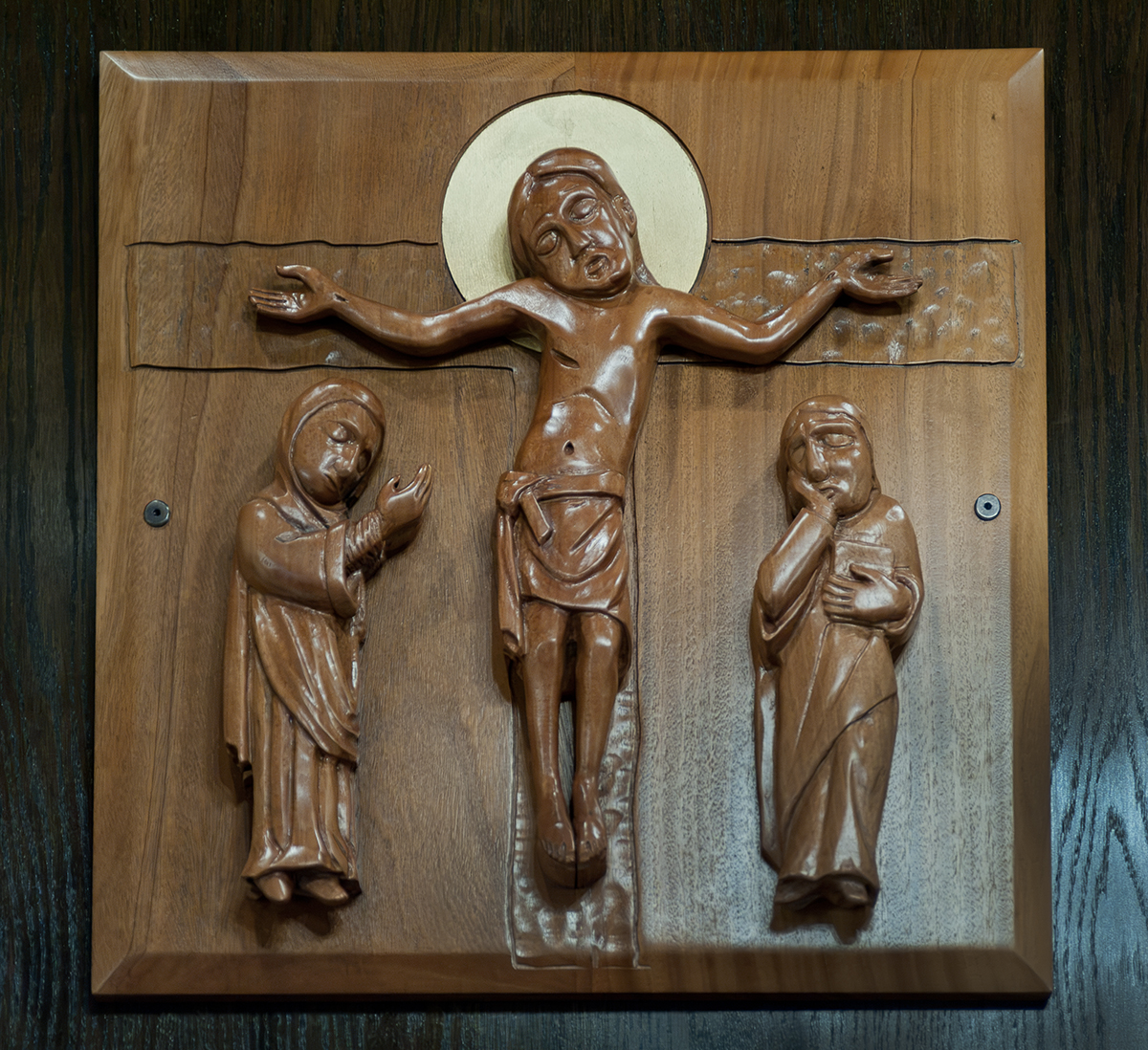
The original concept proposed by then pastor Fr. Gregory Pilcher, OSB, was for scenes from St. Paul's letter to the Corinthians. During the design phase this evolved into a vision of the hypostatic union expressed through the Life of Christ and the mystery of redemption.
Stylistically, the desire was for images inspired by Medieval models such as the famous bronze doors of Bernward at Hildesheim.
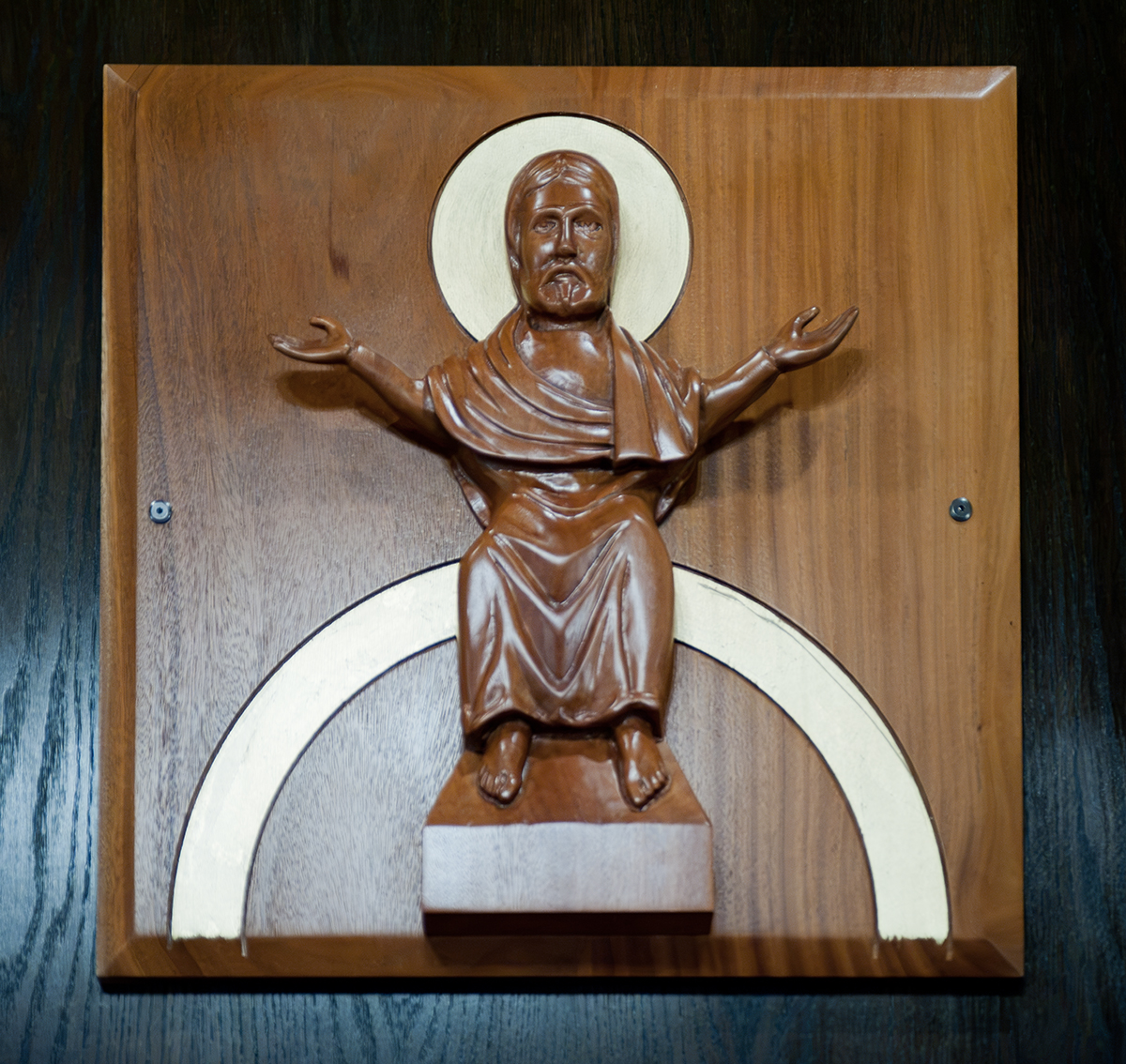
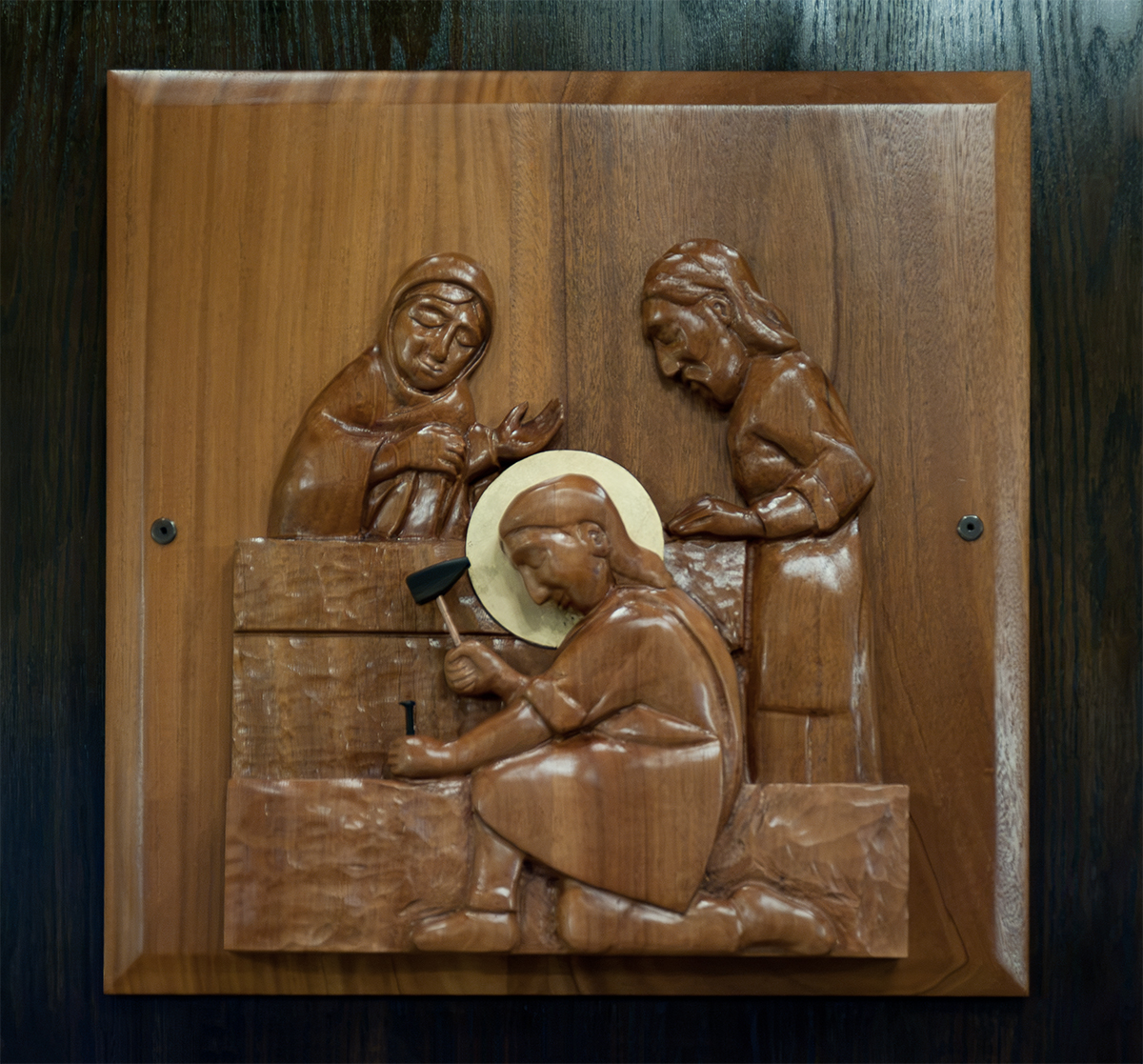
The human life of Christ (left door) is paralleled with His Divine mission (right door) thus revealing the hypostatic union of His Divine and Human natures.
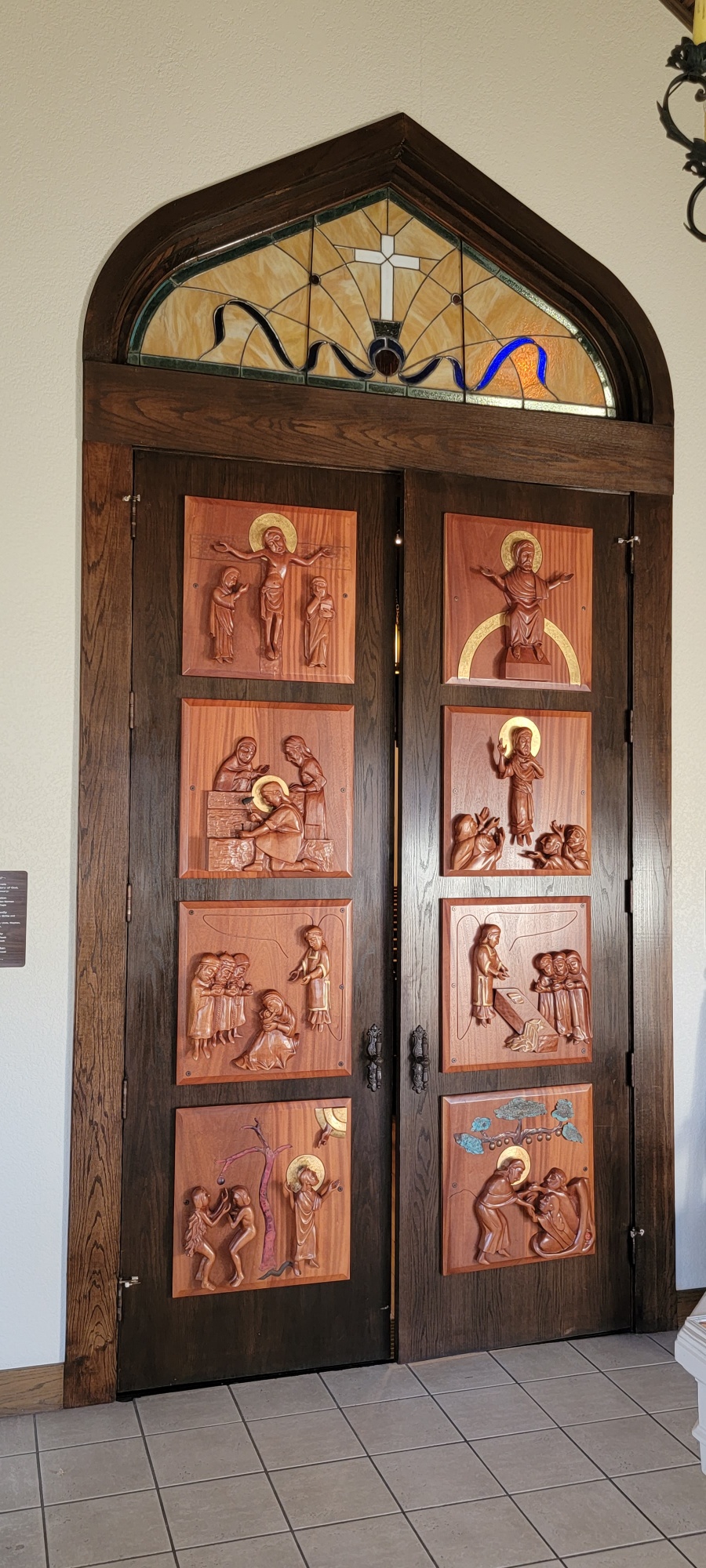
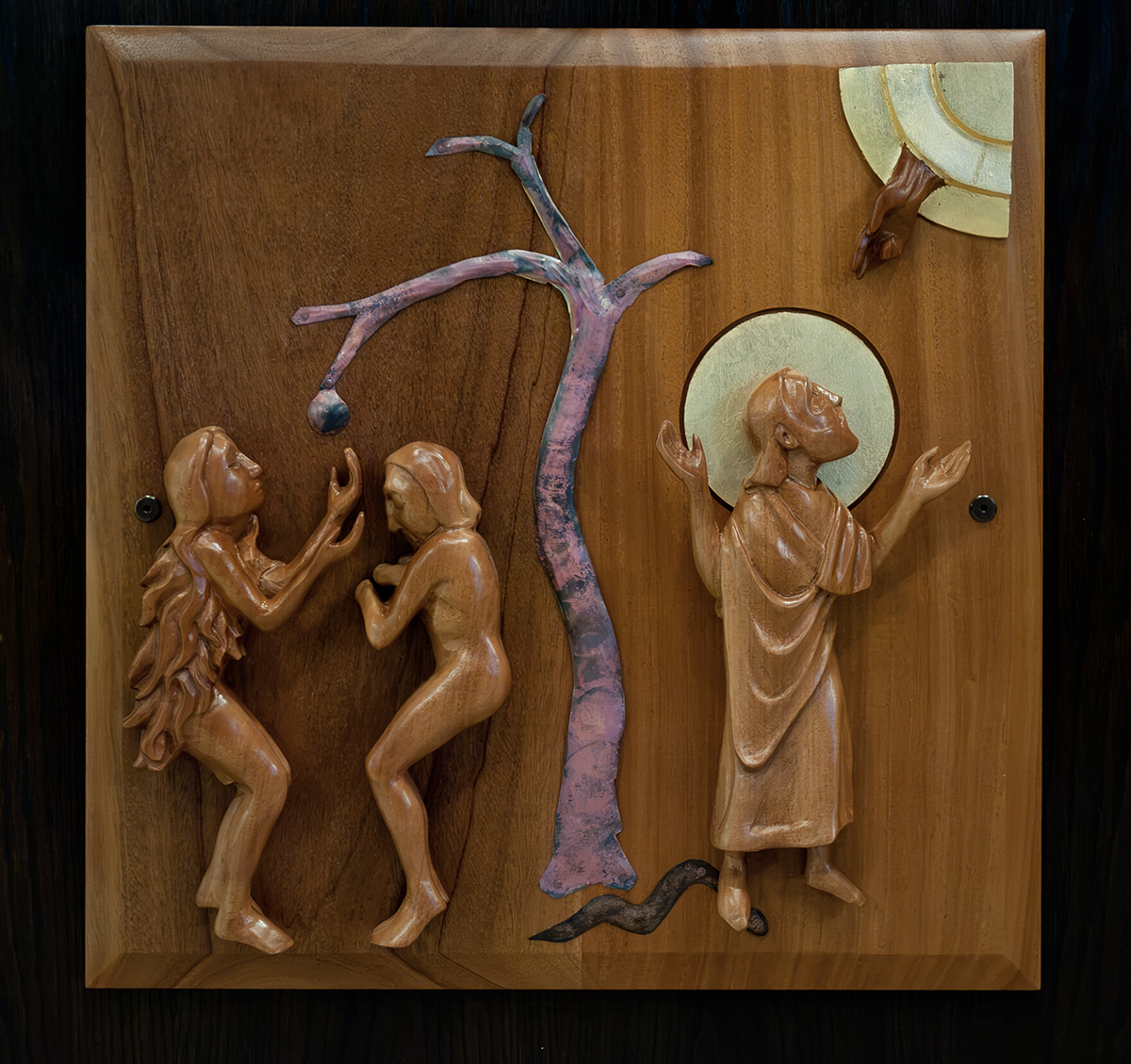
The lowermost level parallels the Fall of Adam and Eve (left) with the Anastasis, or redemption from the underworld (right). In the Fall, our first parents turn to the bad fruit of arrogance and disobedience. Contained within this ancient story is the Divine promise of the redeemer. While humanity turns toward the creature, the Promised One turns to the Creator, crushing the serpent of deception and delusion under his feet.
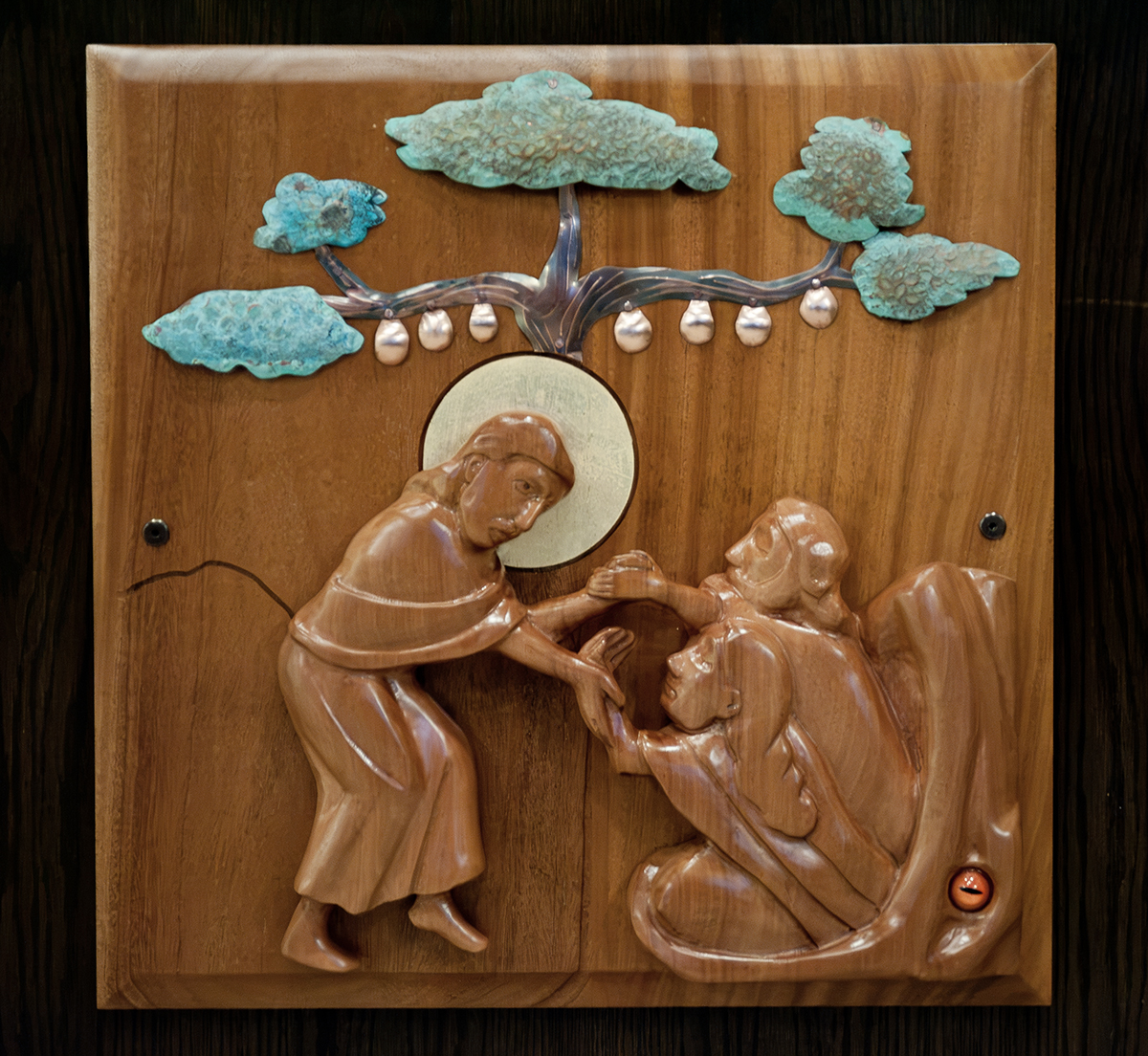
On the right, Christ the Redeemer draws Adam and Eve from the maw of the Abyss, restoring them to the Tree of Life. The tree bears seven fruit representing the seven Sacraments through which redemptive grace flows to humanity.
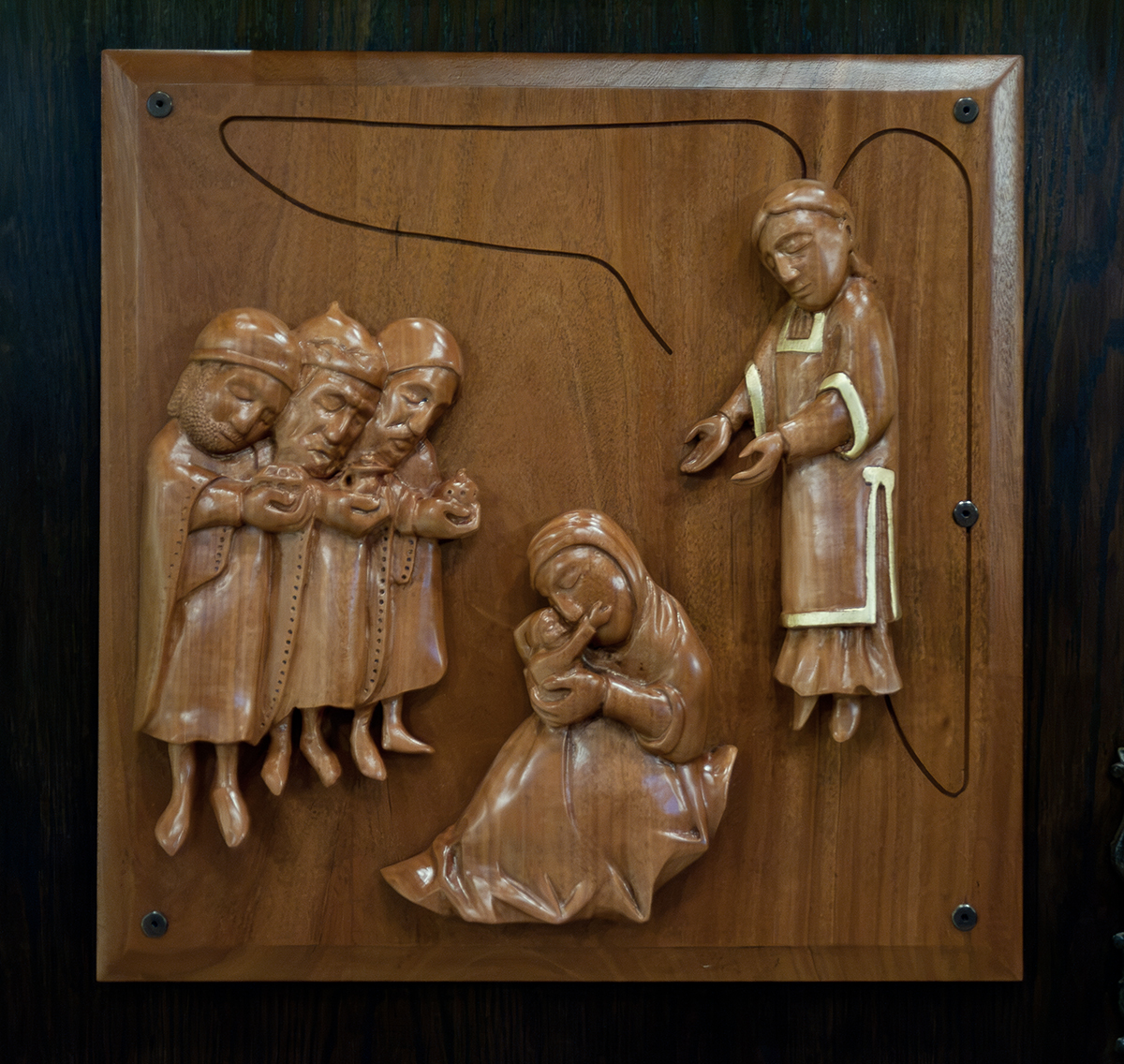
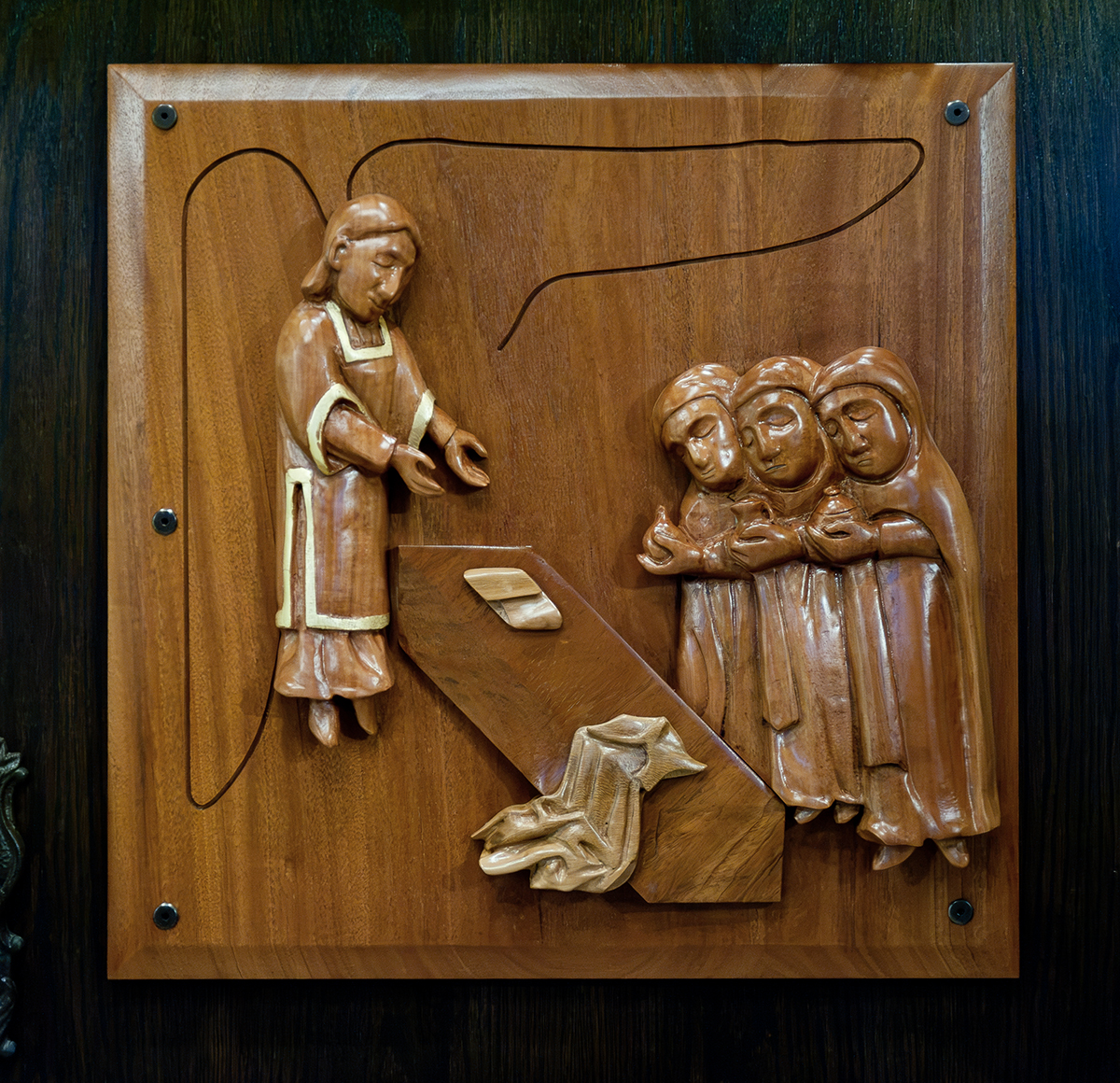
These images are at the level of the door handles. Hence, the interior of the church is revealed as one encounters the revelation of the Incarnate Christ at His Nativity, and in His Resurrection. Both events are announced by angelic messengers, and both are welcomed by a trio of witnesses.
Jesus in His earthly family is obedient to His parents and grows in human wisdom. His obedience to His Heavenly Father and divine Wisdom is manifest in the Church, the eschatological Family.
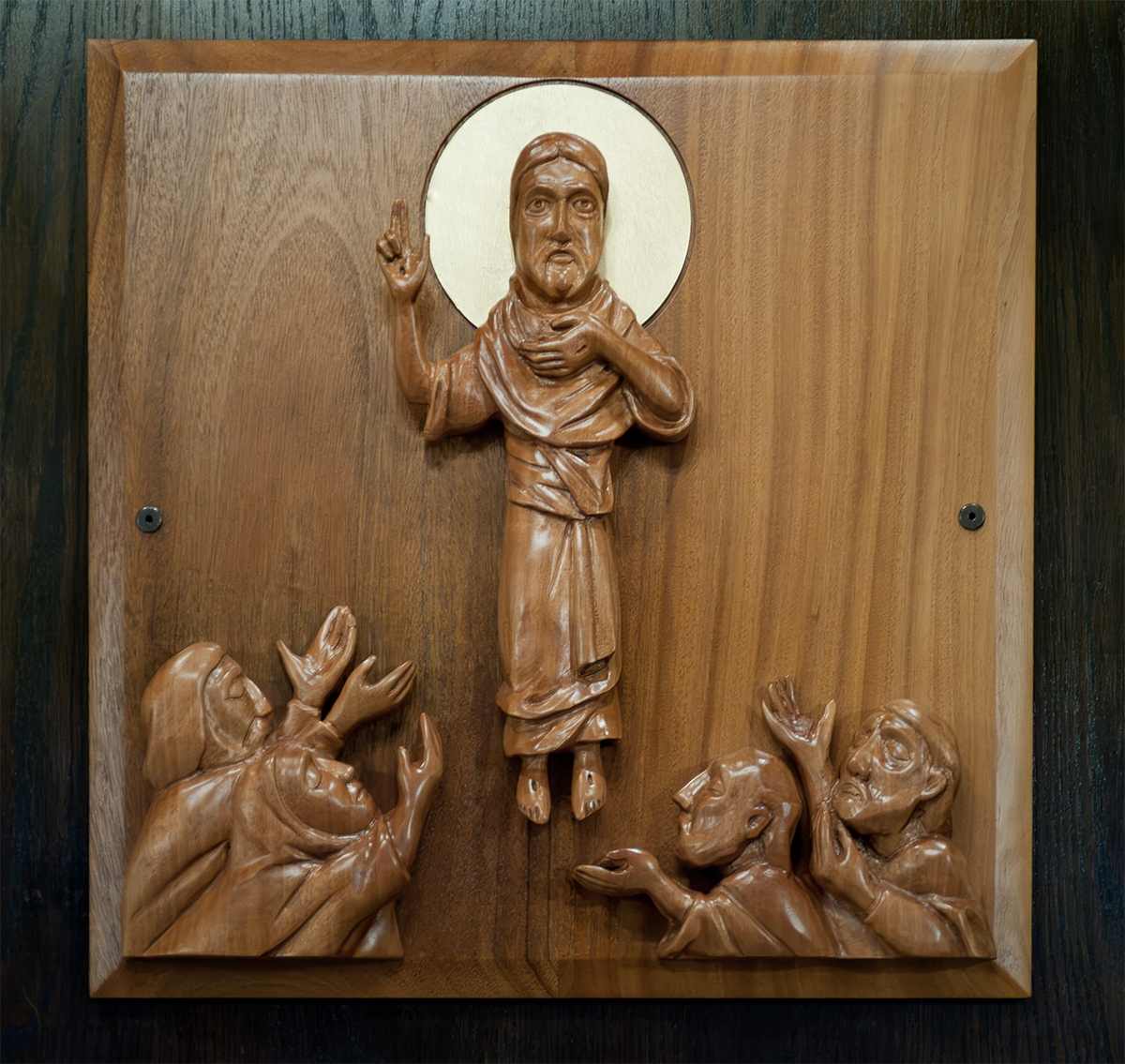
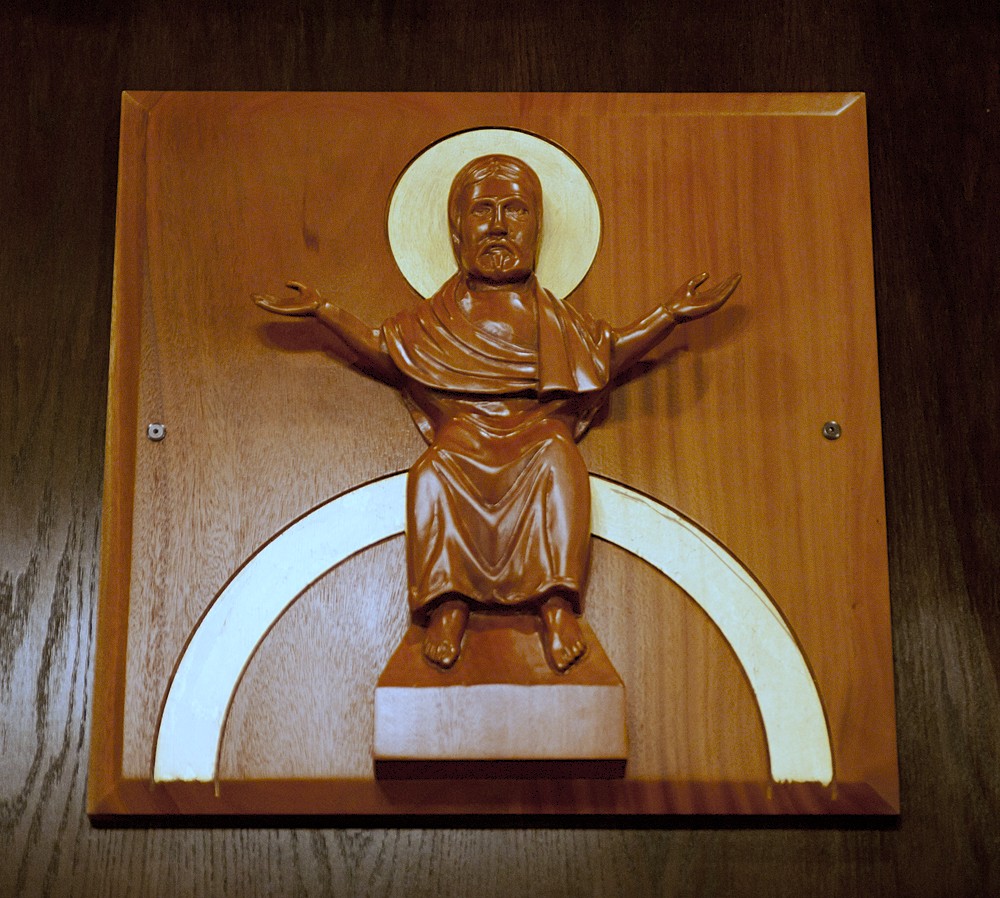
By His death and resurrection, we are set free and a new covenant is established. We are joined to that covenant through the Eucharist and anticipate His return in glory, here represented by the image of the Pantocrator.