


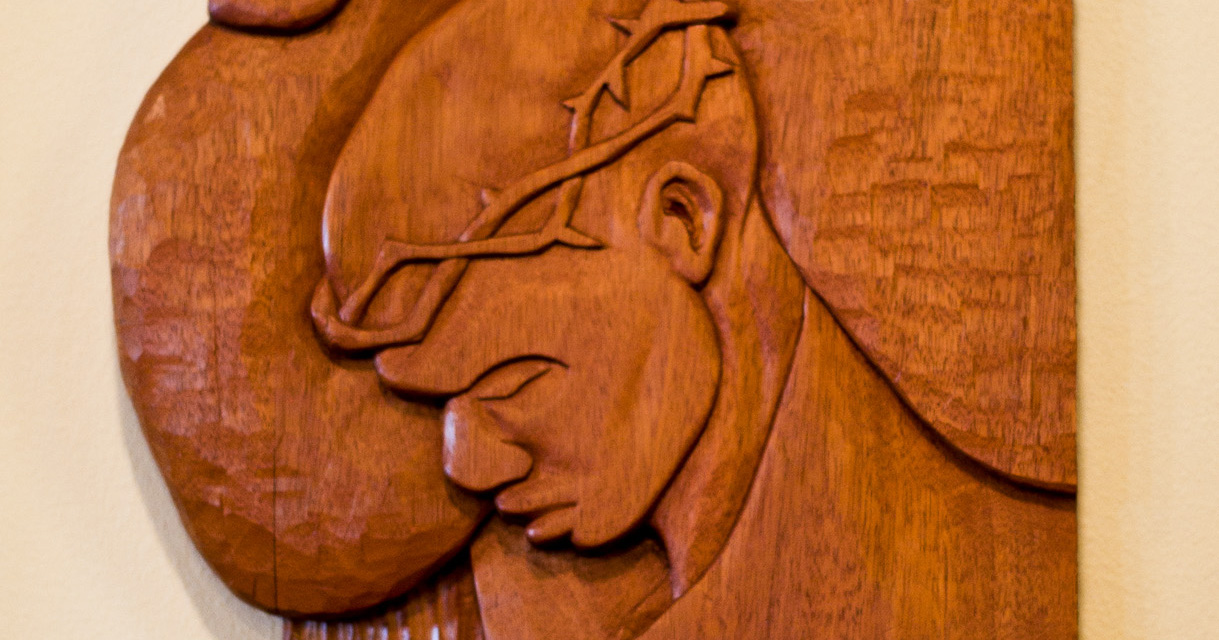
St. Augustine's is an historically African American parish in North Little Rock, Arkansas. It was established in 1929 specifically to minister to the Black community. Duing the 1970's the parish church fell into disrepair due to the economically disadvantaged circumstances of the community. Plans were made to suppress the parish and integrate its members into other parishes well outside the neighborhood. The old church was condemned by the city and razed.
The Parishoner's, however, remained steadfast and by the early 1980's had successfully petitioned for the restoration of the parish and construction of a new church. By 1985 the parish had outgrown this space and a new, larger church was built.
In 1988 newly ordained Fr. Warren Harvey was assigned to St. Augustine's as administrator. Fr. Harvey was the first African American ordained for the Diocese of Little Rock and undertook this assignment with enthusiasm.
George R. Hoelzeman and Fr. Warren Harvey had been in seminary together at St. Joseph's Seminary in St. Benedict, Louisiana. Knowing that George did woodcarving, Fr. Harvey approached him about a set of Stations for the new church at St. Augustine. The primary goal was a series that spoke aesthetically to the African-American community, including the significant Nigerian population in the area.
George participated in the Liturgy at St. Augustine's, ultimately becoming a member of the parish. He also studied Nigerian Art and culture in order to draw on meaningful themes.
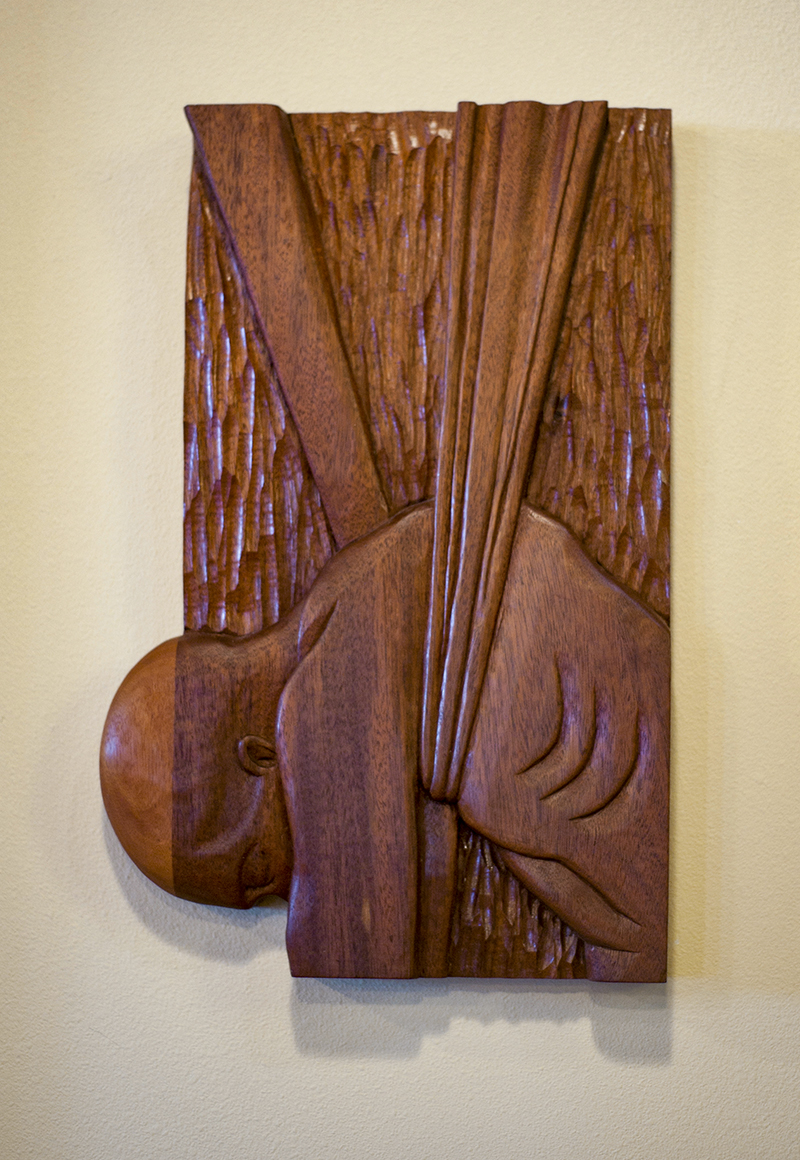
The final designs focus on specific aspects of each Station. This is intended to draw the viewer into the event. The rectangle of each panel is broken by some aspect of the image, emphasizing the transcendent nature of the Passion. The lone exception is the death of Christ.
On a lark, George submitted images of the Stations for Ministry and Liturgy's "BENE Award" in late 1990. In early 1991 he received notice that the "African Way of the Cross" was that year's recipient of what was then one of the top awards for Liturgical Art in North America.
The work appeared in the September 1991 issue of Ministry and Liturgy. This launched George's career as a Liturgical Artist. He is eternally grateful to the St. Augustine's community for their trust and support.
This was the first panel completed and was used during Lent of 1990 while awaiting the completion of the remaining Stations
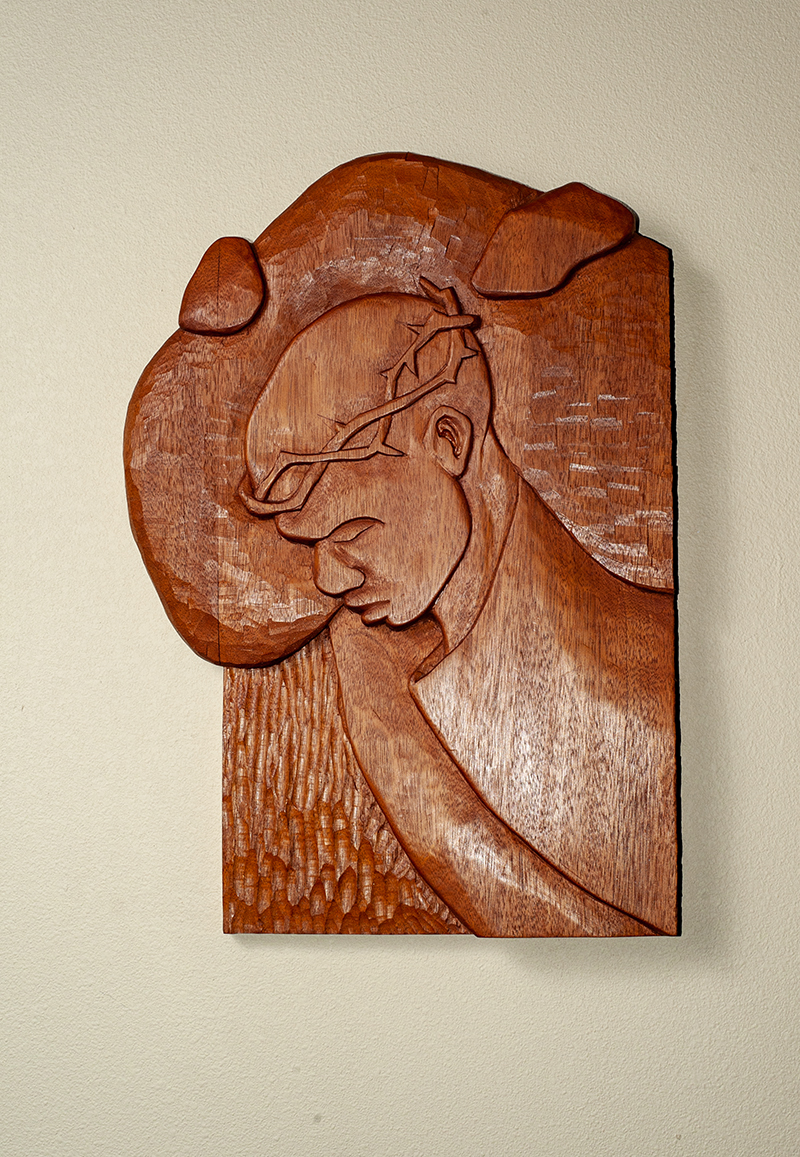
The Crossbeam is fashioned in the form of a yoke. This symbolizes humanity's slavery to sin, refers to the Hebrew People enslaved in Egypt, and recalls the African-American experience of slavery and segregation. It was also inspired by a crucifix in the Friedenskapelle in Germany's Black Forest.
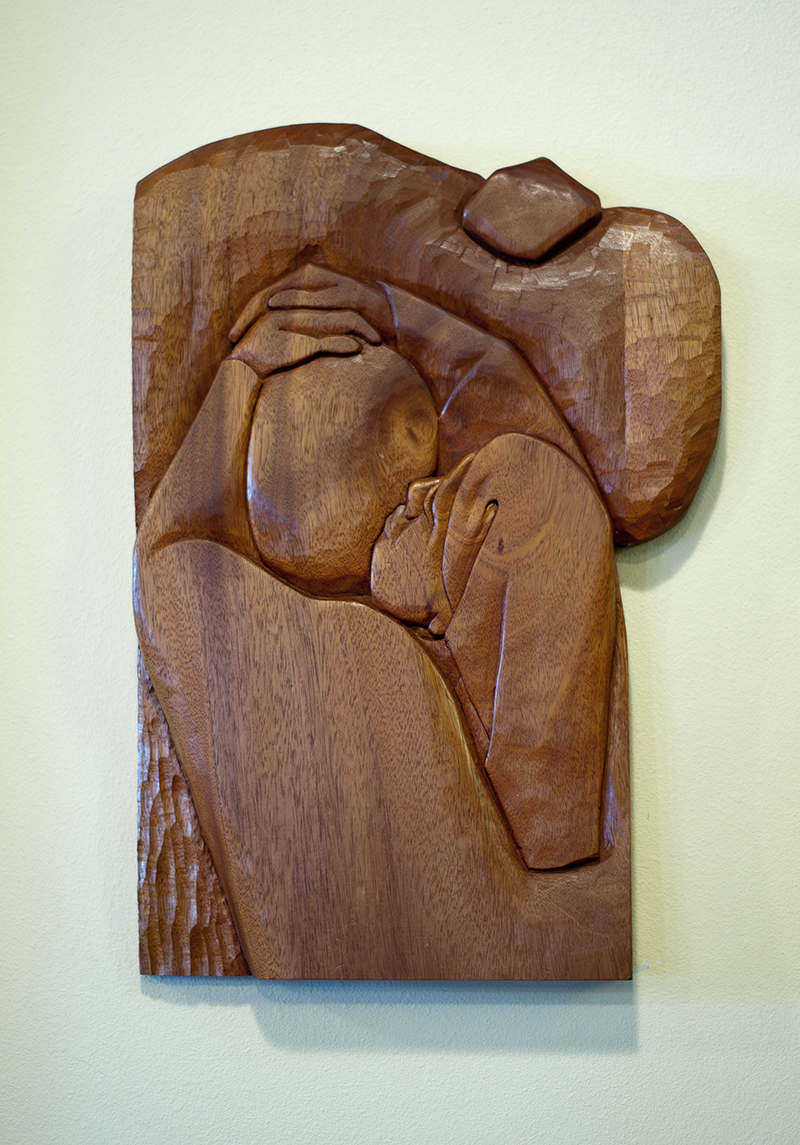
Mary embraces her Son without regard for his disfiguration thus becoming a type of God's Love for humanity.
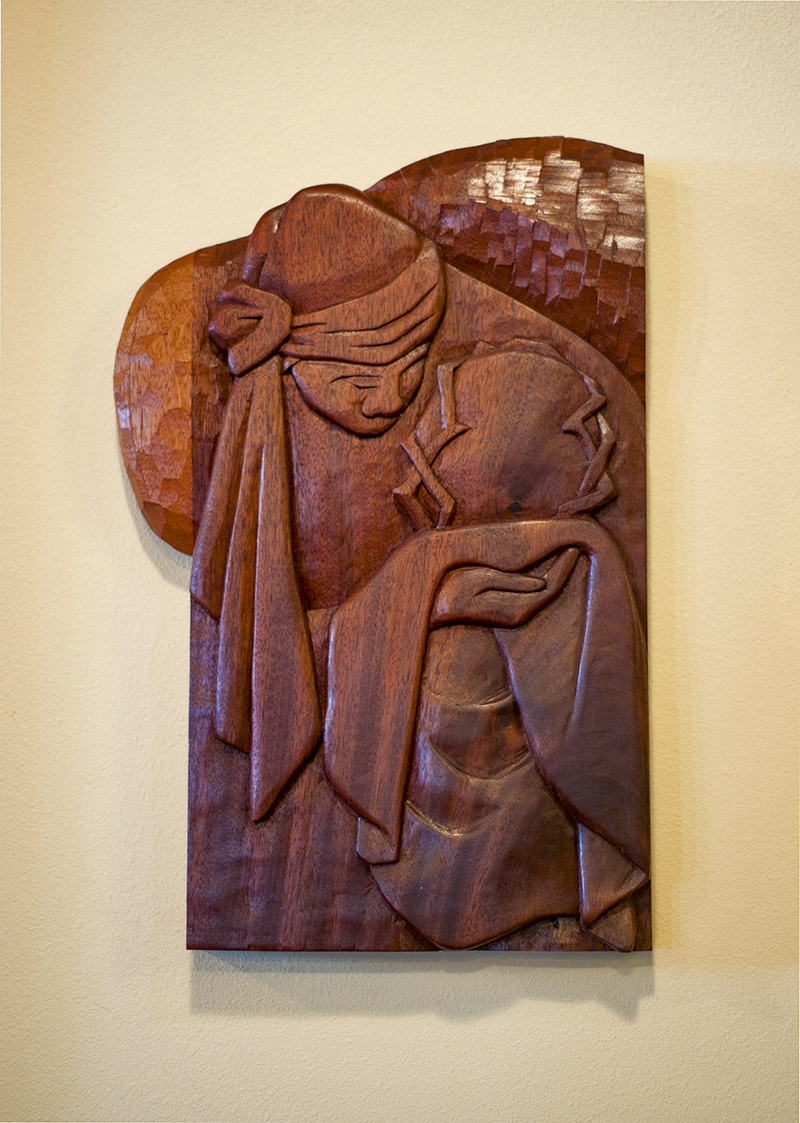
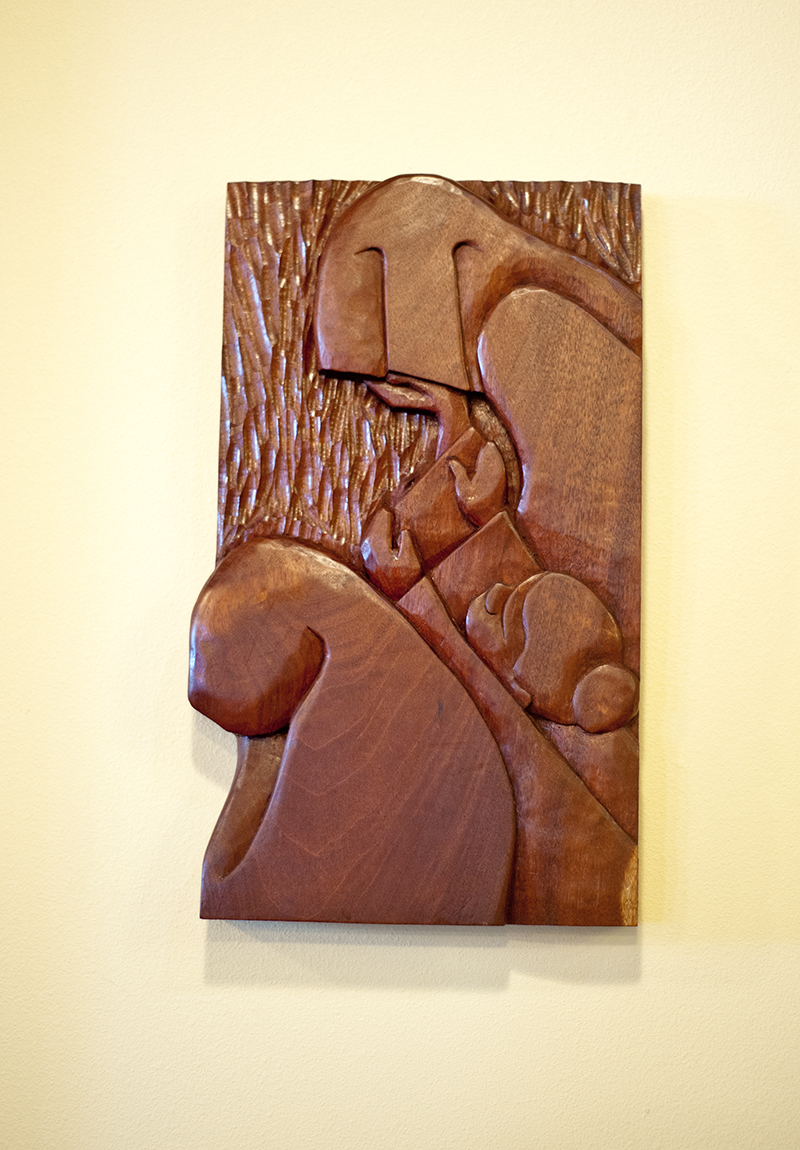
The Women represent grieving humanity.
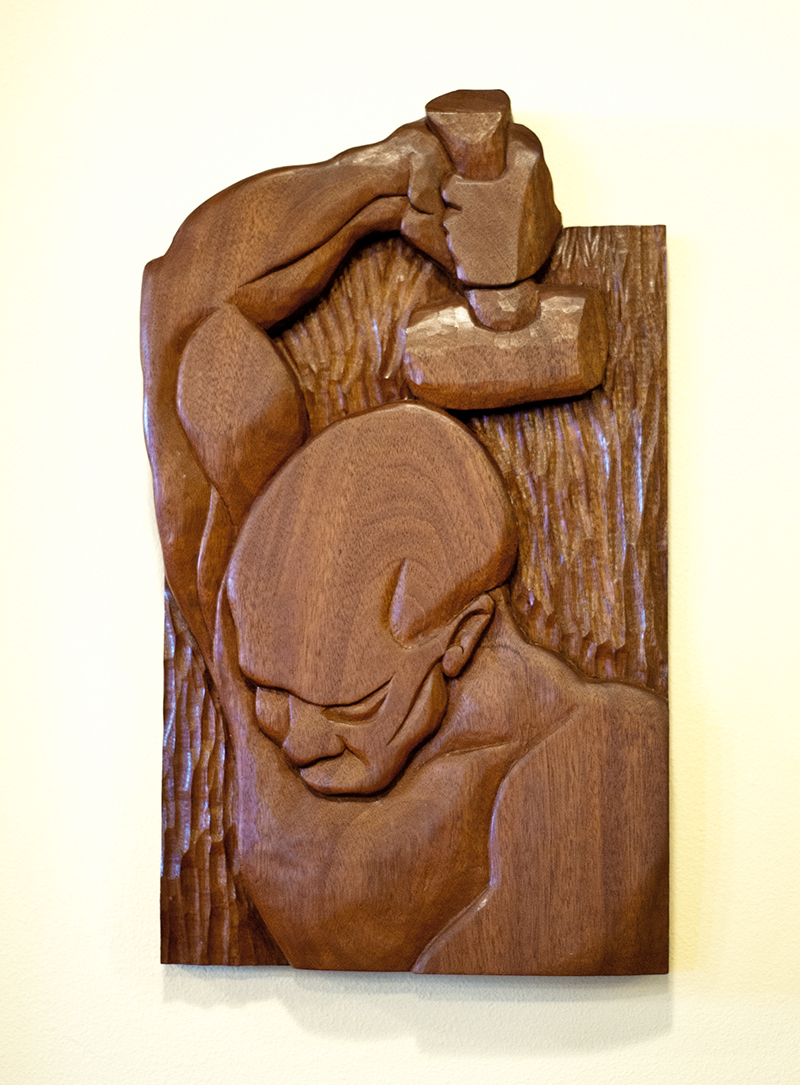
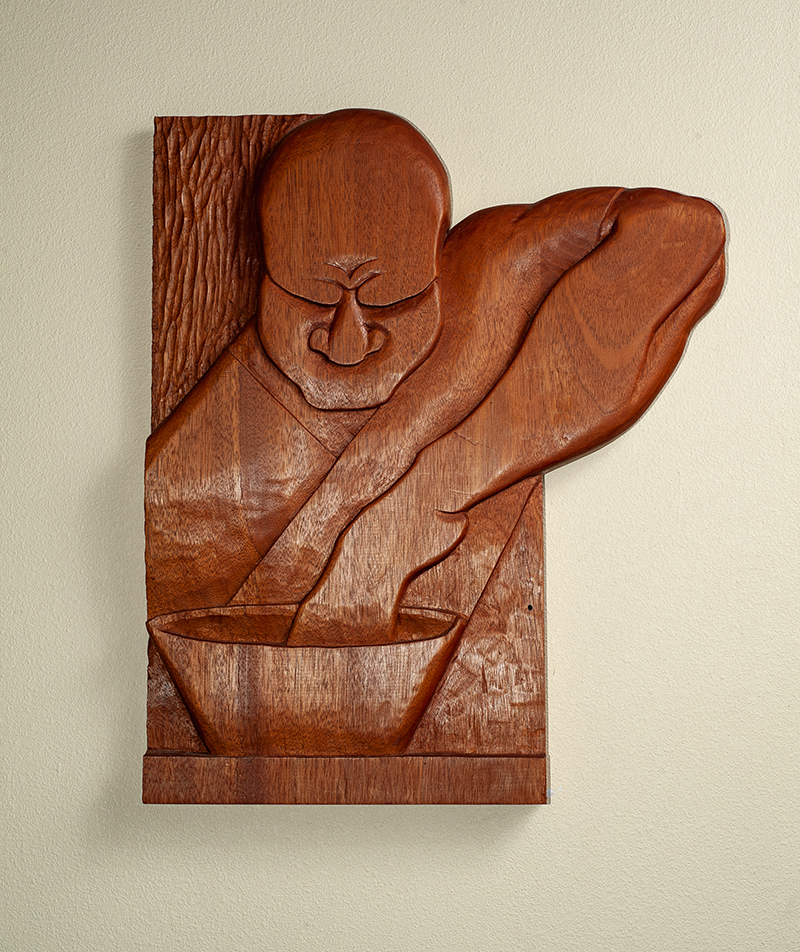
By focusing only on the soldier driving the nails, the viewer is reminded that merely "following orders" or accepting things as they are can be unjust and sinful.
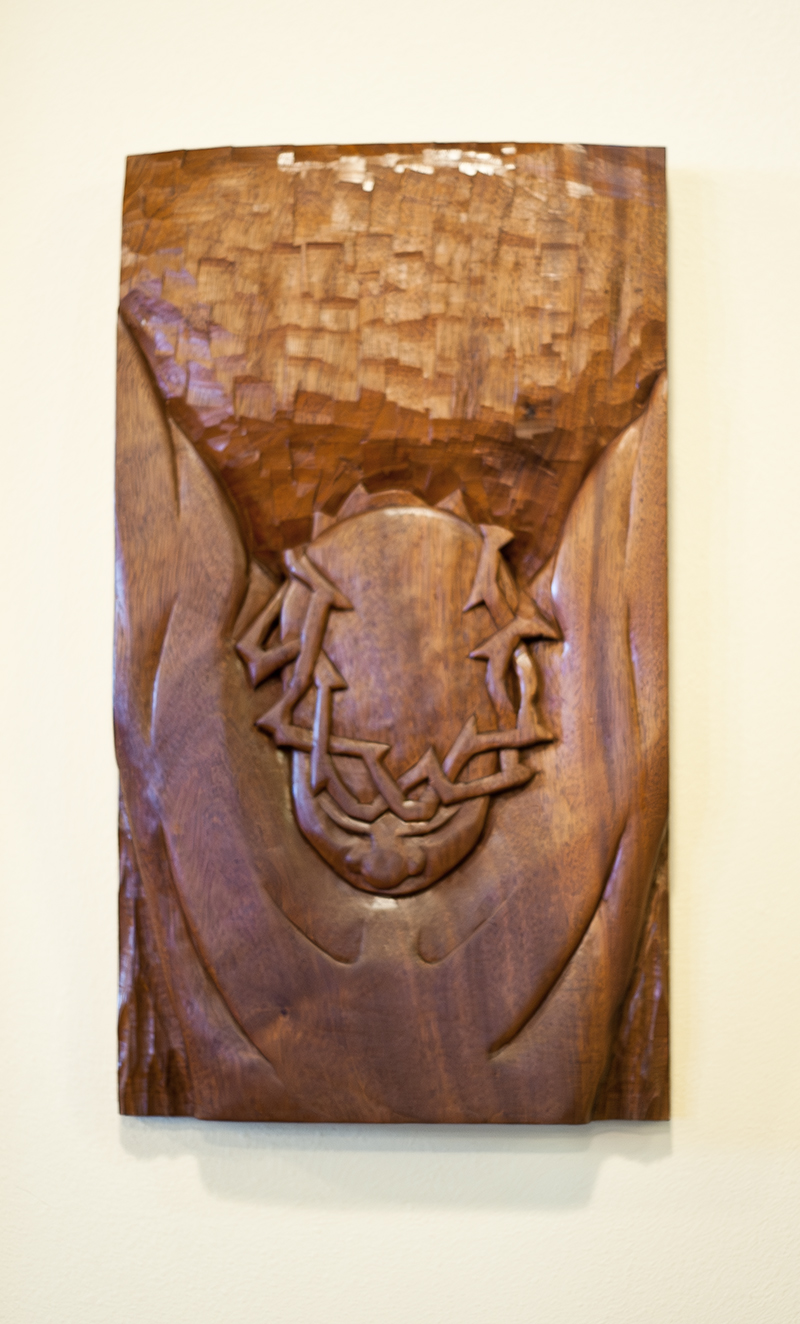
In traditional iconography the square (in this case a rectangle) symbolizes "the world". In each of the Stations the broken rectangle represents that the Passion of Christ is an event that breaks free of the World and extends into eternity. Only now, at the death of Christ, does the World seem to hold sway.
We await the Resurrection and encounter the Risen Christ in the Eucharist.
